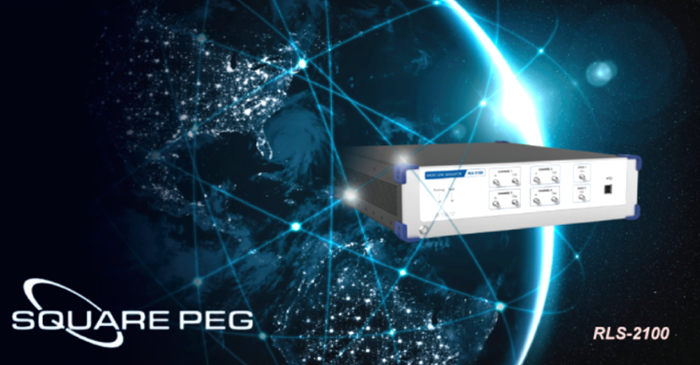
Square Peg Communications has advanced Radio Link Simulation capabilities for 5G networks, designed to support the development and validation of hybrid satellite-terrestrial communication systems. As global demand for high-speed connectivity continues to grow, the company’s simulation technology enables satellite operators, network providers, and defense organizations to test, optimize and deploy satellite-enabled 5G networks with greater confidence and reduced risk. With the rapid evolution of 5G and Non-Terrestrial Networks (NTN), satellite communications are becoming an essential component of next-generation connectivity architectures. Square Peg Communications addresses this shift by providing testing solutions that replicate real-world network conditions, enabling seamless integration between terrestrial infrastructure and satellite constellations across LEO, MEO and GEO orbits.
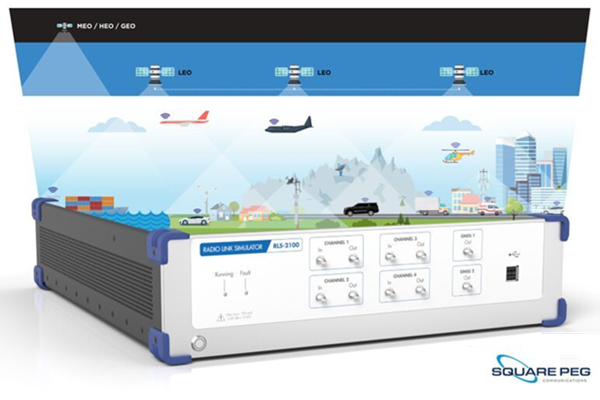
The transition to hybrid satellite-terrestrial networks introduces new technical challenges, including varying propagation delays, satellite motion, Doppler effects and complex handover scenarios between network layers. Traditional testing methods are insufficient to capture these dynamic conditions, particularly as 5G networks demand low latency, high throughput, and continuous mobility support. Square Peg’s radio link simulation technology is designed to address these challenges by enabling the emulation of realistic communication environments. This includes testing across different orbital configurations, evaluating performance under varying link conditions, and verifying the compatibility of terrestrial commercial off-the-shelf (COTS) equipment within hybrid network architectures. By simulating these conditions in controlled environments, operators can validate system performance before deployment, reducing uncertainty and accelerating the development of reliable 5G-enabled satellite services.
At the core of Square Peg’s offering is the RLS-2100 Radio Link Simulator, an integrated testing platform developed to support advanced satellite communication scenarios. The system is designed to simulate a wide range of wideband 5G link conditions, allowing engineers to test network performance across multiple use cases. The RLS-2100 supports 5G mobility scenarios, enabling validation of communication performance for moving platforms such as aircraft, maritime vessels, and land-based systems. It also enables testing of 5G traffic backhaul applications, ensuring that satellite links can effectively support data transmission between remote sites and core networks. The simulator supports emerging concepts such as 5G cellular infrastructure in space, where satellites function as part of the mobile network ecosystem. By providing a controlled environment for testing these advanced scenarios, the RLS-2100 helps operators prepare for future network architectures.
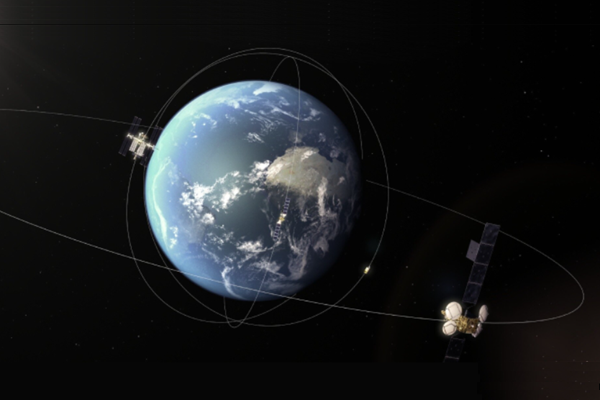
The RLS-2100 is designed as an all-in-one testing system capable of applying a wide range of impairments that affect satellite communication links. These include variations in signal delay, attenuation, Doppler shifts and interference conditions that occur in real-world satellite operations. This capability allows engineers to perform rigorous and repeatable testing across all phases of network development from initial design and system validation to deployment and performance optimization. By replicating real-world conditions with high accuracy, the system ensures that networks can meet performance expectations before they are deployed in operational environments. The result is improved reliability, enhanced service quality and reduced risk for operators deploying satellite-enabled 5G networks. One of the key challenges in satellite-enabled 5G networks is ensuring seamless handover between different network segments. This includes transitions between satellites in different orbits as well as between satellite and terrestrial networks. The RLS-2100 enables the validation of handover scenarios across LEO, MEO and GEO constellations, as well as between satellite and terrestrial infrastructure. This ensures that communication services remain uninterrupted during network transitions, which is critical for applications requiring continuous connectivity. Square Peg Communications supports the development of resilient hybrid networks capable of delivering consistent performance across diverse operating environments.
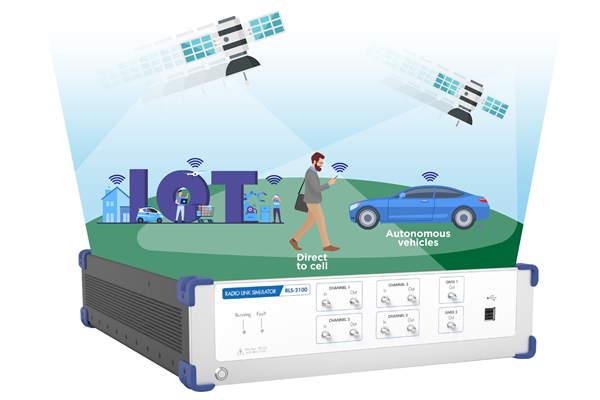
Square Peg Communications has also collaborated with the European Space Agency to enhance the capabilities of the RLS-2100, particularly in the area of hybrid channel emulation. Through this collaboration, the simulator is being extended to support both terrestrial and satellite link simulations using advanced 5G channel models. These enhancements are expected to enable the verification of handover performance in hybrid networks, making the RLS-2100 one of the first platforms capable of fully testing integrated satellite-terrestrial 5G systems. This development reflects the growing importance of collaboration between industry and space agencies in advancing next-generation communication technologies. As 5G adoption accelerates globally, satellite communications are playing an increasingly important role in extending connectivity to remote regions, enabling mobility services, and supporting mission-critical applications. Square Peg Communications’ radio link simulation technology provides the tools needed to validate these complex systems before deployment. By enabling comprehensive testing of wideband 5G links, hybrid network architectures, and multi-orbit connectivity scenarios, the company supports the development of robust and scalable communication networks. The RLS-2100 platform helps operators reduce deployment risks, optimize network performance and accelerate time-to-market for new services. Square Peg Communications is contributing to the evolution of satellite-enabled 5G networks, supporting the delivery of high-performance connectivity across global communication infrastructures.
About Square Peg Communications
Square Peg Communications is a Canada-based provider of satellite communications ground segment solutions, specializing in advanced RF and digital signal processing technologies. Headquartered in Ontario, Canada, the company develops products and systems that support satellite payload testing, ground infrastructure and communication network performance optimization. Square Peg Communications focuses on delivering high-performance solutions such as frequency converters, modems, gateways and signal processing equipment designed for satellite operators, system integrators and government customers. The technologies are used across a range of applications including satellite ground stations, teleport operations, in-orbit testing and satellite payload validation. With expertise in RF engineering and digital communications, the company provides flexible and scalable solutions that enable efficient satellite network operations across multiple frequency bands and mission requirements.