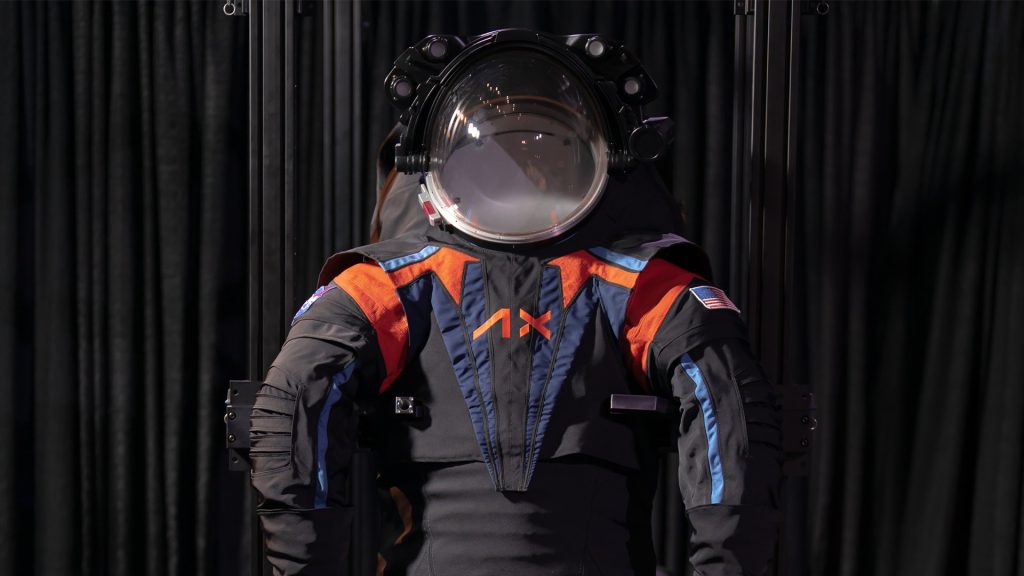
The new task order allows Axiom Space to utilize a single foundational architecture to concurrently design spacesuits for both the ISS and lunar surface.
Axiom Space is currently working on the low Earth orbit, LEO, spacesuit effort, which is intended for use on its forthcoming commercial space station, Axiom Station, designed to cater to the next generation of private space explorers.
“We are excited to add our orbital spacesuits as an option for NASA,” said Mark Greeley, Axiom Space extravehicular activity program manager, in a company statement. “The team is truly humbled to be a provider of spacesuits for the NASA Artemis missions and now a developer of spacesuits for future ISS missions. Aligning our spacesuit architecture for commercial LEO, lunar, and ISS is proving to be of great benefit in terms of streamlining designs and continuing to deliver the best value to NASA, while serving our future commercial astronauts on Axiom Station by the end of the decade.”
Similar to the Artemis 3 spacesuit, the Axiom Space ISS suit will be designed to accommodate various crew members, offering enhanced flexibility and specialized tools. Its features will include life support systems, pressure garments, power avionics, and communication capabilities.
In addition to providing design, certification, and hardware, the Axiom Space team will support EVA systems training and real-time operations for NASA.
Russell Ralston, Axiom Space EVA deputy program manager, highlighted the significance of astronauts wearing Axiom Space spacesuits during EVAs outside the ISS. The suit development pays homage to the efforts of past NASA spacesuit contributors and those currently working on NASA’s future spacesuit technologies.
 100vw, 1024px”><figcaption class=) NASA has been using its current spacesuits, called Extravehicular Mobility Units, for 40 years. Credit: NASA
NASA has been using its current spacesuits, called Extravehicular Mobility Units, for 40 years. Credit: NASABoth spacesuit task orders awarded to Axiom Space fall within NASA’s Extravehicular Activity Services or xEVAS contract, enabling the company to compete for contracts fulfilling NASA’s spacewalking requirements until 2034.
The xEVAS contract, based on milestones, holds a combined maximum potential value of $3.5 billion for all task order awards.