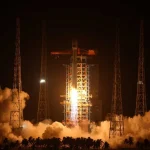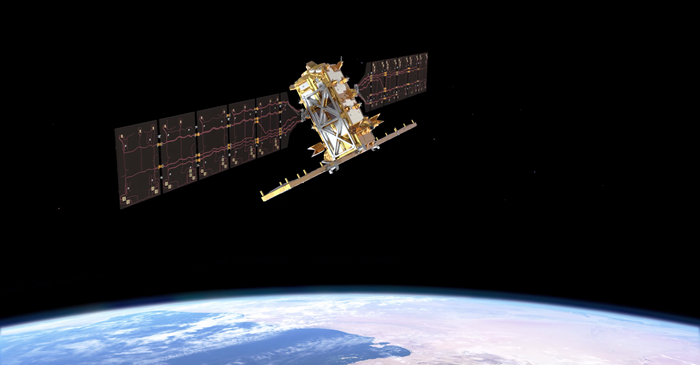
Beyond Gravity has announced its crucial technological role in the upcoming launch of the European environmental satellite, Sentinel-1D. Scheduled to lift off on November 4, 2025, aboard an Ariane 6 rocket from French Guiana, the satellite is a key component of the European Union’s Copernicus Earth observation program. The Sentinel-1D mission will provide radar imagery independent of weather conditions and daylight for monitoring land and oceans, supporting environmental management, disaster response, and climate change research.
“Understanding what’s happening on our planet—environmentally and from a global security perspective—is more critical than ever. The European Sentinel satellites deliver unparalleled Earth observation data, day and night, in all weather conditions. We’re proud that the newest Sentinel satellite, like its predecessors and successors, depends on our mission-critical components to help safeguard the future of our world”, says Oliver Grassmann, Executive Vice President Satellites at Beyond Gravity.
Headquartered in Zurich, Switzerland, Beyond Gravity is a leading provider for both established customers and New Space customers. The company also provided vital components to the Ariane 6 launch vehicle for which Ariane Group is the main contractor. For the satellite mission Sentinel-1D, Thales Alenia Space, a joint venture between Thales 67% and Leonardo 33%, is the main contractor.
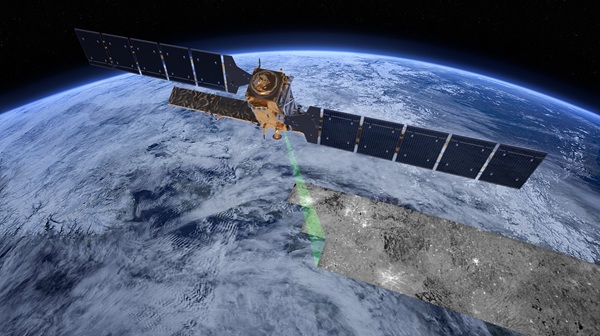
Beyond Gravity supplied several mission-critical products for both the satellite and the launch vehicle:
- Thermal Protection: A thermal insulation system from Beyond Gravity protects the environmental satellite, including its 12-meter-long radar antenna, from the extreme cold and heat in space. A multi-layer thermal insulation, consisting of several layers of ultra-thin special polyimide foils, will maintain the satellite’s instrument at the required operating temperature despite the extremely harsh thermal environment in space. The thermal insulation was designed and produced at Beyond Gravity’s sites in Austria. Nearly every European ESA satellite is protected by thermal insulation from Beyond Gravity.
- Satellite Structures: The main instrument of the satellite is its 12-meter-long synthetic aperture radar (SAR). Beyond Gravity provided the support structures for the 12-meter-long radar antenna. Both the primary structural elements of the SAR antenna and the antenna support structure, which provides the interface between the SAR and the satellite bus during launch, were designed and produced at the company’s site in Zurich, Switzerland. The advantage of radar is that it can image Earth’s surface through rain and cloud, regardless of whether it is day or night. This is particularly useful for monitoring areas prone to long periods of darkness – such as the Arctic – or providing imagery for emergency response during extreme weather conditions.
- Precision Navigation: The satellite’s position in space is determined to within centimeters using technology from Beyond Gravity’s site in Vienna, Austria. The more accurate the positioning, the more accurate the data provided by the satellite. The receiver can process both US GPS and European Galileo signals. The navigation receiver can also compute the new High Accuracy Service, which has been provided by Galileo satellites since 2023. Currently, Beyond Gravity’s navigation receivers determine the position of around 30 satellites in space.
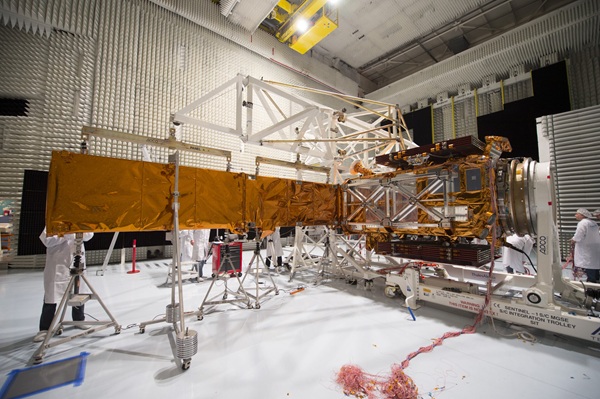
- Central parts of the radar payload: Beyond Gravity’s site in Gothenburg, Sweden, delivered important electronics for the payload of the satellite. The company designed and produced the uplink and downlink modules, the tile control unit, and the transmit module. Beyond Gravity also delivered central parts of the C-band synthetic aperture radar payload as well as the spacecraft’s TTC antenna (Telemetry, Tracking and Command). The satellite will fly at an altitude of around 700 kilometers.
- Payload fairing: The top of the Ariane 6 rocket, designed and assembled by ArianeGroup, consists of the payload fairing from Beyond Gravity, made of carbon fiber composite. The fairing has a diameter of 5.4 meters. Produced at the Beyond Gravity site in Emmen, Switzerland, the two halves of the payload fairing protect the satellite from the harsh forces experienced during launch and the early flight stages.

- Payload adapter: Beyond Gravity’s site in Linköping (Sweden) provided the payload adapter system for Europe’s heavy-lift launcher Ariane 6. The payload adapter system connects the satellite and launcher during liftoff, then precisely supports the release of the satellite into orbit once the proper altitude is reached.
- High-temperature insulation: In Austria, Beyond Gravity produced the high-temperature insulation for the rocket engines of the launcher’s lower and upper stages. On the journey from Earth to space, the Vulcain rocket engine, which is protected by the insulation, has to withstand the extreme heat of up to 1,500 degrees Celsius for several minutes. The high-temperature insulation for the upper stage of the Ariane 6 launcher (near the Vinci restartable engine) consists of glass fabric and polymer films.
- Gimbal Mechanism: For Ariane 6, the Austrian Beyond Gravity site is also supplying a gimbal mechanism for the upper stage of the rocket. The mechanism serves as a joint to align the engine for the thrust vector control of the rocket’s upper stage. The special mechanism, which weighs just ten kilograms, has to transmit the thrust forces of 15 tons, comparable to the force of a diesel locomotive.