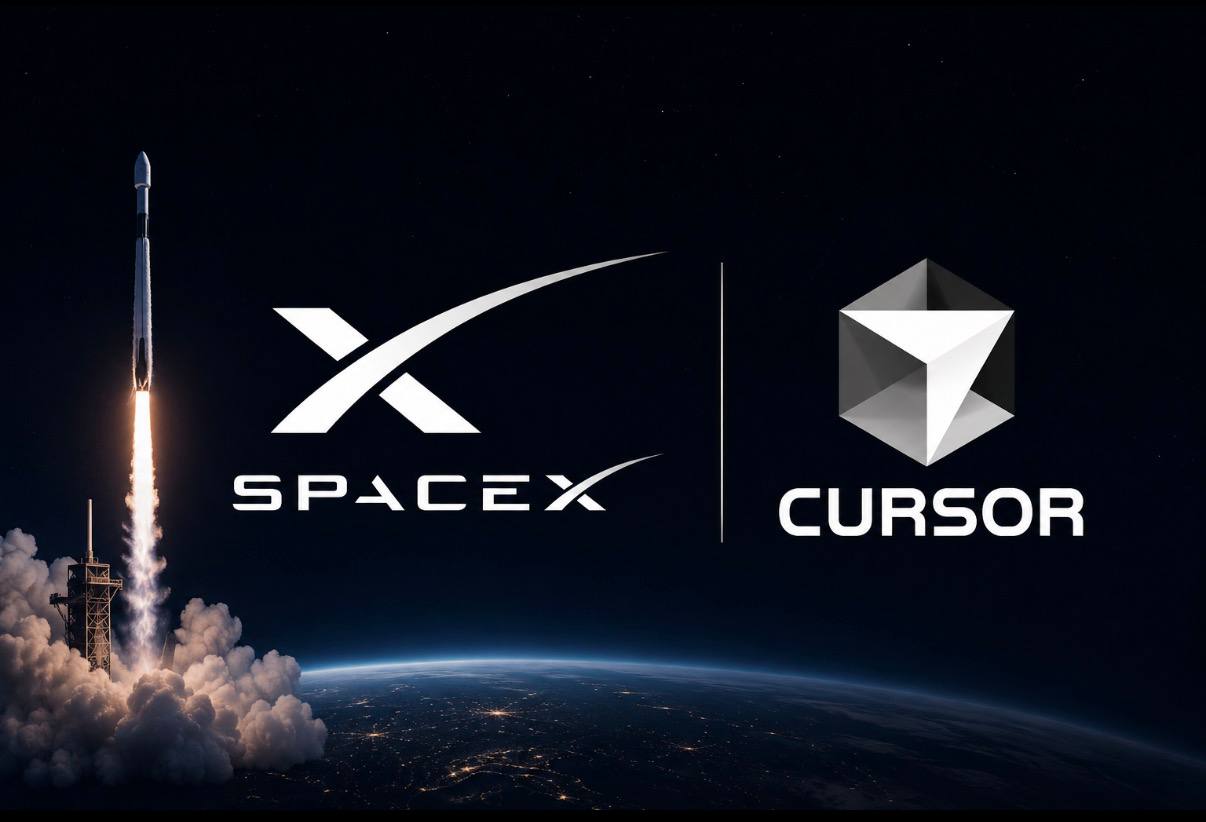
The acquisition is meant to strengthen SpaceX’s AI division, which was built around xAI, Elon Musk’s AI company that SpaceX merged with earlier this year. That division has been undergoing a restructuring after running into repeated hurdles and controversies.
Cursor, officially operated by Anysphere, Inc., was founded in 2022 and went through OpenAI’s startup accelerator in 2024. Before SpaceX came knocking, Cursor was reportedly on track to close a $2 billion funding round from backers including Andreessen Horowitz, Thrive, and Nvidia that would have valued the startup at $50 billion.
SpaceX’s interest surfaced earlier this year when xAI hired two of Cursor’s senior engineering leaders. In April, xAI rented out some of its data center capacity to Cursor, mirroring similar deals SpaceX later struck with Anthropic and Google ahead of its IPO. Also in April, SpaceX announced it would contractually either buy Cursor for $60 billion in stock or pay a $10 billion break-up fee if the deal fell through. SpaceX said Tuesday that the acquisition is likely to close in the third quarter of this year.
Within xAI, 11 of Musk’s co-founders and early team had left in March, and Musk publicly admitted the company “was not built right [the] first time around” and that he was rebuilding it “from the foundations up.” That followed controversies such as xAI’s Grok chatbot calling itself “MechaHitler” to users in 2025. SpaceX told investors in its IPO filings that such behavior is a risk to its business, and the company currently faces a number of legal challenges as a result.
SpaceX and its bankers pitched investors on a total addressable market of around $28 trillion with a large majority of it, $26 trillion, centered on AI. The company said it sees a potential $2.4 trillion AI infrastructure business, including plans to build a satellite constellation that handles AI compute, and a $22.7 trillion opportunity in enterprise applications. SpaceX is now leaning on Cursor to deliver on some of those promises. The acquisition signals that the company’s ambitions extend well beyond aerospace, and it raises questions about how SpaceX plans to use its fresh IPO capital and whether its core space business will remain the focus.
Since going public last Friday, SpaceX’s stock has risen from its IPO price of $135 per share to more than $200 per share in pre-market trading as of Tuesday morning, adding nearly $1 trillion to its valuation in a matter of days.
The deal is expected to close in the third quarter of this year.