NASA’s Jet Propulsion Laboratory (JPL), operated by Caltech in Pasadena, has led humanity’s robotic exploration of the solar system and beyond, managing missions to every planet, the Sun and interstellar space. With innovations spanning over eight decades, JPL continues to design and operate spacecraft that explore extreme environments and deliver groundbreaking science. As NASA’s only federally funded research and development center, JPL’s work began with the Explorer I satellite in 1958 and has since expanded to include landmark missions such as Voyager, Galileo, Cassini and Curiosity. Its spacecraft and instruments also play a vital role in monitoring Earth’s climate and natural systems, supporting global efforts in sustainability and disaster response.
JPL’s technological advancements have continually set new benchmarks in space exploration. From developing corrective optics for the Hubble Space Telescope to contributing one of the main science instruments on the James Webb Space Telescope, the lab’s innovations have enabled transformative discoveries. It was a JPL-engineered camera that captured the iconic “Pale Blue Dot” image from Voyager 1, and the lab’s sensor technologies laid the foundation for modern digital imaging used in everyday devices like smartphones. JPL also builds and manages NASA’s Deep Space Network, an essential communications link with spacecraft operating beyond the Moon.
Mission Portfolio and Capabilities
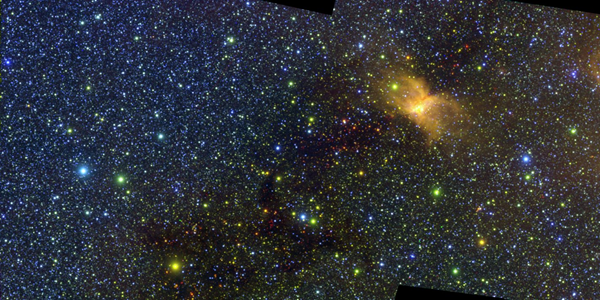
- SPHEREx: This infrared space observatory will conduct four complete sky surveys over two years, gathering data to explore cosmic inflation, the distribution of galaxies, and the nature of dark matter. By mapping the entire sky, SPHEREx will help answer fundamental questions about the universe’s origin and evolution.
- Voyager 1: Launched in 1977, Voyager 1 remains a trailblazer in interstellar exploration. Recently, JPL engineers successfully reactivated its backup thrusters, extending the mission’s life and enabling the spacecraft to continue transmitting data from beyond our solar system.
- PREFIRE: This CubeSat mission focuses on measuring thermal infrared radiation in the Arctic and Antarctic. By collecting data on how heat escapes from Earth’s polar regions, PREFIRE helps improve climate models and predictions.

- EMIT (Earth Surface Mineral Dust Source Investigation): Mounted on the International Space Station, EMIT uses imaging spectroscopy to map the composition of mineral dust around the globe. These insights are crucial to understanding dust’s influence on climate, air quality, and ecosystems.
- Europa Clipper: Launched in 2024, the mission orbited Jupiter and conducted multiple flybys of its icy moon Europa. It assessed the potential habitability of Europa’s subsurface ocean using advanced instruments to analyze the moon’s ice shell and thin atmosphere.
- NEO Surveyor: Positioned at the Sun-Earth L1 Lagrange point, this infrared space telescope successfully detected and cataloged numerous potentially hazardous near-Earth objects (NEOs). The mission played a vital role in strengthening NASA’s planetary defense capabilities.
- SWOT (Surface Water and Ocean Topography): This Earth-observing satellite successfully mapped global surface water and sea levels with unprecedented detail. Its data significantly enhanced understanding of ocean circulation, improved flood forecasting, and advanced climate change monitoring of freshwater systems.
These missions highlight JPL’s enduring commitment to scientific discovery from unlocking the secrets of the cosmos to monitoring Earth’s changing climate and protecting our planet from space-based threats. The lab’s commitment to sustainability and Earth science is evident in its airborne missions and Earth-orbiting satellites, which provide critical data for climate research, agriculture, disaster response, and resource management. With innovations in remote sensing and robotics, JPL continues to provide tools for humanity to understand and protect the Earth.

JPL is preparing missions to explore the interior of Venus, delve into the ocean beneath Europa’s icy shell, and develop advanced mapping technologies for Earth. In partnership with the European Space Agency (ESA), JPL is also spearheading efforts to return rock samples from Mars, a critical step in the quest to uncover signs of past microbial life. These missions not only push scientific boundaries but also pave the way for human exploration of Mars.
JPL’s diverse workforce of scientists, engineers, technologists, designers, and communicators fuels a legacy of innovation that has influenced both space exploration and everyday life. The lab engineered corrective optics for the Hubble Space Telescope, built one of the four cameras aboard the James Webb Space Telescope, and even pioneered the imaging sensors used in modern digital cameras and smartphones. Looking ahead, JPL is developing missions to explore Venus and Jupiter’s moon Europa, map Earth’s shifting surfaces, and return samples from Mars to search for signs of ancient life. From Earth to the farthest frontiers of the universe, JPL continues to lead the way in scientific advancement that benefits all of humanity.