
Tag: Launch
-

ISRO Successfully Launches X-ray Polarimeter Satellite Mission
ISRO’s PSLV-C58 launched the XPOSAT Satellite into an Eastward low inclination orbit on January 01, 2024, 09:10 Hrs IST. After injection of XPOSAT, the PS4 stage will be re-started twice to reduce the orbit into 350 km circular orbit to maintain in 3-axis stabilized mode for Orbital Platform (OP) experiments. The PSLV Orbital Experimental Module-3…
-

Key Infrared Telescopes that Set the Stage for NASA’s James Webb
On Dec. 25, NASA celebrated the two-year launch anniversary of the James Webb Space Telescope – the largest and most powerful space observatory in history. The clarity of its images has inspired the world, and scientists are just beginning to explore the scientific bounty it is returning. Webb’s success builds on four decades of space…
-
JAXA Announces Launch Schedule of Second H3 Launch Vehicle
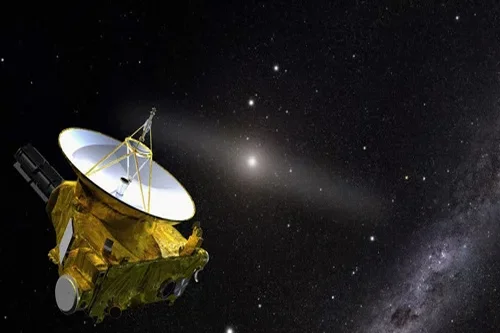
The Japan Aerospace Exploration Agency (JAXA) has announced the launch schedule of the second H3 Launch Vehicle (H3TF2: Test Flight No.2. The H3TF2 will carry the Vehicle Evaluation Payload-4 (VEP-4) to conduct the flight demonstration. In addition, we will capitalize on the excess launch capability of the H3TF2 by providing launch and orbit insertion opportunities…
-
SpaceX Falcon Heavy Rocket Successfully Deploys U.S. Military Spaceplane
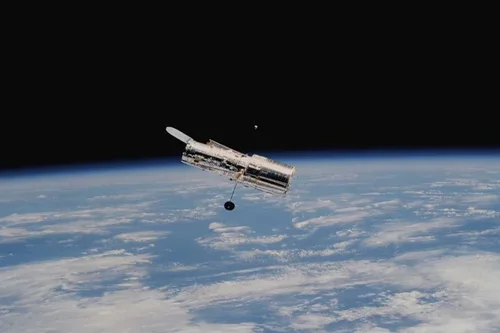
A SpaceX Falcon Heavy launched the USSF-52 mission to orbit from Launch Complex 39A (LC-39A) at Kennedy Space Center in Florida on December 28 at 8:07 p.m. ET. This was the fifth launch and landing of these Falcon Heavy side boosters, which previously supported USSF-44, USSF-67, Hughes JUPTER 3, and NASA’s Psyche mission. X-37B Mission…
-

NASA Sets Coverage for ULA and Astrobotic’s Robotic Moon Launch
As part of NASA’s CLPS (Commercial Lunar Payload Services) initiative and Artemis program, United Launch Alliance (ULA) and Astrobotic are targeting 2:18 a.m. EST, Jan. 8, for the first commercial robotic launch to the Moon’s surface. Carrying NASA science, the liftoff of ULA’s Vulcan rocket and Astrobotic’s Peregrine lunar lander will happen from Launch Complex…
-

Sidus Space Looks Toward 2024 Launch After Milestone Success in 2023
Sidus Space, a multi-faceted space and data-as-a-service company concludes 2023 with remarkable achievements, laying the groundwork for an eagerly anticipated launch in Q1 2024. 2023: A Pivotal Year for Sidus Space “2023 was a pivotal year for Sidus Space. We accomplished significant milestones, preparing for the launch of LizzieSat, a testament to our commitment to…
-
Qualcomm Developed Select Chipset Platforms Compatible with ISRO’s NavIC L1 Signals
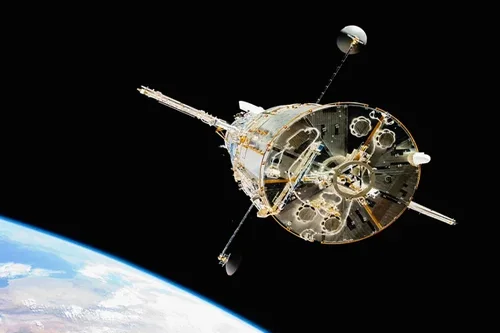
Qualcomm Technologies, in partnership with the Indian Space Research Organisation (ISRO), has developed and tested select chipset platforms that support NavIC L1 signals. The initiative will help accelerate the adoption of NavIC and enhance the geo-location capabilities of mobile, automotive and the Internet of Things (IoT) solutions in the region. Speaking about the development,…
-

NASA’s Juno Spacecraft to Get Close Look at Jupiter’s Volcanic Moon Io on Dec 30
NASA’s Juno spacecraft will make the closest flyby of Jupiter’s moon Io, that any spacecraft has made in over 20 years, on Saturday, Dec. 30. Coming within roughly 930 miles (1,500 kilometers) from the surface of the most volcanic world in our solar system, the pass is expected to allow Juno instruments to generate a…
-

JAXA’s Smart Lander for Investigating Moon Successfully Enters Lunar Orbit
The Japan Aerospace Exploration Agency (JAXA) has announced that the Smart Lander for Investigating Moon (SLIM) was successfully inserted into lunar orbit at 16:51 (Japan Standard Time, JST) on December 25, 2023. The lunar orbit of SLIM will be inserted into an elliptical lunar orbit connecting the Moon’s north and south poles with a period…
-

ESA Introduces Pinhole Propulsion for Satellites
ESA has introduced a palm-size pinhole propulsion for satellites. This option for future space missions: each one of these seven emitter arrays etched onto this silicon wafer using micro- and nano-technology possesses more than 500 pinhole-sized emitters that spray out ions, accelerated via an electrostatic field to maximise thrust. Inherently scalable, this ‘electrospray’ technology is…