
Tag: LEO
-

A Million Satellites Could Create a Visible Ring Around Earth
Will Orbital Data Centers Create a Permanent Artificial Ring Around Earth? More than a million data center satellites and 50,000 space mirrors, if launched as currently proposed, would concentrate into a single orbital plane visible as a luminous band spanning the entire sky — brighter than any star or planet, and according to researchers, potentially…
-
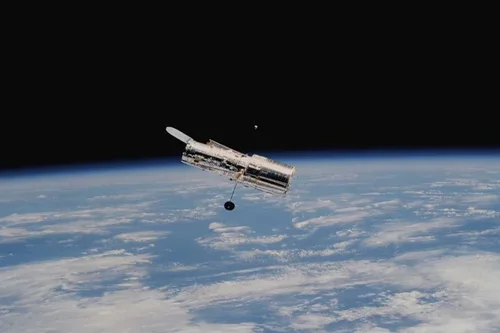
Unseenlabs Advances Space-Based RF Detection for Maritime Surveillance and Intelligence
Unseenlabs has developed a space-based radio frequency (RF) detection technology that enables the detection, geolocation and characterization of vessels at sea by capturing the electromagnetic signals emitted from onboard communication and navigation equipment. Unlike conventional maritime tracking systems that rely on vessel-reported information, the company’s passive RF technology provides independent intelligence, helping identify and monitor vessels operating…
-
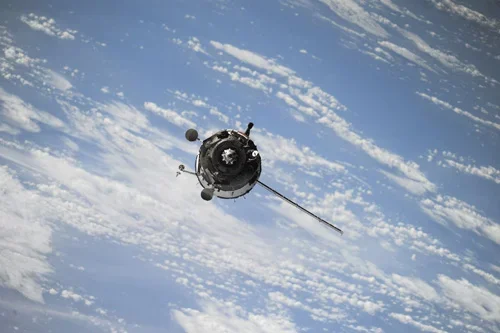
Soyuz MS-29 Docks at ISS With NASA Astronaut Menon
Did Soyuz MS-29 Successfully Dock at the ISS With a NASA Astronaut Aboard? Three hours and five minutes. That was the elapsed time from liftoff at Baikonur to docking at the International Space Station for Soyuz MS-29 on July 14, 2026 — a textbook fast-rendezvous profile that deposited NASA astronaut Anil Menon and Roscosmos cosmonauts…
-

Reflect Orbital Clears FCC for First Space Mirror Launch
Is Reflect Orbital’s Space Mirror Constellation Legal to Launch? California-based startup Reflect Orbital has received a license from the U.S. Federal Communications Commission (FCC) to launch and operate its first demonstration satellite, Eärendil-1 — a spacecraft designed to unfurl a reflective surface measuring approximately 18 meters (60 feet) on a side. The license, announced July…
-

Pulse Space Advances Laser-Based Orbital Power Solutions
Pulse Space is developing a laser-based space power infrastructure designed to provide remote, on-demand power for satellites operating in low Earth orbit (LEO). As satellite deployments continue to grow and onboard solar arrays and batteries face increasing power limitations, the company aims to build what it describes as the “power grid for space,” enabling energy…
-

SDA Awards L3Harris $955M, Sierra Space $798M for Tranche 3
Does the SDA’s $1.75B Tranche 3 Award Signal Accelerating Proliferated Warfighter Space Architecture Buildout? The Space Development Agency has committed $1.75 billion to two contractors for Tranche 3 of its Tracking Layer: L3Harris Technologies receives $955 million and Sierra Space receives $798 million, both under fixed-price Other Transaction Authority (OTA) rapid prototyping contracts. The contracts…
-

D-Orbit Signs Multi-Launch Contract with ArkEdge Space
D-Orbit, a space logistics and transportation company, has announced that it has signed a launch services contract with ArkEdge Space, a Japanese satellite systems integrator of micro-satellite systems, to deliver a series of launches aboard D-Orbit’s ION Satellite Carrier. Under the agreement, D-Orbit will provide its ION launch service across multiple missions, integrating ArkEdge Space’s…
-
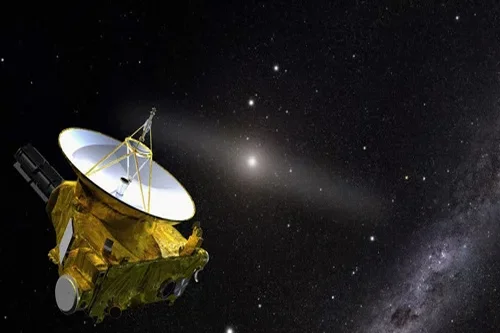
Starship Flight 13 Carries 20 Starlink V3 Sats July 16
Does Starship Flight 13 Carry Its First Real Payload? Yes — and it matters. SpaceX has confirmed Starship Flight 13 is targeting liftoff from Starbase, Texas, as early as Thursday, July 16, carrying 20 Starlink V3 satellites: the vehicle’s first operational payload in 13 flights of developmental testing. For the first time, the world’s most…
-
Falcon 9 Booster Hits 35 Flights, 12,472 Starlinks Launched
Is a 35-Flight Falcon 9 Booster the New Normal for Launch Economics? A single Falcon 9 first stage flew its 35th mission on July 10, 2026, deploying 29 Starlink satellites to low Earth orbit and landing intact for future reuse. The flight is the highest confirmed reuse count in the Falcon 9 fleet to date,…
-
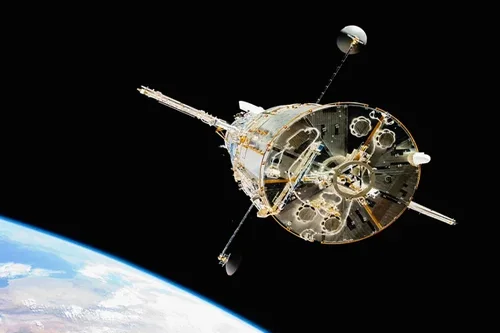
China’s Long March 10B Nails First Net Catch at Sea
Is China’s Net-Catch Booster Recovery a Viable Third Architecture? China’s state-owned China Aerospace Science and Technology Corporation (CASC) recovered an orbital-class booster for the first time on July 11, 2026, catching the Long March 10B first stage in a tensioned cable net mounted to an offshore vessel — a recovery method distinct from both SpaceX’s…