
Tag: Thrusters
-

Ursa Major’s Hadley Engine Powers Talon-A2 to Sustained Hypersonic Speeds with Recovery
Ursa Major‘s Hadley liquid rocket engine designed for commercial space and national security needs, successfully achieved sustained hypersonic speeds during two separate tests conducted since late 2024. Both test flights exceeded flight and power objectives for Stratolaunch’s Talon-A2 (TA-2) testbed and also featured the successful recovery of the hypersonic testbed vehicle post-landing for re-use. “With…
-
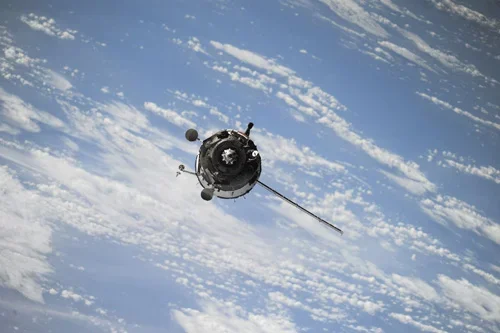
ThrustMe: Pioneering Sustainable In-Orbit Propulsion with Iodine Innovation
ThrustMe is a trailblazer in the field of advanced in-orbit propulsion systems, Founded in 2017 and headquartered in Verrières-le-Buisson, France. The company specializes in developing innovative propulsion solutions for satellites, with a strong emphasis on sustainability and efficiency. ThrustMe’s core mission is to revolutionize space mobility by providing reliable and eco-friendly propulsion technologies. Collaborations with…
-
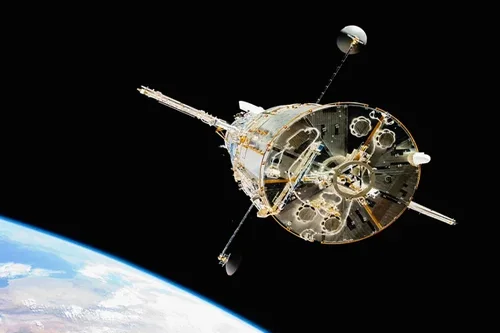
NASA’s Artemis Lunar Space Station Module Enters Final Outfitting Phase
NASA continues to mark progress on plans to work with commercial and international partners as part of the Gateway program. The primary structure of HALO (Habitation and Logistics Outpost) arrived at Northrop Grumman’s facility in Gilbert, Arizona, where it will undergo final outfitting and verification testing. HALO will provide Artemis astronauts with space to live,…
-

Impulse Space: Revolutionizing In-Space Transportation and Logistics
Impulse Space, founded in 2021 by Tom Mueller, is headquartered in Redondo Beach, California. The company is a trailblazer in the field of in-space transportation and logistics, with a mission to accelerate humanity’s future in space. Specializing in orbital transfer vehicles (OTVs) and propulsion systems, Impulse Space provides efficient payload delivery and hosting services across…
-

Safran DSI Opens New Colorado Facility to Produce US-Made Electric Propulsion Systems
Joe Bogosian, CEO of Safran Defense & Space, Inc. (Safran DSI), and Pier Roviera, President of Space Solutions at Safran DSI, inaugurated the company’s new manufacturing facility in Parker, Colorado, on April 11. “We are very proud to welcome Safran to Colorado, where the space industry is making great strides forward,” said Jared Polis, Governor…
-

Intelsat Concludes Satellite Life-Extension Mission, Makes Space History
Intelsat, operator of one of the world’s largest integrated satellite and terrestrial networks, became the first and only satellite operator to complete a life-extension mission adding five years of valuable service to the Intelsat 901 (IS-901) satellite and its many customers, providing extended reliable and global connectivity. “The MEV mission proved that in-orbit servicing enhances…
-
Momentus Space: Powering In-Space Transportation and Infrastructure Services
Founded in 2017, Momentus Space is a U.S. commercial space company headquartered in San Jose, California. The company’s core mission is to offer in-space infrastructure services, including satellite buses, in-space transportation, hosted payloads, and other in-orbit services. Momentus focuses on providing cost-effective solutions for satellite deployment and orbital transfer, utilizing its proprietary Vigoride Orbital Service…
-

Dawn Aerospace Advances the Future of Sustainable Space Propulsion and Launch Systems
Dawn Aerospace is a pioneering space technology company founded in 2017, headquartered in New Zealand and the Netherlands. The company focuses on developing green in-space propulsion systems, reusable spaceplanes, and satellite services to enable sustainable and scalable access to space. With a mission to revolutionize space transportation through environmental responsibility and economic efficiency, Dawn Aerospace…
-

Firefly Aerospace Secures DoD Contract for Elytra Space Maneuver Mission in 2027
Firefly Aerospace, the leader in end-to-end responsive space services, announced it was awarded a contract to perform a responsive on-orbit mission with its Elytra spacecraft in support of the U.S. Department of Defense’s (DoD) Defense Innovation Unit (DIU) Sinequone Project. During the DoD mission, Elytra will serve as a space maneuver vehicle to perform a…
-
Ursa Major Redefines Rocket Propulsion for Next Generation Space and Defense Innovation
Ursa Major, the leading independent rocket propulsion provider and a critical player in building the defense industrial base in the United States, is powering the future of defense and aerospace with advanced propulsion systems that span national security domains, hypersonics, and space. Optimized for speed, cost, and reliability, Ursa Major provides propulsion for critical missions…