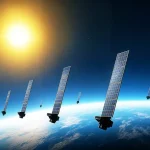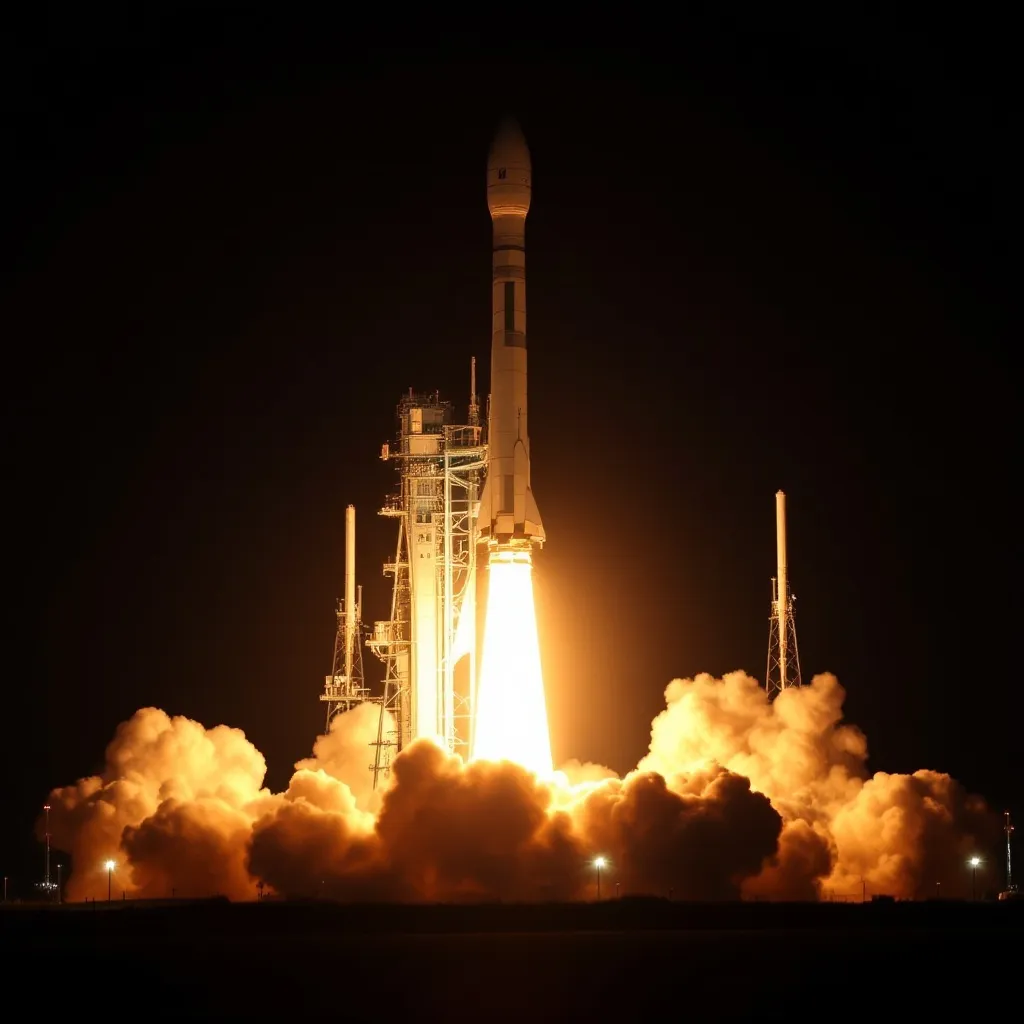
The Atlas 5 Amazon Leo 8 mission, also designated Leo Atlas 8, lifted off from Space Launch Complex 41 at 12:30:15 a.m. EDT, flying a north-easterly trajectory. ULA confirmed deployment of all 29 satellites at 1:30 a.m. EDT. The launch supported Amazon’s broadband internet constellation, which relies on multiple launch providers.
The 551 designation denotes the five-meter fairing, five solid rocket boosters, and single Centaur upper stage engine. There have been 22 Atlas 5 551 launches to date, the first supporting NASA’s New Horizons mission to Pluto on Jan. 19, 2006. The rocket, designated AV-114 by ULA, was the 110th Atlas 5 launched.
The 205-foot-tall rocket rolled from the Vertical Integration Facility, Government to the pad Wednesday, riding atop the Mobile Launch Platform down a set of train tracks about a third of a mile away. The MLP was lowered onto the launch pad piers at 11:11 a.m. EDT, establishing “hard down” status. ULA began loading the booster with RP-1 kerosene at about 2:30 p.m. EDT, completing the process an hour later. The 45th Weather Squadron forecast an 85 percent chance of favorable weather during the 29-minute launch window.
“Atlas 5 has played a critical role in the early deployment phase for Amazon Leo, launching 224 satellites with a 100 percent success rate across all eight missions, and we’re excited to build on that foundation with ULA as we transition to Vulcan,” said Melissa Wuerl, Amazon Leo Director of Launch Systems. She cited hundreds of flight-ready satellites at the Cape and a new dedicated vertical integration facility ready to support Leo Vulcan 1 and subsequent missions.
Following Thursday’s launch, six Atlas 5 rockets remain, all reserved to fly Boeing’s CST-100 Starliner spacecraft. Those vehicles fly in the N22 configuration, the only variant featuring a dual-engine Centaur upper stage. After the 2024 Crew Flight Test of Starliner experienced several issues resulting in NASA declaring a Type A mishap, the cargo-only Starliner-1 launch date is in question.
Amazon Leo’s constellation is launched using a variety of providers. It has flown three missions each with Arianespace and SpaceX, using their Ariane 6 and Falcon 9 rockets respectively. The company also purchased 38 launches with ULA’s Vulcan rockets and 27 with Blue Origin’s New Glenn rockets, though both vehicles remain grounded pending their own anomaly investigations. After this launch, there are 396 Amazon Leo satellites in low Earth orbit.
According to statements from Amazon Leo, the milestone advances the company’s plan to expand network coverage following an initial service rollout later this year. Steven Metayer, vice president of Production Operations at Amazon Leo, said the first Vulcan flight of Amazon Leo satellites is expected sometime in the third quarter of 2026. The company aims to roll out early commercial service by the end of the year but has not stated how many satellites will be needed to begin.
Metayer said one more Ariane 6 launch will support the constellation this year, though he did not specify when. ULA stacked its Vulcan rocket inside its new VIF-A hangar and plans to conduct a wet dress rehearsal tanking test following the LA-08 launch.