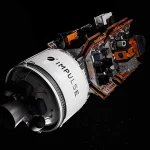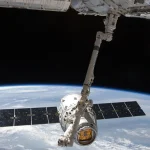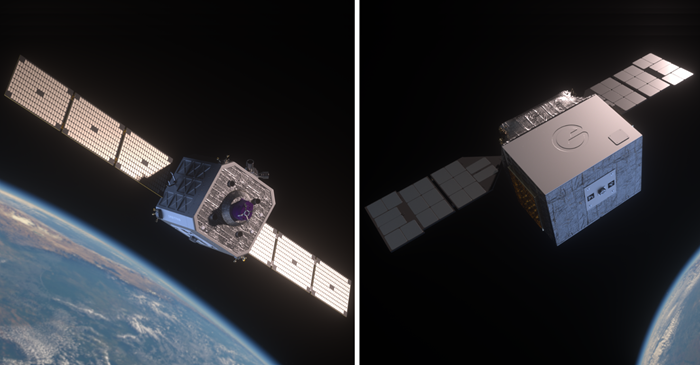
Orbit Fab unveiled a new in-space refueling architecture centered on two vehicles: RAVEN, a refueling shuttle, and NEST, a fuel depot. RAVEN and NEST work in tandem to create an on-orbit fuel network that supports more maneuverable, responsive satellite operations. By positioning fuel in orbit and delivering it to spacecraft when and where it is needed, Orbit Fab aims to enable missions to refuel multiple times across a range of operational scenarios.
RAVEN is designed to serve as the mobile element of the system, transporting fuel to client spacecraft. With capacity for 150 to 200 kilograms of propellant, the vehicle can dock directly with satellites equipped with Orbit Fab’s RAFTI refueling interface. That capability is enabled by the company’s GRIP active interface, which combines rendezvous, proximity operations and docking, precision propulsion, grappling and fluid transfer.
NEST is designed to function as an on-orbit fuel depot, storing larger quantities of propellant and resupplying RAVEN for follow-on servicing missions. Deployed in numbers, NEST depots would form a distributed network of fuel nodes to support responsive refueling across multiple missions and orbital regimes.
Orbit Fab is building the system to support a future in which spacecraft can maneuver more dynamically and sustain operations longer through on-orbit refueling. The company plans to launch the first RAVEN and NEST vehicles in 2030, with additional systems to follow.
“This is about building the logistics backbone for dynamic operations in space,” said Peter Shaper, CEO of Orbit Fab. “RAVEN and NEST are a major step toward making on-orbit refueling routine, unlocking the maneuverability, endurance and operational flexibility that will define strategic advantage in space.”