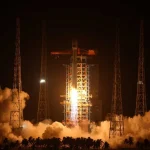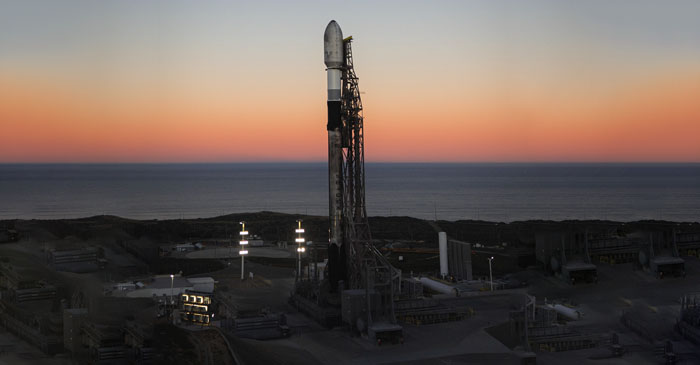
SpaceX has successfully launched its Transporter-15 mission aboard a Falcon 9 rocket from Space Launch Complex 4E at Vandenberg Space Force Base. The 57-minute launch window opened at 10:18 a.m. PT, marking another milestone in SpaceX’s small-satellite rideshare program.
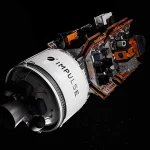
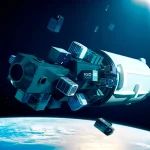
The mission carried 140 payloads, including cubesats, microsats, hosted payloads, and orbital transfer vehicles that will later deploy 13 additional satellites. This makes Transporter-15 one of the most diverse and complex commercial satellite deployments to date.
The first-stage booster—making its 30th flight—had previously supported missions such as NROL-87, SWOT, Transporter-8 and -9, and 18 Starlink launches. Following stage separation, it successfully landed on the Of Course I Still Love You droneship in the Pacific Ocean.
Residents along California’s Central Coast, including Santa Barbara, San Luis Obispo, and Ventura counties, may have heard sonic booms from the launch, depending on local weather conditions.
Among the 140 satellites were payloads from Exolaunch, Planet Labs, OHB Italia, NASA’s CubeSat Launch Initiative, and numerous commercial operators worldwide. The precise sequence of deployments took place over several hours, culminating with the final payload—NASA’s Realizing Rapid, Reduced-Cost High-Risk Research (R5) satellite—deploying roughly 2 hours and 43 minutes after liftoff.
This latest rideshare continues SpaceX’s mission to democratize access to space, offering low-cost orbital opportunities to governments, startups, and research organizations worldwide.
Countdown
The Transporter-15 countdown progressed with precision as SpaceX teams verified every stage of rocket preparation. About 38 minutes before liftoff, the launch director gave the “go” for propellant loading, and both RP-1 kerosene and liquid oxygen began flowing into Falcon 9’s tanks. Sixteen minutes ahead of launch, second-stage fueling started, followed by engine chill-down seven minutes later to thermally condition the nine Merlin engines. In the final minute, the flight computers conducted pre-launch checks, tanks were pressurized to flight levels, and ignition commands were issued. At exactly 10:18 a.m. PT, Falcon 9 roared off the pad from Vandenberg Space Force Base, beginning another precise orbital delivery.
Launch, Landing, and Deployment
Following liftoff, the rocket passed through Max Q just over a minute into flight, then achieved main-engine cutoff at two and a half minutes before separating its stages. The second-stage engine ignited to push the 140-satellite payload toward orbit while the first stage returned to Earth, performing a controlled descent and a smooth touchdown on the droneship Of Course I Still Love You in the Pacific Ocean. After reaching a stable orbit, the upper stage executed several burns over the next two hours to align with its target trajectory. Satellite deployments began roughly 55 minutes after liftoff and continued sequentially until the final payload—the NASA R5 CubeSat—was released around two hours and forty-three minutes into the mission, marking full success for SpaceX’s fifteenth rideshare flight.