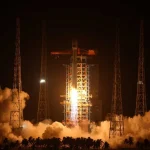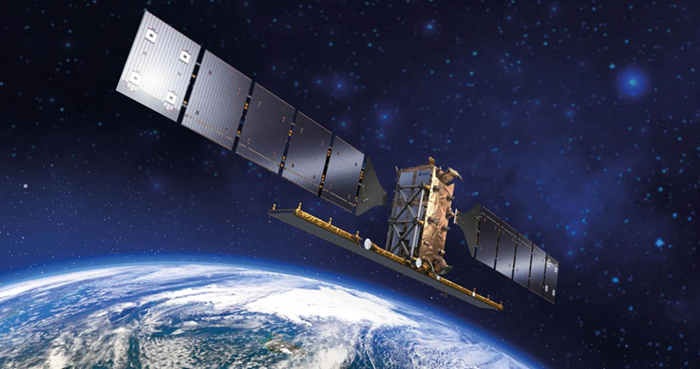
The Copernicus Sentinel-1D Earth observation satellite, built by prime contractor Thales Alenia Space, the joint company between Thales (67%) and Leonardo (33%), was successfully launched by Arianespace with an Ariane 6 rocket from Europe’s spaceport in French Guiana. Sentinel-1D is part of Copernicus, the Earth Observation component of the European Union’s Space Programme. This program is managed by the European Commission and co-funded by the European Union and the European Space Agency.
With Sentinel-1D now successfully launched, the Sentinel-1 family is complete. As the final satellite in the first Copernicus constellation, Sentinel-1D will ensure continuity and enhance the missions in orbit, extending system operations for at least the next seven years and beyond. The satellite captures images of Earth’s surface — day and night, in all weathers — for a wide range of applications to help protect our planet. This crucial data will be used to monitor landslides, earthquake zones, volcanic activity and variations in polar ice cover. They will also provide valuable insights for monitoring deforestation, the use of water resources and supporting emergency responders and search and rescue teams in the event of natural disasters.
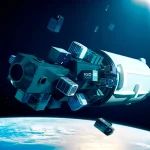
Sentinel-1D, like Sentinel-1C, carries an Automatic Identification System (AIS) payload to enhance maritime safety — improving traffic management, preventing collisions and monitoring vessels in sensitive areas. It also introduces a world-first: a patented mechanism that separates the radar antenna from the spacecraft bus during end-of-life reentry, helping reduce orbital debris.
“I’m particularly proud of this successful launch — now the Sentinel-1 family is complete,” said Giampiero di Paolo, Deputy CEO and Senior Vice President Observation, Exploration and Navigation at Thales Alenia Space. “Our long-standing recognized expertise in developing radar-based Earth observation satellites is once again in orbit”.
“Over the years, our company has proven it has the capabilities required to meet this program’s technological challenges, fully aligned with Europe’s environmental policy goals and marking a new phase in our collaboration with the European Commission and ESA” Thales Alenia Space CEO Hervé Derrey said.