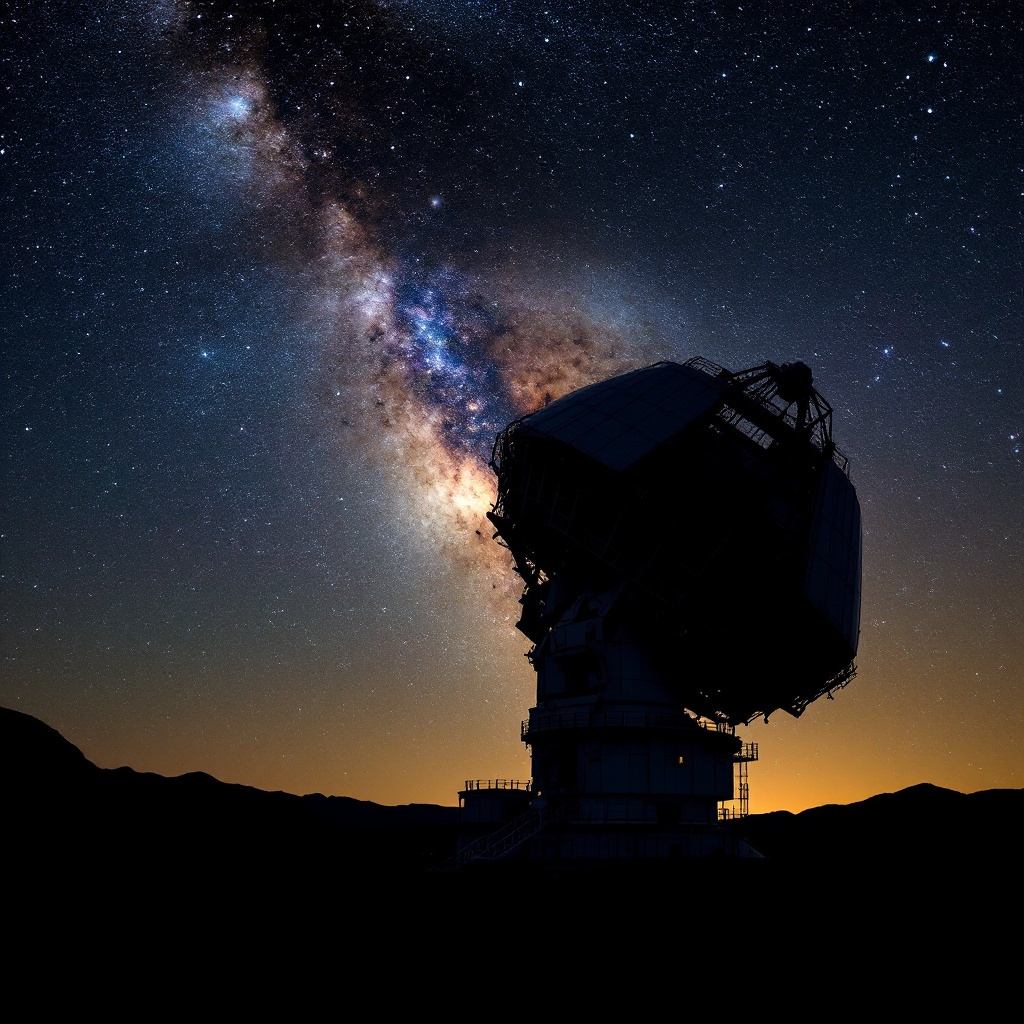
The launch follows a first public look at the observatory’s capabilities last June, when images of deep-space galaxies and a video of thousands of never-before-seen asteroids drew wide attention. Commissioning is now complete, and the observatory has moved into full survey operations.
Every night for the next decade, Rubin will rapidly scan the sky using the world’s largest digital camera, a 3.2-gigapixel instrument, imaging the entire visible southern sky every few nights. Brian Stone, the National Science Foundation director, marked the start of operations with a statement: “Today, we begin filming the greatest cosmic movie ever made.” The observatory acquires about 10 terabytes of data per night, and each time it detects a change in the sky, whether a supernova erupting or an asteroid crossing the background stars, it issues an alert. According to NOIRLab, the system may produce as many as 7 million alerts in a single night.
After 10 years, astronomers expect a final dataset of billions of objects with trillions of measurements, available to both scientists and the public. To coincide with the survey’s start, NOIRLab released a new image, Rubin’s Oceans of Stars Field, showing a dense field of stars in the region of the constellations Lupus the Wolf and Centaurus the Centaur. The observatory will also build a multicolor map of the universe using various color filters, combining repeated recordings to reveal sharper, more detailed views by gathering more light.
Darío Gil of the U.S. Department of Energy said the survey will reveal insights into the cosmos from the solar system to the structure of the universe. “By seeking to understand the enigmatic phenomena of dark energy and dark matter, we are not just observing the stars,” Gil said. “We are striving to grasp the fundamental laws that govern our existence.”
Over the coming decade, the observatory will continue its nightly scans, building its timelapse record of the universe and feeding its real-time alert system as it detects transient events and moving objects across the southern sky.