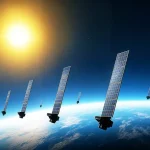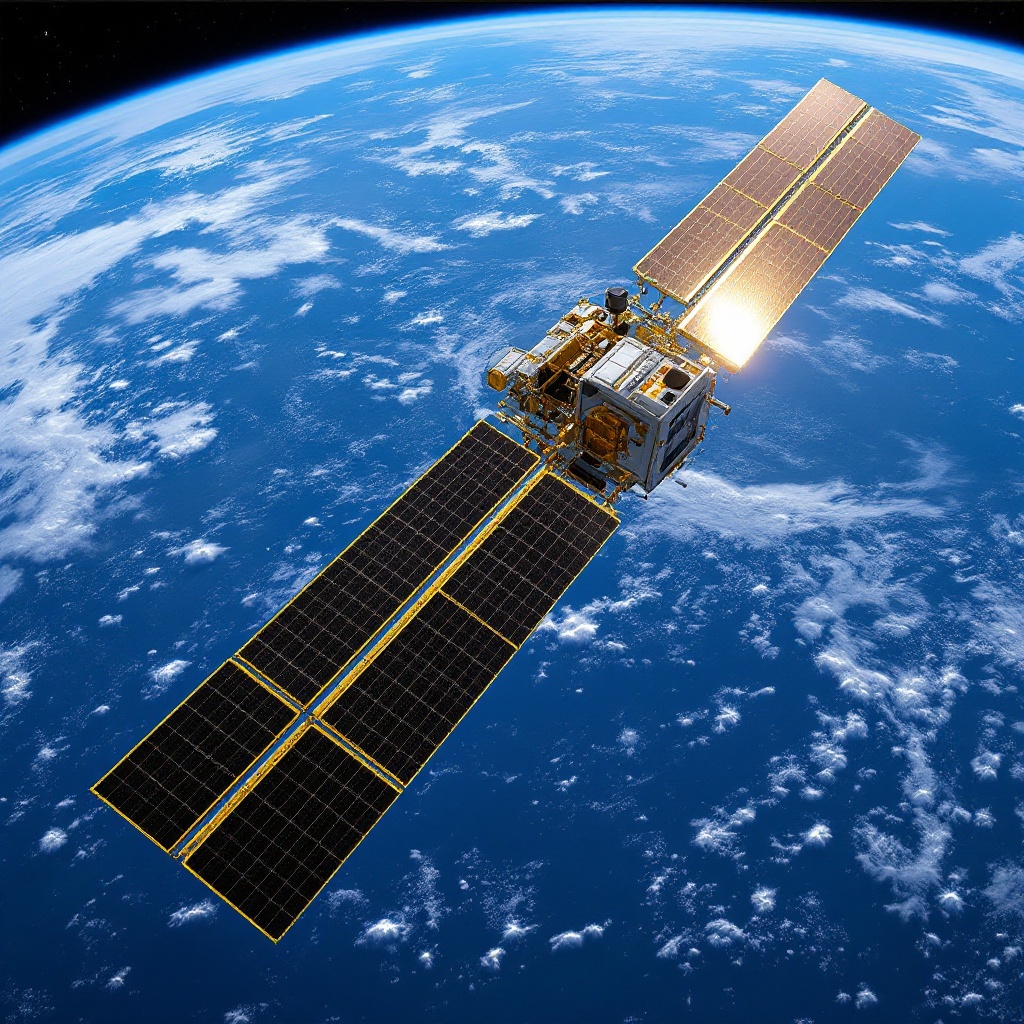
The plans call for 100-kilowatt-class satellites in low Earth orbit at altitudes of 500 to 850 kilometers, with solar arrays and radiators spanning around 100 meters and a dry mass of 1.5 to 2.5 metric tons. Similar to orbital data center plans filed earlier this year by Starcloud and Cowboy Space, Orbital said the primary data path for its Orbital Datacenter System would rely on optical intersatellite links with third-party constellations, such as SpaceX’s Starlink.
CEO and founder Euwyn Poon, an electric scooter entrepreneur who founded micromobility company Spin and later sold it to Ford, described the filing as a first regulatory step as the company finalizes satellite design. The demonstrating payload will be a heavily scaled down version of the operational concept built around a single GPU, perhaps one one hundredth the size. Poon said the venture aims to design Orbital-1, its first purpose-built orbital compute satellite slated for 2028, to be as close to the 100-kilowatt-class operational spacecraft as possible, though the full constellation would likely not deploy until well into the next decade.
Performance could increase as the design is finalized. Poon noted that Starcloud targets 200 kilowatts for satellites in its proposed 88,000-strong constellation, while SpaceX has outlined 150-kilowatt-class orbital data centers after filing plans for up to a million of them. Blue Origin and others are also pursuing similar constellations as terrestrial data centers face mounting power, cooling and land constraints. Poon’s current team of six brings expertise from SpaceX, Amazon and Northrop Grumman, and he cites 10 years of manufacturing experience.
Poon framed the moment as the time to coordinate how large orbital systems will coexist. He drew on his micromobility background, where multiple companies tried to build out large fleets and faced questions of how to sort out shared infrastructure. The same question, he said, now applies to managing constellations in space. He described an orbital data center as a relatively simple system at its core compared with a communications network like Starlink, which requires more complex antennas and networking payloads. The hard part, he said, is launch, with Orbital and others waiting on SpaceX’s Starship to carry their constellations to orbit. The rest, he said, comes down to first principles physics and manufacturing, including solar panels, radiators and electronics, with the added challenge of operating in vacuum and shielding against radiation.
Poon argued that manufacturing is a distinct skill in this market, since satellites have traditionally been bespoke, one-of-one builds. He compared the challenge to lessons from Spin, where adding swappable batteries to later scooter generations simplified operations and improved profitability. Orbital could see similar gains across successive generations of compute spacecraft, where small design changes could have outsized effects when scaled across a 100,000-satellite constellation.
Orbital is designing the core satellite platform in-house from Los Angeles. Poon said the venture is also looking to work with manufacturing partners and is exploring broader collaboration opportunities, with the demonstration mission planned for next year and Orbital-1 slated for 2028.