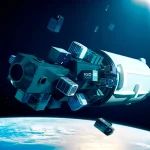
As part of the ESA’s MIRROR project, GMV has crafted and rigorously tested a next-generation robotic platform. This autonomous robot boasts three arms, a key feature that enables it to manipulate and assemble structural modules while traversing the structure it is constructing. The versatility of its three arms allows the robot to move, transport modules, receive power, communicate, and even use assembly tools with precision.
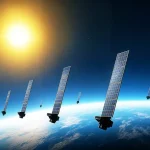
MIRROR’s diverse capabilities have garnered significant interest from leading space agencies and the aerospace industry. It opens up new possibilities previously deemed unattainable, such as generating electricity in orbit through photovoltaic solar panels for terrestrial use. If built, these orbiting stations, roughly one kilometer in size, promise continuous electricity production transmitted to Earth via microwave technology.
Another compelling application involves large-scale telescopes for cosmic research. Scaling up to sizes of tens of meters, these observatories could revolutionize our understanding of the universe, touts the company. Additionally, GMV’s robot hopes to pave the way for extensive orbital platforms where telecommunications operators can efficiently install and maintain their equipment.
Join our Discord Server: Join the community with forums and chatrooms about space!
The MIRROR project’s initial phase defined key features of the structure to be assembled, functional requirements, operational criteria, and testing parameters. Collaborating with companies like Italy’s Leonardo, GMV designed the MIRROR robot to meet these specifications, with a particular emphasis on mobility, module transportation, and assembly precision. Substantial advancements were made across all subsystems, including actuators, power systems, and grippers.
GMV’s development efforts also extended to an advanced semi-autonomous control subsystem, designed to automate the assembly process, even in the face of uncertainties and potential failures. Simulations, including models of the structure to be assembled, were conducted for testing purposes, alongside a versatile control center enabling various levels of autonomy.
Presently, GMV has successfully concluded validation tests using the demonstrator in its robotic laboratory. These tests have confirmed the concept’s viability and set the stage for the next phase, where operations would be demonstrated in Earth’s orbit.
In addition to the MIRROR project, GMV is leading other pioneering space robotics initiatives in collaboration with ESA and the European Commission. These projects encompass the European Moon Rover System, RAPID, and the development of the operating system for space robot control (ESROCOS project) and autonomy or artificial intelligence systems (ERGO project).