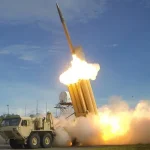
SpaceX has launched the National Reconnaissance Office Launch (NROL)-87 mission on their third dedicated mission for the National Reconnaissance Office (NRO). NROL-87 launched on top of a brand-new SpaceX Falcon 9 from Space Launch Complex-4 East (SLC-4E) at Vandenberg Space Force Base (VSFB) in California. Liftoff occurred on February 2 at 12:27 PM PST (20:27 UTC).
NROL-87 is the second of three missions planned for launch this week. After launching the CSG-2 mission from SLC-40 at Cape Canaveral Monday evening, NROL-87 precedes the Starlink Group 4-7 mission from LC-39A, launching no earlier than Thursday.
This mission was SpaceX’s fifth overall launch of the year and the first from Vandenberg. The flight utilized a brand-new booster, B1071, marking the first new booster to launch in 2022.
Payload and rocket overview:
With five flights already under SpaceX’s belt, 2022 is set to be a record year in terms of the number of flights for the company. A large part of SpaceX’s ability to launch quickly is reusing the first stage boosters. On this particular mission, a new booster, B1071 took its first flight.
B1071 was first spotted vertically at the first stage test stand at SpaceX’s McGregor testing facility. Sporting a temporary white interstage, B1071 completed its test campaign, which included a long-duration static fire test. The booster was then shipped west to SLC-4E at VSFB.
Aerospace industry analysis
(adsbygoogle = window.adsbygoogle || []).push({});
SLC-4 is Falcon 9’s launch and landing site at VSFB. The entire complex is composed of two launch sites: SLC-4E (East) and SLC-4W (West). SLC-4E is used as Falcon 9’s launch site. It was first used for Falcon 9 in September 2013 on the CSA’s CASSIOPE mission. Since then, it has been used 18 more times, with NROL-87 the 20th SpaceX launch from the pad.
See Also
- NROL-87 Updates
- SpaceX Missions Section
- L2 SpaceX Section
- Click here to Join L2
SLC-4W was unused for Falcon 9 launches. It was instead converted from a Titan launch site to a landing pad in the mid to late 2010s. Now named LZ-4, it was first used in a first-stage, West Coast Return to Launch Site (RTLS) landing in October 2018 on the SAOCOM-1A mission. Since then, it has been used three times.
With B1071 at SLC-4E, it underwent final processing before its launch. A second stage was attached to B1071 to nearly complete the Falcon 9 rocket. From there, the rocket was placed on the Strongback Transport Erector (T/E). The T/E and rocket were then rolled out to the pad to complete a final static fire test.
The static fire test was completed on January 26.
After the static fire, the rocket and T/E were rolled back into the hangar at SLC-4E. From here, the payload fairing with the classified NROL-87 payload was attached to the second stage.
The National Reconnaissance Office is a government agency that is a part of the US Department of Defense. Since its formation in 1961, the NRO is responsible for the US’s reconnaissance satellites. Every year, the NRO launches new payloads into space, with more missions set to launch this year following NROL-87.
SpaceX was awarded the contract for NROL-87 at the same time as two other missions in March 2019. The first mission also awarded was AFSPC-44 (now named USSF-44) which is currently set to launch on a Falcon Heavy sometime in the first half 2022. The Falcon Heavy will place two classified payloads directly into a Geostationary orbit.
The second is the NROL-85 mission which is currently set to launch on a Falcon 9 also in the first half of 2022. The Falcon 9 will lift a pair of Intruder Naval Ocean Surveillance System (NOSS) satellites to Low Earth Orbit (LEO).
For SpaceX, this is their third overall mission for the NRO. In 2017 and 2020, SpaceX launched the NROL-76 and NROL-108 missions, respectively. Both were likely technology demonstration missions and were placed in LEO.
As for NROL-87, not much is known about the payload. The contract called for Falcon 9 to deliver the payload to a 512.7 km circular Sun-Synchronous orbit (SSO) with a 97.4-degree inclination. This type of orbit points to the payload being a next-generation electro-optical reconnaissance satellite.
Following burnout and separation, the B1071 first stage landed on SpaceX’s LZ-4. The RTLS landing at LZ-4 also points to the payload being lighter and smaller in size.
Launch:
With the Falcon 9 fully assembled, it was rolled back to the launch pad at SLC-4E and raised vertically in preparation for launch.
The primary countdown begins at T-38 minutes, with a Go/No-Go poll for propellant loading. Once the launch director (LD) gives the final “Go” for prop loading, the auto-launch sequence begins and propellant loading starts. The first stage begins loading with RP-1 and Liquid Oxygen (LOX) while the second stage is only loaded with RP-1 at that point in the count.
Stage Two RP-1 loading is complete at T-20 minutes, with LOX loading beginning at T-16 minutes.
At T-7 minutes, the Falcon 9 first stage begins engine chill to ensure there are no thermal shocks to the engines at ignition. At T-4 minutes and 30 seconds, the T/E is retracted to the launch position of 77.5 degrees.
Propellant loading is completed at T-2 minutes. At T-1 minute, the Falcon 9 enters “startup,” when the flight computers take control of the countdown. At the same time, the propellant tanks on both stages begin pressurizing for flight.
At T-45 seconds, the final “Go” for launch is given by the LD.
At T-3 seconds, the nine first-stage Merlin 1D engines are commanded to be ignited. Once the engines are verified to be healthy and producing full thrust, the hydraulic hold-clamps release the rocket allowing liftoff.

Falcon 9 B1063 launches Sentinel-6 from SLC-4E in November 2020. (Credit: SpaceX)
Shortly after liftoff, Falcon 9 begins a pitch maneuver to the launch azimuth that will reach the 97.4-degree inclination. Around one minute into the flight, the Falcon 9 becomes supersonic. A few seconds later, the Falcon 9 reaches Max-Q, where aerodynamic forces are at their peak.
Around T+1 minute and 45 seconds, the single Merlin Vacuum (MVac) engine on the second stage begins its engine chill.
The nine first-stage engines shut down at T+2 minutes and 18 seconds, following a few seconds later by stage separation. The second stage MVac engine ignites while the first stage begins a flip maneuver for the boostback burn.
The second stage continues toward orbit, but due to the classified nature of the payload, coverage of the flight for the second stage ended shortly after payload fairing separation. The NRO later confirmed a successful launch.
Fairing separation occurred at T+2 minutes and 44 seconds. The two halves will be recovered by NRC Quest in the Pacific Ocean following a descent under parafoils.
While the second stage continued toward orbit, the first stage began to return to LZ-4. The first stage ignited three of its nine Merlin engines for the boostback burn. This burn lasted for about 30 seconds. Once complete, the four titanium grid fins opened to help control Falcon 9’s descent.
Stage one then coasted until T+6 minutes and 23 seconds and once again reignited three engines to begin a reentry burn. This roughly 23-second burn reduced the descent rate of the first stage to protect it from the aerodynamic stresses of reentering the atmosphere.
Following the entry burn, the first stage reignited a single Merlin engine for its final burn. This 20-second burn gently brings the first stage down on LZ-4 for B1071’s first landing. This was the 105th Falcon 9 landing. B1071 will now be moved from LZ-4 to be refurbished for a future flight.
Even with the five launches already completed this year, SpaceX still has multiple missions set for February following NROL-87. The next one is Starlink Group 4-7, which was originally scheduled to launch in January but had to wait due to delays affecting the CSG-2 mission. That mission will be lofted by booster B1061-6 no earlier than Thursday from LC-39A at the Kennedy Space Center in Florida.
(Lead photo: Falcon 9 lifts off from SLC-4E with NROL-87. Credit: Jack Beyer for NSF)