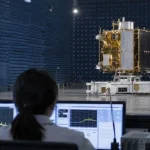
The hidden champions represent the “most indispensable” companies in the upstream of China’s commercial aerospace industry chain.
They do not directly manufacture rockets or satellites, and they rarely appear in the public and media horizons. But they are the real “kings” entrenched in the commercial aerospace industry chain. Behind every successful commercial aerospace launch, there are these companies.
01
Why You Should Pay Attention to “Hidden Champions”
The core value of focusing on the “hidden champions” of commercial aerospace is not to rank the industry, but to accurately anchor the “technical pivots” in the industry chain that truly drive large-scale implementation:
(1) Constellation networking has entered the mass production stage, and key supporting equipment has become a “stuck node”
Constellation networking has entered the mass production stage, which means that satellite manufacturing has shifted from “manual customization” to “industrial mass production.” The stable supply of key upstream components such as laser communication terminals, flexible solar wings, and spaceborne phased array terminals is the “invisible pillar” that ensures the pace of networking and promotes the healthy development of the industry.
(2) The more high-value, high-tech, and high-reliability products are, the easier it is for segment leaders to be born
Enterprises standing at key nodes in the industrial chain have deeper technological moats, higher product added value, and stronger irreplaceability. The more irreplaceable their position in the industrial chain is, the easier it is for these enterprises to become “segment leaders.”
(3) In the industry reshuffle stage, the first to make profits is often not the overall unit, but the key suppliers.
During the industry reshuffle, overall units are still stuck in the quagmire of R&D and launch costs, but key suppliers are the first to make profits because they are in the upper reaches of the industry and master key technologies.
The “independence and controllability” of China’s commercial aerospace industry does not depend on the number of rocket launches, but on these “giants” who silently support the launch of thousands of stars. Paying attention to the “hidden champions” is to see the real engine of new quality productivity.
02
Which segments are more likely to give birth to hidden champions?
Hidden in the upstream of the rocket and satellite manufacturing industry chain are many key component companies with “highly enriched technology” and “extremely high single-machine costs.” Not only are these core components highly valuable, often costing over one million per machine, but their mass production process has even affected the progress of China’s satellite internet constellation and the healthy development of the commercial aerospace industry.
In the rocket manufacturing industry chain, the liquid engine system has the highest manufacturing cost and technical difficulty, and its value accounts for approximately 50% of the total cost of the rocket. Followed by the rocket fairing and storage tank, accounting for about 10% and 15% of the overall cost of the rocket.
In the satellite manufacturing industry chain, various types of payloads are the most difficult to manufacture and the most valuable. For example, the phased array antenna, the main load of broadband communication satellites and SAR remote sensing satellites, accounts for more than 30% of the cost of the entire satellite; the “spaceborne laser communication terminal”, the core load to realize the inter-satellite networking of satellite Internet constellations, costs more than one million per machine, and one satellite needs to carry more than three such terminals. In addition, products such as flexible solar wings, Hall electric thrusters, and on-board computing power loads are also high-value products in the satellite industry chain.
These technology-rich and high-cost products are not only key nodes for the future development of China’s commercial aerospace industry, but also excellent soil for the birth of industry “hidden champion” companies.
03
How does Hello Space rate Hidden Champions?
The “hidden champions” of commercial aerospace defined by Nihao Space are not “big companies” or “well-known companies” in the traditional sense, but core suppliers that are deep in the upstream and key supporting links of the industrial chain and have high technical barriers, strong industry penetration and deep customer binding capabilities in a certain segment.
They may not be the most well-known to the public, but they often determine whether rockets can be launched on schedule, whether satellites can be delivered in batches, and whether constellations can be networked as scheduled.
NiHaoSpace’s evaluation of “hidden champion” companies generally revolves around the following four dimensions:
1) The importance of the link you are in
Whether the segmented track in which the enterprise is located is a key node in rocket, satellite and constellation networking will directly affect the delivery of complete machines and system capabilities.
2) Technical barriers and difficulty of substitution
Whether it has a high technical threshold, whether it fills domestic gaps, and whether it is difficult to be replaced in the short term.
3) Customer coverage and industry penetration
Whether it has entered the supply chain of leading rocket, satellite and constellation projects, and whether it has achieved stable delivery and continuous repurchase.
4) Large-scale delivery and industrialization capabilities
Whether it has mass production capabilities, on-orbit verification capabilities or a long-term stable delivery record can truly support the industry from the “prototype era” to the “mass production era”.
04
Which companies may become “hidden champions”?
Based on the above criteria, Nihao Space has selected 13 companies from various subdivisions of the aerospace manufacturing industry chain that have the greatest potential to become the industry’s “hidden champions”. They are:
1. Aisida Aerospace: At present, Aisida is the only private aerospace company in China that can provide customized carbon fiber rocket fairing products and successfully fly them. It has served many domestic commercial aerospace companies, and its products have supported 40 successful launches of launch vehicles into orbit and successfully escorted 152 satellites into orbit;
2. Aerospace Technology: Aerospace Intelligence and Propulsion Technology Laboratory is located in Chengdu High-tech West District. It is the first commercial electric propulsion intelligent manufacturing production line in China. It has the mass production capacity of about 1,000 commercial satellites per year. Its customers include Juntian Aerospace, Nationsat Aerospace, Micro-Nano Star, Tianyi Research Institute and many other domestic satellite companies;
3. Electronics Technology Blue Sky: Affiliated to the 18th Institute of China Electronics Technology, it is the core supplier of domestic aerospace power supplies with a market coverage rate of more than 50%. Since 2019, multiple rounds of technical research have been carried out around stacked flexible solar wings and chip-based digital power supplies, which have been successfully applied to the Qianfan constellation satellites;
4. Lanyue Space: The company has built a 35,000-square-meter R&D and production base, equipped with automated and intelligent production lines. As of March 16, 2026, Lanyue Space has established cooperation with more than 60 satellite overall units, delivered nearly 3,000 sets of reaction flywheels, magnetic torquers and other products, providing attitude control support for 277 satellites;
5. Hangju Technology: Committed to the R&D and production of internal insulation and external heat protection products for spacecraft, it is the first private enterprise in China to have an arc wind tunnel laboratory. A variety of new aerospace materials have been successfully used in many commercial aerospace projects such as Kuaizhou series, Feitian 1, and Ceres 1;
6. Space Navigation: Provide integrated solutions for satellite measurement, operation, control and data transmission, satellite life cycle, space situation and remote sensing satellite calibration services. A global satellite ground station network and comprehensive calibration field including more than 60 ground stations have been built, and the cumulative number of satellites and rockets served exceeds 500;
7. Huawei: Although Huawei is a household name, its importance in the commercial aerospace industry is still underestimated. As the only company in China that can manufacture “optical modules” for laser communication terminals, it has been rated as a “highly dependent” core component supplier by the industry in many commercial aerospace manufacturing fields such as spaceborne phased array antennas and laser communications;
8. Lanzhou Huayu: Affiliated to Lanzhou Vacuum Equipment Manufacturing Co., Ltd., a subsidiary of Lanzhou 510 Institute, it is engaged in the design and production of various space environment simulation test equipment and special vacuum cryogenic equipment. It has provided nearly 400 sets of various ground environment simulation test equipment for various satellite, rocket, ship and weapon systems in my country;
9. Jiuzhou Yunjian: The leading company in the field of “liquid reusable rocket engines” in China. The Longyun engine developed by it is used by many domestic recyclable rocket models such as the Long March 12A, Yuanxingzhe 1, and AS-1. It has now achieved many milestone tests such as splashdown recovery and reuse, and orbit launch;
10. Hot Number Technology: Focus on supporting commercial aerospace structures and thermal control systems. As of March 2026, the company has successfully provided thermal control products for major domestic commercial satellite constellations such as the Circumsky Constellation, Star Computing Project, and Yunyao-1;
11. Shanggang Communications: One of the core suppliers of spaceborne laser communication terminals for the GW State Grid Constellation of StarNet. From July 2025 to the present, its spaceborne laser communications terminal products have participated in 7 GW State Grid constellation launch missions;
12. Xunlian Technology: Focus on the research and development of measurement and control communication equipment and navigation equipment. As of March 16, 2026, Xunlian Technology has accumulated 663 sets of in-orbit products and has served a total of 352 satellites;
13. CITIC Mobile: Its subsidiaries FiberHome Communications and Datang Telecom are the main suppliers of China Star Network laser communications and on-board routing loads respectively. Among them, FiberHome Communications and Huawei are the only domestic companies that can manufacture laser communication terminal “optical modules”.
05
Development trends in commercial aerospace subdivisions
In 2026, China’s commercial aerospace industry will enter the watershed between commercialization and scale. Industry reshuffle will accelerate and competition logic will change.
1. The segmented tracks will accelerate the reshuffle, and the advantages of leading suppliers will expand.
Capital is concentrated in head projects, the old stock transfer market is heating up, and lower-tier companies are facing elimination pressure. In rocket manufacturing, satellite networking and other tracks, players compete around cost, production capacity and delivery capabilities. Companies with core technologies and stable orders will stand out, and industry resources will further gather at the top.
2. Mass production capacity, on-orbit reliability and stable delivery will become the core of a new round of competition.
National-level constellation networking has generated massive launch demand. 30-50 launches need to be completed in 2026, and the annual satellite manufacturing capacity needs to reach 1,000. Rocket companies need to quickly improve their mass production capabilities to ensure efficient turnover of launch stations; satellite companies need to achieve large-scale batch production to ensure the success rate of orbiting, meet the strict requirements of “first come, first served” for frequency orbit resources, and avoid resource expiration.
3. The future invisible champion will not only sell hardware, but also extend to system capabilities and service capabilities.
Recyclable rocket technology continues to work hard, and models such as Zhuque 3 and Tianlong 3 will undergo intensive technical verification. Once normalized recycling is achieved, launch costs will be significantly reduced and the company will have the power to price the industry. The lightweight, modular and highly integrated satellites will also continue to reduce the cost of single-satellite launches, promote the implementation of downstream application scenarios such as space Internet and commercial remote sensing, and build a commercial closed loop of “technological breakthrough – cost reduction – application explosion”.
Conclusion
As China’s satellite Internet enters the intensive deployment stage, “hidden champion” companies will be the first to enter the profit stage. Relying on the entry capabilities brought by “hardware”, in the future these “hidden champions” will even increasingly participate in the competition of industry terminals such as “applications and services”. Their growth is bound to reshape the entire commercial aerospace landscape in the future.