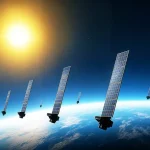
Yesterday we wrote that 1 million satellites is not a gimmick: SpaceX has entered the next stage, what should China do? SpaceX is advancing space from communication networks to next-generation computing infrastructure.
Today, Musk confirmed this judgment with one thing: SpaceX officially acquired xAI.
This is not an ordinary merger or acquisition, nor is it just the superposition of the concept of “AI + aerospace”, but:
SpaceX no longer intends to be just an aerospace company.
The implications of this change for China’s commercial aerospace industry are much more important than “whether to develop space computing power.”
01
What exactly has SpaceX integrated?
Judging from Musk’s internal statement, what was merged into SpaceX this time was not just an AI model company, but a whole set of capabilities:
xAI: Large models, reasoning capabilities, algorithms and growing demand for computing power
Rocket system: Falcon + Starship, providing extremely low-cost space transportation capacity
Starlink Network: Space-based communications and data channels with global coverage
Direct connection of mobile phones to satellites: turning satellite networks directly into “user networks”
X platform: one of the world’s largest real-time information and interaction platforms
These capabilities used to be scattered among different companies, different industries, and different business logics. But now, they are put into the same system.
The key to this step is not to “integrate more”, but rather: these capabilities only make sense if they are placed in the same system.
If they remain dispersed, there are three practical problems:
First, the computing power requirements cannot match the launch rhythm.
What AI needs is a long-term, stable, and scalable source of computing power, not a one-time experiment.
Second, satellite networks can only “transmit data” but cannot “digest data”
Without computing power and models, Starlink is just a high-bandwidth pipeline.
Third, the user entrance is in the hands of the platform company
Aerospace companies can only serve as infrastructure outsourcers and cannot dominate demand.
SpaceX’s acquisition of xAI essentially solves these three problems at once. At this point, SpaceX is no longer just launching satellites, but is also controlling: computing power, network, access, transportation capacity and application scenarios.
This is no longer an aerospace company in the traditional sense.
02
Business logic upgrade
If we only look at it from a technical perspective, it is easy to fall into the debate: Is space computing power necessary? Is the technology feasible? When can I make money?
But in this step of SpaceX, what really changes is not the technical route, but the business logic.
In the past, the typical model of aerospace companies was: build rockets → launch satellites → charge one-time fees. Starlink has taken a step forward to use communication networks to build long-term subscription revenue.
Now, what SpaceX is building is the third layer of logic:
Rockets: Lowering the cost of access to space
Satellite Internet: Forming a continuously online infrastructure
AI and platforms: creating long-term and scalable computing power demand
User terminal: directly reach billions of users
In this system, rockets and satellites are no longer the end point, but a link in the system.
If SpaceX were just a launch service provider today, then Starship-level transportation capacity would become a burden. Greater capacity must match greater and ongoing demand. AI, data, content, and applications are exactly this need.
03
What is SpaceX really doing?
If you zoom out a little further, you will find that SpaceX’s route is very clear: Starlink solves “global real-time connection”; xAI solves “global computing and intelligence”; Starship solves “large-scale access to space”.
The three together do not point to a single business, but to a judgment:
Space is being used as next-generation infrastructure.
Just like power grids, highways, and the Internet back then, when aerospace begins to be regarded as infrastructure, its investment cycle, return logic, and supervision methods will all change accordingly.
This is why SpaceX can withstand huge investments that seem “uneconomical” in the long term – because what it wants is infrastructure-level returns.
04
Can China’s commercial aerospace industry be integrated across industries?
Compared with “Should we do space computing?”, the question that is truly more worthy of discussion is:
Does China’s commercial aerospace industry have the capabilities and space for cross-industry integration?
It’s not just AI. From the perspective of industrial collaboration, at least it includes:
Automotive industry: autonomous driving, in-vehicle communications, location and data services;
New energy and photovoltaics: space energy and energy system engineering capabilities;
Internet and platform companies: application scenarios, user scale, data closed loop;
Manufacturing and industrial systems: scale, cost control, supply chain efficiency.
But one thing to be wary of is: if “AI”, “new energy” and “Internet” are just used as labels on commercial aerospace, but cannot generate continuous payment and large-scale demand, then cross-industry integration will only become a superposition of concepts.
In turn, commercial aerospace should not just “wait for demand”, but should proactively find applications: Which industries will it provide irreplaceable capabilities? Can it be an ongoing payment rather than a one-time project? Can it become an “inseparable” infrastructure for other industries?
If commercial aerospace always only circulates within the aerospace industry, it will be difficult to get out of the real commercial closed loop.
Conclusion
SpaceX’s acquisition of xAI sends a very clear signal: aerospace is evolving from a vertical industry to a horizontally integrated platform system.
For China’s commercial aerospace industry, the issue is also changing – not just whether rockets can be reused and whether satellites can reduce costs, but whether aerospace can become the infrastructure of more industries.
This may be more worth thinking about now than “can we do it with space computing power?”