The most outrageous event in China’s commercial aerospace industry has come at the beginning of the new year.
In the past month, a statement about “Changbajia completed the verification of offshore network recovery” has been repeatedly quoted on multiple platforms, and even appeared in the public speech materials of a heavyweight industry conference last week.
The problem is: this statement is untrue from the beginning.
But it did not appear suddenly, nor was it someone who “said the wrong thing temporarily”. Instead, it went through a set of communication processes of generation, retelling, amplification, and endorsement, and finally evolved into a seemingly “confirmed” industry message.
In this article, we not only want to dispel a rumor, but also want to clarify a problem:
After commercial aerospace entered the public and capital horizons, how did misinformation penetrate the industry information system step by step?
01
“Changbajia Recycling” is not technically valid
The Changbajia is my country’s new generation of disposable liquid launch vehicle. It does not have the ability to be recycled and has never undergone any form of offshore network recovery verification.
First of all, both the core first stage and the booster of Changbajia use the YF-100 liquid oxygen kerosene engine from the Sixth Aerospace Academy. As the first generation of the YF-100 series, this engine does not have the ability to start multiple times, so it cannot complete vertical recovery tasks such as reentry ignition.
Secondly, as a one-time use rocket, the Changbajia is also quite different in rocket body configuration from “common” recyclable rockets. For example, it lacks grid rudders for aerodynamic control, and landing legs for vertical landings.
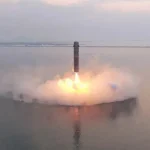
Finally, the only rockets that our country has publicly adopted the offshore network recovery program are the Long 10 models of the China Academy of Aerospace Science and Technology.
02
How are error messages generated?
Looking back at online information, we can find that this statement does not originate from an official release, but is more like a spliced and generated content.
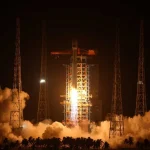
On December 26, 2025, after Changbajia completed the launch of 17 satellites in low orbit for the satellite Internet, news about “Changbajia completed the offshore network recovery test” appeared on the Internet for the first time. This information extensively quoted the launch content of Chang Bajia and the introduction of the recovery of the maritime net system of the Long March 10B rocket, and combined the two to fabricate an article “Chang Bajia successfully completed the recovery of the sea net system”.
This text structure is highly consistent with the typical characteristics of some current AI retrieval-generated content: correct keywords and coherent semantics, but the technical logic is not self-consistent.
Without human verification, this type of content began to be cited as “background information.”
03
“Capital narrative” joins and begins to be amplified
The information then enters the second stage: it is selectively amplified.
From the end of 2025 to the beginning of 2026, China’s satellite network was launched intensively, and some “commercial aerospace concept stocks” were speculated. Coupled with the broken recovery test of Zhuque 3 and Chang 12 A, commercial aerospace intensively entered the public eye. Driven by traffic and interests, some content platforms, especially accounts related to “stock speculation”, began to bundle “Chang Bajia Recycling” with: the concept of commercial aerospace, the rhythm of constellation construction, and the expectations of listed companies, and created narratives that attracted the attention of a large number of investors and the public.
At this time, the accuracy of information is no longer the core, and “whether the story is exciting enough” is the driving force for communication. At this stage, misinformation is constantly copied, rewritten, and reinforced, gradually breaking away from its original technical context and becoming an emotional expression.
04
When error messages enter the “authority scene”
The third stage is also the stage where this incident really shocked the industry.
On January 23, 2026, at the Third Beijing Commercial Aerospace Industry High-Quality Development Promotion Conference held in Yizhuang, Beijing, a PPT speech by an aerospace expert quoted the statement “Changbajia completes offshore network recovery”, which was noticed by many practitioners and spread quickly.
What needs to be emphasized is: the problem is not “what someone said wrong”, but –
This information has been “verified” repeatedly in cyberspace before;
The training and retrieval results of AI tools have been contaminated;
In formal occasions, there is a lack of a clear information traceability and verification mechanism.
When misinformation openly appears at industry heavyweight conferences, if there are no authoritative channels and a large amount of correct information to “refute the rumors”, then it will become an “established fact.”
05
Thoughts behind the Oolong incident
This matter is most likely to be discussed by complaining about “aerospace experts quoting wrong information” and “using AI to make PPT”.
But this is not the core of the problem. There are three points that really deserve vigilance:
First, the industry is underestimating the speed of information pollution.
Once commercial aerospace enters the vision of capital and the public, technical information will be quickly simplified, spliced, and re-narrated.
Second: Lack of systematic error correction mechanism. From content generation, platform dissemination, to citation in formal occasions, there is almost no stable “verification checkpoint” in between. Third: The public voice of commercial aerospace companies and professional organizations is still insufficient.
The time span from the emergence of the rumor to the entry into the industry conference was nearly a month, but there was almost no timely and clear technical clarification.