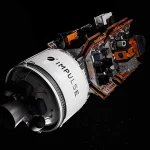
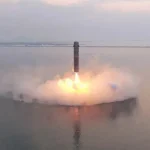
In recent years, China’s commercial aerospace has developed rapidly, and liquid rocket engines, as the core power system, have become a key area of industry competition. Many commercial aerospace companies have successively launched high-performance liquid rocket engines, promoting the technological progress of new generation launch vehicles.
Today, let’s talk about: China’s top 10 commercial aerospace liquid rocket engines.
01
liquid rocket engine
Liquid rocket engine is a rocket engine that uses liquid propellant as fuel. It has the advantages of strong controllability, high specific impulse, and reusability. It is currently the mainstream power choice for launch vehicles. Common liquid propellants include unbiased dimethylhydrazine-nitrogen tetroxide, liquid oxygen and liquid hydrogen, liquid oxygen kerosene and liquid oxygen methane. Liquid rocket engines usually consist of thrust chambers, gas generators, turbopumps, valves and assembly components, etc., and can be classified according to different standards to meet various application needs: 1. According to propellant supply method
Squeeze type: relies on high-pressure gas to directly squeeze propellant into the combustion chamber. It has a simple structure and is suitable for small engines.
Pump type: The use of turbine pumps to actively transport propellant and increase combustion chamber pressure is the mainstream method of modern launch vehicles. 2. According to propellant type
Single component: uses a single propellant, mostly used in small thrust scenarios such as attitude control.
Bi-component: using two propellants, oxidizer and fuel, with high combustion efficiency, it is the mainstream configuration.
Tri-component: An additional propellant is added to improve performance or adapt to specific operating conditions. 3. Press the cycle method
Gas generator cycle: Gas drives the turbine pump and then discharges it. The structure is relatively simple and suitable for high-thrust engines.
Staged combustion cycle: high combustion efficiency and large specific impulse, it is a common choice for high-performance engines.
Expansion cycle: relies on high-temperature gas to heat the propellant and expand it to drive the turbopump. It is often used in upper-stage engines. 4. According to the thrust, it can be divided into large thrust, medium thrust and small thrust engines to adapt to different carrying needs. 5. According to the structural characteristics, it can be reused or disposable, and some engines have thrust vector control function. 6. According to usage
Main engine: Provides the main thrust for launch vehicle takeoff or deep space exploration.
Attitude control engine: used for spacecraft attitude adjustment.
Orbit control engine: used for orbit maintenance, orbit changing and other tasks.
02
Top 10 Liquid Rocket Engines for Commercial Aerospace
Currently, “Nihao Space” has selected the top 10 liquid rocket engines for China’s commercial aerospace industry based on thrust, thrust-to-weight ratio, and technological maturity. The following is the development process and application of China’s top 10 commercial aerospace liquid rocket engines: 1. Tianbing Technology Tianhuo-12 propellant: liquid oxygen kerosene Sea level thrust: 110t Sea level specific impulse: 285s Variable thrust ratio: 40%-110% Thrust-to-weight ratio: 163 Reusable times: >50 times Cycle method: gas generator cycle Tianhuo-12 (TH-12) is a high-thrust liquid oxygen kerosene engine. As the main engine of Tianbing Technology’s Tianlong-3 rocket, its performance is directly comparable to SpaceX’s Merlin 1D engine. As of March 2024, Tianhuo-12 has completed the production of 41 liquid rocket engines and completed the final assembly testing and commissioning verification of 9 complete machines. It is qualified for delivery for the first flight and will provide power support for Tianlong-3’s first flight in 2025. 2. Zhongke Aerospace Liqing 2 propellant: liquid oxygen kerosene Sea level thrust: 110t Sea level specific impulse: ≥2690m/s Variable thrust ratio: 40%-110% Reusable times: 30 times Cycle method: gas generator cycle The first delivery of the Liqing-2 (formerly Xuanyuan-2) 110-ton pinbolt engine was completed in February 2025, serving as the first-stage engine of the Lijian series of reusable rockets. In the near future, it is planned to select an opportunity to carry out hot testing of half-system and six-engine sub-units, and plans to carry out three-machine parallel testing of the power system under recovery conditions at the end of this year. 3. Aerospace Commercial Development YF-209 (vacuum version) Vacuum thrust: 96t Vacuum specific impulse: 353s Thrust-to-weight ratio: 80 Number of reusable times: 50 times Cycle method: gas generator cycle On March 17, 2025, the YF-209 vacuum version supporting the Yuanjian No. 1 and control system successfully completed the joint thermal test run. 4. Tianhui Aerospace Qiaolong 1 Propellant: Liquid oxygen kerosene Sea level thrust: 85t Sea level specific impulse: 281s Variable thrust ratio: 40%-110% Thrust-to-weight ratio: 160 Cycle method: staged combustion pumping cycle Qiaolong 1 is a high-thrust rocket engine developed by Tianhui Aerospace specifically for my country’s commercial aerospace market. It can be used as the first and second stage engines of launch vehicles or the main power engine of suborbital aircraft. Previously, the engine had successfully completed several complete machine tests, demonstrating excellent reliability and engineering maturity. 5. Interstellar Glory Focus II propellant: liquid oxygen methane Sea level thrust: 85t Sea level specific impulse: 289s Variable thrust ratio: 35%-115% Thrust to weight ratio: >100 Reusable times: no less than 30 times Cycle method: gas generator cycle From December 20 to 24, 2024, the first product of Focus 2 (JD-2) in batch production flight status successfully completed three critical status assessment tests, marking its official entry into the mass production and delivery stage. This engine will be used on the Hyperbolic III rocket, with 9 units installed on the first stage and 1 Focus 2 vacuum version on the second stage. The first flight is planned for December 2025. 6. Aerospace Commercial Development YF-102 Propellant: Liquid oxygen kerosene Sea level thrust: 85t Sea level specific impulse: ≮275s Variable thrust ratio: Fixed thrust Thrust-to-weight ratio: ≮130 Cycle mode: Gas generator cycle The YF-102 engine has been delivered and successfully made its first flight. It was first used in the Tianlong-2 Yaoyi launch vehicle and made its first flight on April 2, 2023. The core first stage is equipped with three reduced-thrust versions of YF-102 engines. In addition, the vacuum version engine YF-102V of this series is also ready for delivery and is expected to usher in its first commercial flight mission this year. 7. Blue Arrow Aerospace Tianque-15A (vacuum version) Propellant: liquid oxygen methane Vacuum thrust: 85t Vacuum specific impulse: 3280m/s Variable thrust ratio: 40%-115% Cycle method: gas generator cycle Tianque-15A (TQ-15A) is the second batch of the second-stage main engine of the Suzaku-2 rocket, and is used with Tianque-12A to share key components such as turbopumps, valves, and gas generators. On November 27, 2024, as the second-stage main engine of the Zhuque-2 improved Yaoyi rocket, it assisted the successful launch of the rocket. 8. Jiuzhou Yunjian Longyun engine propellant: liquid oxygen methane Sea level thrust: 80t Sea level specific impulse: 293 Variable thrust ratio: 50%-100% Thrust to weight ratio: 110 Reusable times: ≥50 times Cycle method: gas generator cycle Up to now, the Longyun engine ground version (LY-70) has been mounted on the Aerospace Science and Technology Eighth Changzheng 12B VTVL test rocket and the Arrow Technology Yuanxingzhe 1 verification rocket, and will be configured in a nine-machine parallel configuration on the Yushi Space AS-1 launch vehicle. 9. Blue Arrow Aerospace Tianque-12A propellant: liquid oxygen methane Sea level thrust: about 73t Sea level specific impulse: 2840m/s Variable thrust ratio: 40%-115% Cycle method: gas generator cycle Tianque-12A (TQ-12A) is an improved version of the Tianque-12 engine. Its thrust is increased by 9%, the specific impulse is increased by 40m/s, and the weight is reduced by 100kg. The engine has been successfully used in the improved version of the Zhuque-2 and the Zhuque-3 VTVL-1 test rocket, and will be connected in parallel with nine aircraft in the future to help the first flight of the Zhuque-3 in the second half of 2025. 10. Aerospace Propulsion Mosasaur 1 Propellant: Liquid oxygen kerosene Sea level thrust: 70t Sea level specific impulse: ≮285 Variable thrust ratio: 30%-115% Thrust-to-weight ratio: 77.8 Reusable times: not less than 50 times Cycle method: gas generator cycle Mosasaurus 1 (CL-1) is a first-stage liquid oxygen methane engine independently developed by Aerospace Propulsion. It is suitable for the first stage of launch vehicles and suborbital vehicles, and can be expanded to a vacuum type to meet the needs of the second stage of medium and large launch vehicles. In June 2023, the engine successfully completed multiple system-level ignition tests. In July of the same year, Aerospace Propulsion and Qianyi Aerospace reached a cooperation. The Xuantiao large launch vehicle will use nine Mosasaurus 1 units as the first stage power.
03
The development status of liquid rocket engines in my country
my country’s liquid rocket engine technology is in a critical stage of dual-track research and development breakthroughs and engineering verification. As the first flight dates of multiple reusable rockets approach in 2025, engine technology is accelerating from laboratory research to large-scale engineering applications. Taking SpaceX as an example, the Falcon 9 has been reused 26 times using the Merlin 1D++ liquid oxygen and kerosene engine. Its thrust and durability provide an important reference for reusable technology. Against this background, my country is actively promoting the technological exploration of independently developed reusable liquid rocket engines. Through iterative testing of independently developed models such as Tianbing Technology Tianhuo-12, Interstellar Glory Focus 2, and Blue Arrow Aerospace Tianque-12A, my country has established an engine system covering the thrust range from 70 tons to 110 tons, providing strong support for the development of new launch vehicles such as Zhuque 3 and Tianlong 3. In addition, the policy level also promotes the rapid deployment of private aerospace enterprises through industrial support. Private enterprises such as Jiuzhou Yunjian and Blue Arrow Aerospace have built power manufacturing bases and test beds in multiple regions, forming the prototype of a regionally coordinated industrial chain (see “Inventory of China’s Commercial Aerospace Test Beds” for details). However, there are still shortcomings in engineering verification. For example, the 75-kilometer-level recovery test of Longxing-2 did not meet expectations, and the landing stability of Nebula-1 was insufficient. These problems revealed that reusable technology still needs further breakthroughs. In general, 2025 will become a key window period to test the maturity of technology. Through the engineering practice of rockets such as Suzaku-3 and Tianlong-3, the engine’s thrust, reuse times and cost control capabilities will be fully verified, thus promoting commercial aerospace to enter a virtuous cycle of “high-density launch-rapid iteration-cost reduction”. 1879