1. Basic information
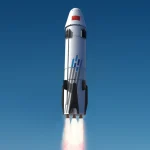
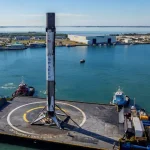
Gravity-1 is a bundled solid launch vehicle developed by Oriental Space. If a solid upper stage is installed, the SSO (500 km) transport capacity is 4.2 tons. If a liquid upper stage is installed, the SSO (500 km) transport capacity is 5.9 tons. For Gravity One, Oriental Space provides both full rocket booking services and carpooling services. Changguang Satellite once purchased 4 Gravity Ones from Oriental Space. The total contract price was 780 million, and each Gravity One was about 195 million. At 13:30 on January 11, 2024, Gravity-1 carried 18 Yunyao-1 stars (Lianxin Yingda 1), 19 Yunyao-1 stars (Three Gorges Remote Sensing 1), 20 Yunyao-1 stars (Langfang Space 1) and other payloads were successfully launched in the Yellow Sea using the Oriental Spaceport rocket launch ship.
2. Rocket configuration
Gravity One is a three-stage semi-configuration, which can be equipped with either a solid upper stage or a liquid upper stage. When equipped with a solid upper stage, it has a height of 29.4 meters and a take-off mass of 405 tons. When equipped with a liquid upper stage, it has a height of 36 meters and a take-off mass of 410 tons.
(1) Booster
Gravity 1 is bundled with 4 boosters. Each booster is more than 10 meters tall and 2.65 meters in diameter. It is equipped with a solid engine and uses a flexible swing nozzle with a thrust of 150 tons. During takeoff, only the boosters are ignited, and the four boosters provide a total thrust of 600 tons, with a thrust-to-weight ratio of 1.5.
(2) First level
The first sub-stage is equipped with an SR-2500 solid engine with an average thrust of 2300 kN and a combustion time of 85 s. The engine was developed by the Fourth Academy of Aerospace Science and Technology.
(3) Second level
The second stage is equipped with a solid engine with a diameter of 2.65 meters, an average thrust of 1100 kN, and a combustion time of 90 seconds. The engine was developed by the Fourth Academy of Aerospace Science and Technology.
(4) Third sub-level
The third sub-stage is equipped with a solid engine with a diameter of 1.4 m, an average thrust of 180 kN, and a combustion time of 52 s. The engine was developed by the Fourth Academy of Aerospace Science and Technology. The terminal attitude control power system includes four 50 N and 12 700 N liquid engines, which realize attitude control and terminal speed correction through the reaction force generated by the engine operation.
3. Development process
In August 2022, Oriental Space successfully completed the ground hot test of the final attitude control power system and the joint hot test of the first-stage engine and servo mechanism. In September 2022, the joint hot test of the booster engine and servo mechanism was successfully completed. In June 2023, the first- and second-level separation and second- and third-level separation tests were successfully completed. In July 2023, the boost separation test was successfully completed. In November 2023, the fairing separation test was successfully completed. In December 2023, the arrow-ship joint training was successfully completed. On January 11, 2024, Gravity-1 made its first flight successfully.
4. Rocket Analysis
First of all, Gravity-1 adopts an all-solid bundled configuration with one sub-stage bundled with four solid boosters. Through the combination of mature power modules (the diameter of the first sub-stage and the booster are both 2.65 meters), it achieves a significant leap in carrying capacity. This is the first time in the world for a medium-sized launch vehicle. Secondly, Gravity 1 adopts the “asynchronous ignition” timing sequence. The booster is ignited first, the substage is not fired first, and the substage is fired again after the booster is burned out. This design cleverly avoids the attitude loss caused by multiple solid engines that may be caused by slight asynchronous combustion, and improves flight reliability. In addition, as the first bundled launch vehicle launched at sea, Gravity 1 has excellent sea launch adaptability. Through the modular bundled configuration of “core stage + booster”, it lowers the center of gravity of the rocket and increases the support span, making the rocket “chassis” more stable and better able to cope with the shaking of the launch ship under high sea conditions.