For commercial aerospace, “cost” is an unavoidable topic. Taking the low-orbit satellite Internet industry as an example, if the construction cost of the satellite communication system is too high, the cost will inevitably be passed on to downstream consumers, causing satellite communication service charges to be too high, which is not conducive to attracting users in the early stage. If it cannot effectively attract users, the corresponding sunk costs will be greater and it will be more difficult for enterprises. In addition, if a competitor launches a cheaper satellite application service during the commercial maturity period, companies without cost advantages will have to face the risk of losing customers, or they can only use price reduction strategies to stabilize the number of existing users. However, if costs cannot be effectively reduced, this method is undoubtedly a waste of money to quench thirst.
Our country’s current structure is “dominated by the national team + supplemented by private enterprises”, which adopts a model of development collaboration and ecological competition. This model is a special product after decades of growth and improvement. It cannot simply be said to be good or bad, but has more particularities under a specific historical background.
Taking rockets as an example, a nationwide collaborative supporting system has been formed. From the perspective of design and R&D, it is mainly concentrated in Beijing and has very strong regional characteristics. This regional characteristic is linked to the characteristics of talents. The entire commercial aerospace industry is still in its early stages. Mature talents can only be expelled from within and outside the system, which also indirectly causes this phenomenon. From the perspective of production and manufacturing, production and manufacturing are gradually evolving towards marketization. They are mainly composed of the following forces. The first is the old industrial supporting system, which is the product of the old third line. It is mainly distributed in Shaanxi, Sichuan and other places, and constitutes the main force in the early stage of industrial development. Secondly, there are some private enterprises that have newly entered this industry. With the development of the commercial aerospace industry, a group of technical backbones within the system have begun to go overseas and enter the commercial aerospace industry. In this process, the supply chain has become a problem that they cannot get around. In the early days, they could only produce certain products because of the national team, or because of their own relationships. The supply chain is dominated by the national team, but because their bargaining power is relatively low compared to the national team, and the delivery cycle of the national team cannot be guaranteed, these general enterprises have begun to look for matching private enterprise supply chains in the market that have previously done similar business. Everyone supports each other and grows together. Related enterprises either actively or passively enter this industry chain. At the same time, some technical personnel who were previously engaged in supporting business within the system have also started their own businesses to produce related supporting products, such as Jiuzhou Yunjian for engines, Jiutianxingge for storage tanks, and Aerospace Servo for servo, etc., filling the gaps in the relevant supply chain. There are also some industrial supporting systems that are supply chain systems deployed by private enterprises in order to survive, mostly concentrated in the Yangtze River Delta. Since private aerospace companies have no profitability in the early stages, they can only rely on financing. Judging from the current venture capital environment, most of the investment funds in the market are government money, and the government has the task of attracting investment and industrial implementation. Therefore, most companies that have taken government money have laid out some local industrial chains, or final assembly and testing plants, or storage container plants. This also reflects the supply of private aerospace companies. Another issue in the supply chain is “how to decide between ‘efficient supply chain configuration’ and ‘who pays where?’” From the perspective of test assembly, most companies invest on their own, and some are built by local governments. There are also two characteristics. One is to gather near the work station, mainly based on the consideration of shortening the industrial radius, and the other is to gather near the money in order to continue to stay at the poker table. From the perspective of launch stations, our country is still mainly based on four bases and is gradually expanding into commercial aerospace. Hainan has built my country’s first commercial space launch site. Stations 1 and 2 have completed their first flights, and the newly built stations 3 and 4 have been approved. The Jiuquan Satellite Launch Center has built the Dongfeng Commercial Space Innovation Test Zone and begun commercial exploration. Generally speaking, things are stable and improving. However, during the exploration process, some problems that were not expected before have emerged, which will be discussed later.
Compared with the current characteristics of my country’s commercial aerospace supply chain, let’s take a look at the United States’.
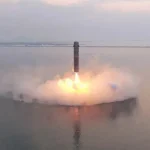
From the perspective of the United States, the most representative one is undoubtedly Musk’s Spaxe-X. Space-X adopts a vertical integration model in order to independently control the entire chain and achieve efficiency and closed-loop advantages. Musk builds his own rockets, rocket engines, satellites, launch stations, and offshore recovery ships and recovery systems. Through this model, he has reduced his dependence on external suppliers. Technical bottlenecks and delivery delays of external suppliers will not affect his rapid iteration of internal trials and errors. Because everyone is his own person, it is easy for internal coordination, rapid internal trial and error, and rapid technological iteration, which also significantly reduces the cost of the entire industry chain.
Judging from the current development trend of the commercial aerospace industry, China and the United States will definitely face a battle in the process of reaching the top in the future, and the characteristics of the supply chain model are also very important for the direction of this battle. The future outcome may depend on who can achieve large-scale technology application and cost breakthroughs faster.