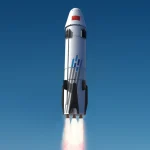
Recently, Galaxy Power and Beijing Tianren Daohe New Materials Co., Ltd. (hereinafter referred to as “Tianren Daohe”), a subsidiary of Beijing Tianyi Shangjia High-tech Materials Co., Ltd. (stock code: 688033), successfully held a strategic cooperation signing ceremony in Beijing. The two parties decided to carry out in-depth cooperation in the field of R&D and manufacturing of relevant parts of solid and liquid launch vehicles and form an in-depth strategic partnership. Galaxy Power actively supports Tianrendaohe’s business development in solid and liquid rocket components (fairings, final-stage integrated structural components, etc.), and uses its resource advantages in the commercial aerospace industry chain to provide support for Tianrendaohe. At the same time, Tianren Daohe will fully cooperate with the development of new models of Galaxy Power commercial space launch vehicles and provide corresponding resource platforms for its commercial space launch business. The cooperation between Galaxy Power and Tianren Daohe reflects that Galaxy Power is already working hard to improve its supply chain, and supply chain construction is an important key for commercial rocket companies to move from level 1 to level 2.
Let’s talk about Galaxy Power first:
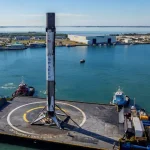
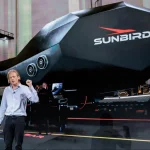
Galaxy Power is the first private rocket company in China to achieve continuous and stable launch success. Core products include the “Plasma” series of medium and large reusable liquid launch vehicles, the “Ceres” series of light and small solid launch vehicles, etc. The company has created many industry milestones, including the first private rocket to enter a 500km sun-synchronous orbit, an 800km inclined orbit, and a twilight orbit, the first to successfully implement a sea launch, the first to achieve rocket mass production and high-density launches, and the first to achieve in-orbit service based on the last stage of a rocket. It is currently the private rocket company with the most launches and the best success rate. Relatively speaking, Galaxy Power is a relatively stable company among private commercial rocket companies. The personality of a company is closely related to the personality of its founder. Liu Baiqi, the founder of Galaxy Power, seems to be more of a scholar, more humble, and a good “product manager.” Therefore, Galaxy Power has a relatively good relationship with the government, investors, and industry partners, and it has also done relatively well in exploring new aerospace businesses. Among private commercial rocket companies, Peng Xiaobo of Interstellar Glory and Wei Yi of Arrow Technology both graduated from Beihang University, but Beihang University funds have a soft spot for Galaxy Power.
Let’s talk about Tianren Daohe again:
Tianren Daohe is mainly engaged in the research, development, production and sales of resin-based carbon fiber composites and carbon-based composite products. The company has built a tens of millions of simulation platforms and has a variety of molding equipment and technologies such as autoclave, molding, winding, RTM and so on. It has forward design and development capabilities of finite element analysis technology such as structural strength, vibration and noise, environmental stress, and process processes. In terms of resin-based composite materials, we have completed the material development and verification of a commercial aerospace rocket fairing project, the design and manufacturing of mold tooling, and the test verification of typical parts; we have achieved batch delivery of a certain type of rocket final stage structural integrated bracket products and small batch delivery of new models of final stage structural integrated brackets. At present, Tian Ren Daohe’s business that is closely related to rocket companies is fairings, final stage integrated structural components, etc. Prior to this, the fairing company that Galaxy Power had a close cooperation with was Tianjin Aisida. Many rockets in the Ceres 1 series use fairings produced by Aceda. After this signing, Galaxy Power and Tianren Daohe will be more closely bound, and future orders for Galaxy Power fairings will also be tilted.
Tianren Daohe, as a new composite material product supplier with independent R&D and design capabilities in this field, has mature carbon-based composite material R&D and production capabilities. The application of resin-based composite products requires the completion of a series of processes from raw material selection, design, simulation analysis, process development, trial production to mass production. In addition to the requirements for structural mechanical properties, it is also necessary to further meet the structural and functional integration needs of composite products such as high temperature resistance and corrosion resistance. This requires the company to have a rich raw material library and production technology reserves. Carbon fiber composite materials can reduce weight through optimal design based on anisotropy, and their thermal expansion coefficient is only one-tenth that of metal. They are very dimensionally stable in alternating temperature environments and are the best materials for space applications.
Although after years of development, my country has become the world’s largest producer of carbon fiber. In 2023, the domestic carbon fiber production capacity will be approximately 135,900 tons, accounting for 57.2% of the global production capacity of 237,600 tons. However, the production capacity of the domestic resin-based carbon fiber composite material industry is scattered, and the products are mostly concentrated in the mid-to-low-end fields, with serious product homogeneity. Performance reliability and process manufacturability are two major challenges for carbon-based composite products. From the perspective of performance reliability, they mainly refer to oxidation resistance, ablation resistance and thermal protection capabilities. From the perspective of process manufacturability, C/C, C/SiC and SiC/SiC materials have several different manufacturing processes. Each process faces its own challenges, especially in the processing of large-size components, material compatibility and delamination issues, and the economics (cost and cycle) of the manufacturing process.
I believe that as the cooperation between Galaxy Power and Tianrendaohe continues to deepen, the two may also explore a new path for the construction of our commercial aerospace supply chain system and accelerate the construction progress of my country’s commercial aerospace industry.