1. Company Profile
Jiangsu Deep Blue Aerospace Co., Ltd. was established in 2016. It is a commercial aerospace enterprise with the core business of launch vehicle research and development, production and commercial launch services. Since its establishment, it has been focusing on the development of liquid recyclable launch vehicles and is committed to greatly improving human beings’ ability to enter space and reducing the cost of entering space.
2. Introduction of the founder
Huo Liang: PhD from the Department of Mechanical Engineering of Tsinghua University, studying under the guidance of academician Liu Baicheng, a manufacturing expert. He once worked at the Second Academy of Aerospace Science and Industry (Air Defense Missile Design Department) as chief designer. In 2016, Huo Liang served as vice president and co-founder of Zero One Space, a private rocket company. In November of the same year, Huo Liang resigned from Zero One Space and founded Deep Blue Aerospace.
3. Company layout
Nantong, Jiangsu: Headquarters.
Beijing Yizhuang: Rocket Technology and Liquid Engine R&D Center.
Jinan, Shandong: Rocket power test base.
Hainan Wenchang: Cultural Tourism Education Base.
4. Product Type Spectrum
(1) Launch vehicle: “Nebula-1” liquid reusable launch vehicle, “Nebula-2” liquid reusable launch vehicle
1. “Nebula-1” liquid reusable launch vehicle: The “Nebula-1” liquid reusable launch vehicle has a two-stage configuration. The first stage is equipped with nine “Thunder-R1” 20-ton liquid oxygen and kerosene engines, with a take-off thrust of more than 130 tons. The second level is equipped with a “Thunder-R1” 20-ton liquid oxygen kerosene engine.
Arrow body diameter
series
Engine type
Engine system
Carrying capacity
3.35 meters
Level 2
9+1 Thunder-R1
liquid oxygen kerosene
2 tons @LEO
(Improved version is 8 tons)
2. “Nebula-2” liquid recyclable launch vehicle
Arrow body diameter
series
Engine type
Engine system
Carrying capacity
5 meters
Level 2
9+1 Super Thunder
liquid oxygen kerosene
20 tons @LEO
(2) Engine: “Thunder-R1” liquid oxygen kerosene engine, “Super Thunder” liquid oxygen kerosene engine
1. “Thunder-R1” liquid oxygen kerosene engine: The production and manufacturing of key components of the engine such as the thrust chamber, gas generator, turbine pump, and large-diameter ducts use 3D printing additive manufacturing technology, accounting for 85% of the engine mass.
sea level thrust
vacuum thrust
Thrust adjustment range
Number of starts
60-215KN
75-265KN
30%-110%
Not less than 3 times
2. Thunder-R2 engine: liquid oxygen kerosene engine, open cycle, sea level thrust of about 61 tons. 5. Node events
time
specific events
July 23, 2021
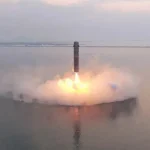
Completed the country’s first vertical takeoff and vertical landing (VTVL) free flight of a liquid oxygen and kerosene rocket, a launch vehicle vertical recovery flight test known as the “grasshopper jump”.
October 13, 2021
Successfully completed the 100-meter VTVL vertical recovery flight test.
May 7, 2022
It successfully completed the kilometer-level VTVL vertical recovery flight test and became the second company in the world to complete all low-altitude engineering tests for vertical recovery and reuse of liquid oxygen and kerosene rockets (the first was SpaceX of the United States).
June 29, 2022
Successfully completed the test run of the 20-ton liquid oxygen kerosene engine “Thunder-R1”.
September 29, 2022
Successfully completed the first secondary start-up test run of China’s commercial aerospace reusable liquid oxygen kerosene engine.
October 8, 2022
The same engine was tested again for a second start without leaving the engine. The first start of the engine worked for 20 seconds and the second start of the engine worked for 20 seconds. Once again, it was a complete success, indicating that the “Thunder-R1” engine has the ability to be reused.
July 2023
Successfully completed the first domestic fairing separation test using a non-pyrotechnic connection unlocking mechanism.
August 2023
Successfully completed the first vertical test bench test of the “Thunder-R1” engine, which lasted 120 seconds.
August 15, 2023
Successfully completed the first three-start complete machine test run of “Thunder-R1” in China.
August 23, 2023
Successfully completed the first three-start test run of the liquid oxygen kerosene engine in the full flight sequence in China.
October 18, 2023
Successfully completed the 420-second long-distance test run of “Thunder-R1”.
November 20, 2023
Successfully completed the 40%-100% online variable thrust test run of the “Thunder-R1” machine.
December 2023
Successfully completed the landing leg expansion and retraction test of the “Nebula-1” liquid reusable launch vehicle.
December 2023 to January 2024
Successfully completed the swing test run of the “Thunder-R1” engine.
March 2024
Successfully completed the test run of the three-machine state power system of the first stage of the “Nebula-1” rocket.
6. Launch services Launch services include two types: exclusive customized launch plans and shared plans that combine satellites from other organizations to ride on the same rocket. Claimed launch cost per kilogram is $5,000. 7. Financing situation
time
rounds
Amount
investors
2019-01
Seed round
tens of millions of yuan
Shunwei Capital led the investment, and Xianfeng Changqing, Zhizhuo Capital and Yanqing jointly participated in the investment.
2022-01
Series A
200 million yuan
Zhencheng Investment led the investment, and Detong Capital, Ori Capital, Galaxy Ventures, and Zhuoyuan Capital co-invested.
2022-04
A+ round
Undisclosed
CMBC International Holdings Group Co., Ltd. led the investment, and Zhencheng Investment and other old shareholders also participated in the investment.
2024-05
Round B
Hundreds of millions of RMB
Founder Hesheng, Jigang Dongtai Fund and other institutions jointly invested.