1. Overview of Starship
Starship is a fully reusable heavy-duty launch vehicle system developed by SpaceX. It consists of a first-stage booster and an upper-stage “Starship”. It is the tallest and most powerful rocket in the world so far.
(1) Basic information
high
diameter
quality
series
121 meters
9 meters
5000 tons
2
(2) Carrying capacity
low earth orbit payload
sun synchronous orbit payload
Simultaneous transfer of orbital loads
Earth-moon transfer orbital load
200 tons (theoretical value is not recovered)
100 tons+
(500 km)
100 tons+ (requires on-orbit refueling)
100 tons+ (requires on-orbit refueling)
2. Overview of the launch situation
first
second time
third time
2023.04.20
2023.11.18
2024.03.14
fail
semi-successful
success
(1) First launch
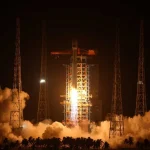
On April 20, 2023, the Starship prototype took off from the Starport in Boca Chica, Texas, USA, and disintegrated 237.474 seconds after ignition.
Reason for failure:
1. The three engines failed to ignite during liftoff, and the starship slid laterally away from the launch pad, causing damage to the launch pad and its surrounding infrastructure.
2. During the ascent, the propellant leaked from the tail of the aircraft, causing methane to accumulate and catch fire, causing the wires to melt, thus cutting off the connection with the main flight computer, causing most of the booster engines to lose communication, and ultimately causing the starship control to be interrupted.
3. About 85 seconds after launch, the thrust vectors of the 13 central engines lost control, and the starship began to spin over the Gulf of Mexico. The Autonomous Flight Safety System (AFSS) automatically issued a destruction command. There was an unexpected delay after the AFSS was activated. The starship did not disintegrate immediately, and the supercharged engine continued to ignite. It was not until 40 seconds after the AFSS was triggered that the starship disintegrated at 237.474 seconds after ignition.
(2) Second launch
In a sense, Starship’s second test flight was a success. In this launch, the starship and the booster rocket successfully completed thermal separation. Except that the booster and spacecraft were not fully recovered as planned, there were few other surprises compared to the process of this launch and the test flight.
Improvements compared to the first time:
1. In order to reduce engine fire and aircraft loss of control, air supply tanks and vents are added.
2. Flight termination system: Adding larger explosives and moving them to more effective locations to terminate the flight. 3. Carry out thermal separation and add a rain shower system on the launch pad.
(3) The third launch
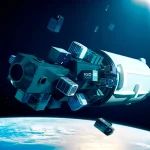
The Starship’s third orbital flight test included a payload bay door opening and closing test, a demonstration of internal fuel transfer technology in orbit and an engine restart attempt in orbit. Since the third test flight has still not actually entered orbit around the Earth, there was no actual demonstration of releasing the satellite. During the test flight, although the hatch jammed when opening, it was still successfully opened after repeated attempts. The first-stage Super Heavy booster successfully performed a return ignition, but fell into the water when it failed to land and ignite as planned while attempting a vertical sea splashdown in the Gulf of Mexico. The second-level starship entered orbit at an altitude of 150 km, and the results of the on-orbit propellant transfer test have yet to be confirmed. About 40 minutes after takeoff, a planned engine restart attempt in orbit was canceled due to excessive roll rates during taxiing.
3. The fourth launch
The goal of the fourth launch is to complete the controlled re-entry of the first-stage super-heavy booster and the second-stage starship to withstand the extreme high temperature environment of the Earth’s atmosphere.
Some improvements compared to the previous three times:
1. A redundant rolling thruster was added to the spacecraft attitude control system: During the third flight, the secondary starship had an attitude control problem, resulting in the loss of some attitude control capabilities.
2. The first-stage super heavy booster adds internal longitudinal beams in the methane tank, which will give the rocket more rigidity.
3. The raising starts later. For secondary starships, methane is released two minutes later and liquid oxygen is released six minutes later. For the first-level super heavy boost, the refilling time is 1 minute and 5 minutes later respectively. The fuel will flow in first, not the oxidizer, unlike the third time.