1. Company Profile
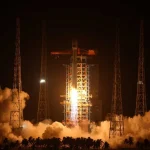
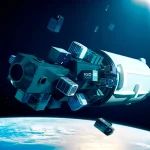
Beijing Galaxy Power Aerospace Technology Co., Ltd. was established in February 2018. It is the first domestic private rocket company to achieve continuous and stable launch success. It is also the first domestic private rocket company to send commercial satellites into the 550km SSO orbit and the first private rocket company to master the capability of launching multiple satellites with one rocket.
2. Introduction of the founder
Liu Baiqi, Ph.D. from Beihang University, once worked at Beihang University and China Academy of Launch Vehicle Technology. He is currently a member of the 14th Beijing Committee of the Chinese People’s Political Consultative Conference and vice chairman of the Commercial Aerospace Branch of the China National Defense Industry Enterprises Association.
3. Product Type Spectrum
(1) Launch vehicles: Ceres-1 and Pallas-1.
1. Ceres 1: “Ceres 1” is a four-stage small solid launch vehicle with a rocket body diameter of 1.4m, a fairing diameter of 1.6m, an arrow length of about 20m, a take-off mass of about 30t, a low-orbit carrying capacity of 400kg, and a 500km SSO orbital carrying capacity of 300kg.
(1) Basic information
series
Basic information
Level 1
A single “Lightyear” GS-1 solid engine is used, with a diameter of 1.4 m, a thrust of 60 t at sea level, and a combustion time of 73 s. The ground specific impulse is 249.5 s.
Level 2
A single “Lightyear” GS-2 solid engine is used, with a diameter of 1.4 m, a thrust of 30 t, and a combustion time of 70 s. The vacuum specific impulse is 285.8 s.
Level three
A single “Lightyear” GS-3 solid engine is used, with a diameter of 1.4 m, a thrust of 15 t, and a combustion time of 70 s. The vacuum specific impulse is 287 s.
Level 4
It uses integrated liquid power for orbit control and attitude control, and uses a 3D printed orbit and attitude control engine. The orbit control engine has a vacuum thrust of 2 kN and a combustion time of not less than 600 s. The vacuum thrust of the attitude control engine is 200 N, and the vacuum thrust of the precision control engine is 25 N.
(2) Carrying capacity
LEO
SSO
(500 km)
SSO
(700 km)
0.4 t
0.3 t
0.27 t
2. Pallas 1: “Pallas 1” is a two-stage medium-sized reusable liquid oxygen/kerosene launch vehicle with a rocket body diameter of 3.35m, a fairing diameter of 4.2m, an arrow length of about 50m, and a take-off mass of about 254t.
(1) Basic information
series
Basic information
Level 1
Using seven CQ-50 (CQ-50) liquid oxygen/kerosene engines, the combustion time is 135 s, the total sea level thrust is 350 t, the sea level specific impulse is 265 s, and the reuse method is vertical recovery.
Level 2
A single vacuum version of CQ-50 (CQ-50V) liquid oxygen/kerosene engine is used, with a vacuum thrust of 60 t and a vacuum specific impulse of 330 s.
Level three
Use a 5000 N or a 2500 N normal temperature liquid engine. The main engine has a swing angle of ±5°, the propellant is dinitrogen tetroxide/monomethylhydrazine and is equipped with several 50 N attitude control engines.
(2) Carrying capacity
LEO
SSO(700 km)
8 t
3 t
(2) Engines: “Border” orbital attitude control power system, “Lightyear” series solid engines, and “Sky” liquid oxygen/kerosene engines.
1. “Border” orbit attitude control power system: independently developed orbit attitude control engine, including 25N, 50N (single/double component), 200N, 300N (single/double component), 700N, 2000N, 2500N and other product series.
2. “Lightyear” series solid engines: “Lightyear” first-stage solid engine GS-1, “Lightyear” second-stage solid engine GS-2, and “Lightyear” third-stage solid engine GS-3.
(1) “Lightyear” first-level solid engine GS-1
diameter
thrust
Burning time
1.4m
60t
73s
(2) “Lightyear” two-stage solid engine GS-2
diameter
thrust
Burning time
1.4m
30t
70s
(3) “Lightyear” three-stage solid engine GS-3
diameter
thrust
Burning time
1.4m
15t
70s
3. “Sky” liquid oxygen/kerosene engine: multiple starts of variable thrust gas generator cycle liquid rocket engine. The rated thrust at sea level is 40 tons, and the maximum thrust at sea level is 50 tons. The minimum working condition is 10 tons of thrust at sea level (variable thrust ratio 4:1). It can be reused 50 times and has a ±6° swing ability.
4. Price
The launch price of Ceres-1 is about 35 million yuan, the research and development cost of Ceres-1 is about 100 million yuan, and the cost of producing a single rocket is about 30 million yuan.
5. Financing
date
rounds
Amount
investors
2018.10.10
angel wheel
20 million yuan
Rich Capital, Yuanhang Capital, Beihang Investment.
2019.12.25
Pre-A
150 million yuan
Puhua Capital, Huaqiang Capital, Sichuan Business Fund, New Potential Fund, Plum Blossom Venture Capital, Wild Grass Venture Capital, and Fed Venture Capital.
2020.09
Series A
200 million yuan
Huaqiang Capital led the investment, followed by Qifu Capital, Dawu Venture Capital, Yuanhang Gaomai Capital, Fed Guantian, and Anhui Jiangnan Industrial Investment.
2023.01.16
Round B
1.266 billion yuan
Oriental Fuhai and Huaqiang Capital led the investment, and were followed by AVIC Hangrong, China Military Financial Investment, Anhui Jiangnan Construction Investment, Chengdu New Economy Fund, Zhongtian Huifu, Yunding Capital, Tianhong Investment, Maiqiu Ventures, Hexin Fangce, Jiusong Heze, Tianqiong Xuanji, Zhidao Capital, Taicang Hongli, Haiyang Ruiming, Looking Up to the Starry Sky, Brilliant Starry Sky, as well as old shareholders New Potential Energy Fund and Yuanhang Capital.
2023.12.18
C round
1.1 billion yuan
Founder Hesheng Investment, Ziyang Heavy Industry Fund, Linkong Fund, Bengbu Zhongcheng Venture Capital.