1. Company Profile
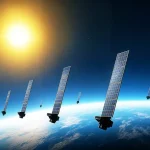
SpaceX is a commercial aerospace company invested and established by Elon Musk in June 2002. SpaceX’s main businesses include rocket launch business, Starlink business and space tourism business. Regarding the rocket launch business, SpaceX has two active rockets, Falcon 9 and Falcon Heavy. Regarding the Starlink business, SpaceX plans to deploy 42,000 low-orbit satellites to provide Internet services around the world. In addition, SpaceX is also developing a fully reusable launch vehicle-Starship. After the establishment of SpaceX, although it experienced many launch failures, it continued to grow and develop with the support of the US government and military. Currently, SpaceX has become the major launch service provider in the United States and one of the largest satellite operators in the world.
2. Establishment background
(1) Policy aspects
Since the retirement of the National Aeronautics and Space Administration (NASA) space shuttle in 2011, the United States has been relying on Russian Soyuz spacecraft to carry out manned spaceflight. In order to change the predicament of being controlled by others, various walks of life in the United States have made many attempts. In 2015, the U.S. Commercial Space Launch Competition Act cleared legal obstacles for commercial space development and clarified the rights of U.S. private institutions to develop space. In 2018, “Space Policy Directive No. 2” “Simplifying the Regulation of the Commercial Use of Space” further simplified the relevant regulatory requirements for commercial space activities. The release of these policies provides a good policy environment for the development and growth of SpaceX.
(2) Market aspects
The growth of SpaceX has taken advantage of the need for new competitors in the U.S. aerospace industry. Before SpaceX, the United Launch Alliance (ULA) formed by Lockheed Martin and Boeing had a long-term monopoly on the U.S. aerospace industry. In order to break the technology and service monopoly of traditional military industry giants, NASA launched the “Commercial Manned Space Program” in 2014. As an emerging commercial aerospace company, SpaceX just met NASA’s needs, so it won a US$2.6 billion contract in one fell swoop. This money not only solved SpaceX’s initial development difficulties, but also provided a financial basis for the development of low-cost rockets and space capsules. In May 2021, the SpaceX Dragon spacecraft carried the Falcon 9 rocket and successfully sent the space capsule into orbit, realizing the United States’ dream of using domestically produced rockets and spacecraft for orbital manned spaceflight since the retirement of the space shuttle.
(3) Industrial supporting facilities
The United States itself is a major aerospace country, with a complete aerospace industry chain system, a large number of aerospace professionals and a solid aerospace industry foundation. Under the “Apollo” moon landing program, there are more than 330 secondary contractors for the “Saturn 5” rocket, and more than 1,400 main contractors are participating in the “Orion” spacecraft and the new-generation “Space Launch System” heavy rocket projects. These supporting supply chains provide a good industrial supporting environment for the start and development of SpaceX. In addition, the U.S. government has given SpaceX a lot of support through various channels. For example, NASA has provided technical support, research and development equipment, and test sites to SpaceX, and the U.S. Air Force has leased launch stations to SpaceX, thus greatly reducing the cost of SpaceX’s aerospace activities.
3. Development process
(1) Initial establishment stage (2002-2009)
After the establishment of SpaceX, it experienced three launch failures of Falcon 1 and fell into a serious financial crisis. On September 28, 2008, Falcon 1 was successfully launched for the fourth time. SpaceX became the first private aerospace company in the world to successfully develop and launch a liquid launch vehicle. It won a US$1.6 billion commercial supply service contract for the International Space Station (ISS), lifting the company’s existential crisis. In July 2009, after the fifth successful launch of Falcon 1, SpaceX has basically acquired the ability to produce its own blood.
(2) Rapid development stage (2010-2016)
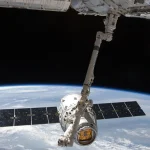
In 2012, the Falcon 9 launch vehicle launched the first-generation Dragon spacecraft into orbit and successfully performed commercial replenishment services for the first time. It became the first commercial spacecraft in the world to deliver cargo to the ISS and began to replenish the ISS regularly. In 2013, the Falcon 9 rocket launched the first commercial satellite into geostationary orbit. In 2014, SpaceX won a $2.6 billion contract to develop next-generation spacecraft for NASA. In 2016, SpaceX announced its entry into the global satellite Internet industry and quickly seized satellite spectrum resources. The company entered a stage of rapid development.
(3) Comprehensive development stage (2016-present)
SpaceX launched the third-generation launch vehicle – the “Falcon Heavy” rocket. “Falcon Heavy” is composed of three “Falcon 9” first-stage rockets. It achieves high thrust through a parallel layout, which greatly improves SpaceX’s competitiveness in the field of commercial rocket launches. In 2019, the Falcon Heavy rocket successfully completed its first commercial launch. In the same year, SpaceX launched the “Starlink” low-orbit Internet broadband constellation networking plan. In 2020, the manned “Dragon” spacecraft achieved its first manned flight, marking that SpaceX became the first private aerospace company with the capability to launch manned spacecraft, and the company entered a stage of comprehensive development.
4. Development path
(1) Technology
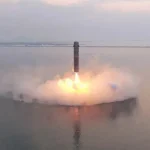
The overall characteristics of SpaceX’s technology route are: focusing on maturity, versatility and innovation. First of all, SpaceX uses a large number of mature technologies in parts and equipment. For example, the injector of the main engine is the same product used in the Apollo lunar module engine. Secondly, SpaceX has fully considered the reuse of components before design and assembly. 80% of the components of the Falcon-1 rocket are designed based on the principle of reuse. At the same time, it emphasizes product versatility. In terms of power system, structural system, navigation control, etc., it strives to be common with subsequent products to avoid repeated investment. Finally, SpaceX continues to promote technological innovation, and its technologies such as lightweight satellites, multiple satellites on one rocket, heavy-lift launch vehicles, rocket recovery, and manned spacecraft are all at the forefront of the world.
(2) Industrial chain
SpaceX continues to promote the optimization of the industrial chain and has a complete supply chain system, covering major links such as satellite R&D and manufacturing, rocket launch, ground station construction, and satellite operation and maintenance. SpaceX’s supply chain system effectively avoids huge supply chain links and fundamentally reduces various costs. In addition, the biggest difference from other aerospace companies is that SpaceX builds its own supply chain and adheres to the principle of “self-sufficiency”. 80% of its parts are produced by itself, which gives SpaceX strong control over its own supply chain. At the same time, SpaceX continues to carry out disruptive innovations, such as “Chopstick Rocket” and “Aerial Refueling” to enhance the core competitiveness of its industrial chain.
(3) Investment and Financing
SpaceX has a diversified and sustainable investment and financing mechanism. On the one hand, SpaceX has accumulated a large amount of capital reserves through financing. On the other hand, SpaceX’s revenue can feed back the development prospects of the company. Based on the mature business model of “rockets + satellites + launch services”, SpaceX has successfully carried out multiple rounds of financing worth hundreds of millions of dollars, attracting many investors such as Google’s parent company Alphabet Inc and Fidelity Investments (Fidelity Investments), and has long-term close cooperation with NASA, receiving a large amount of funding and order support from the military and NASA.