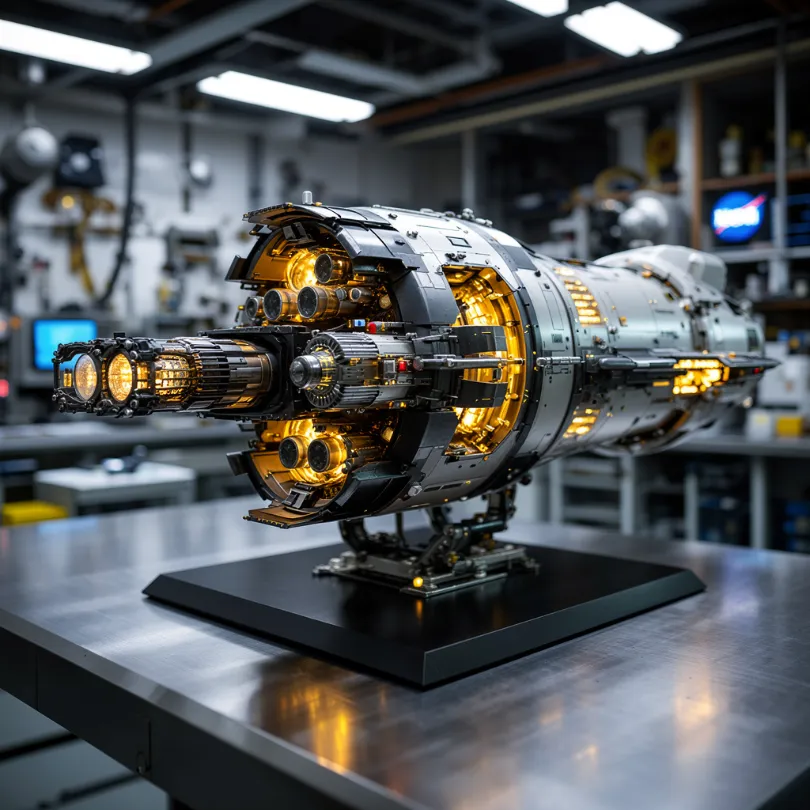
The agency is treating the reactor development as infrastructure for its broader deep space ambitions rather than a single Mars flight. Nuclear propulsion for deep space has been a NASA aspiration for decades, and this is the clearest dollar figure yet attached to making it real.
Jan Wittry, a Pentagon spokesperson, said the agency is leveraging existing hardware and developing the reactor system to prove a capability essential to sustained lunar operations and future Mars missions. That framing positions the reactor as a building block for the Moon program, not a Mars one-off. Redwire Space is named in connection with the program.
The $2.1 billion figure applies to the nuclear spacecraft itself. The science mission payload that the spacecraft would actually deliver to Mars carries costs on top of that amount, which are not reflected in the headline number.
By the terms NASA and the spokesperson have set out, the reactor system is meant to demonstrate a capability described as essential both to sustained lunar operations and to future Mars missions. If that capability becomes standard infrastructure across both destinations, the $2.1 billion figure represents the foundation of a much larger program budget that Congress has not fully priced in yet.
What remains to be seen is how the separate science mission costs are defined and funded, and how the reactor development progresses as a shared capability for lunar and Mars operations.