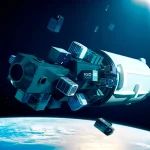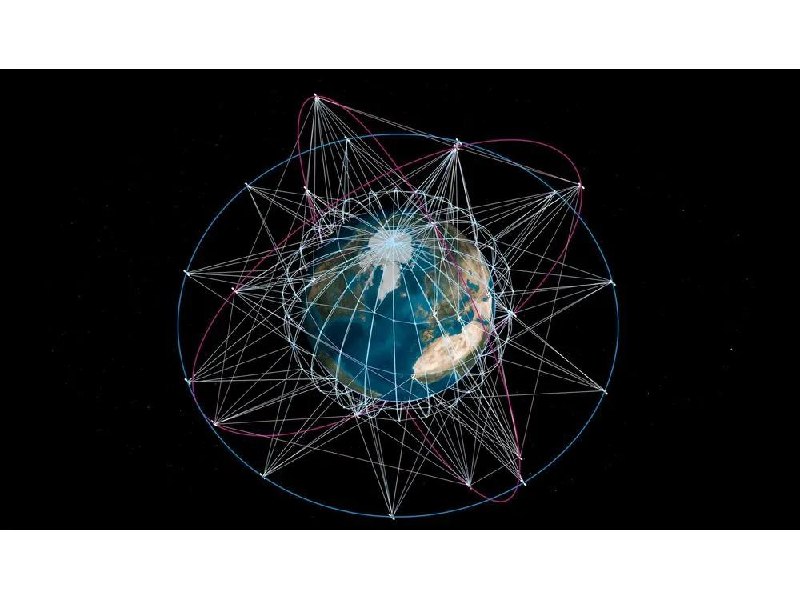
The European Commission selected the SpaceRISE consortium, led by satellite operators Eutelsat, Hispasat and SES, in December 2024 for a one-year design phase, followed by negotiations on the implementation agreement that formed part of Rendezvous 1. At that stage, IRIS² principally included 18 satellites in medium Earth orbit and 264 satellites in high low Earth orbit at an altitude of about 1,200 kilometers, plus 10 or more satellites in a lower orbit for incubating new technologies.
In its announcement, the European Commission said it was adding 66 satellites to the high-LEO shell. The MEO shell remains at 18 satellites, and the announcement did not mention the low-LEO shell, although Hispasat, in its own release, said it remained the lead company for that system. The commission said the additional high-LEO satellites will provide improved defense, security and safety services, estimating they will increase capacity for secure government services by 60% within the European Union and 54% outside it.
“By accelerating the delivery of early defense and security services and reinforcing the IRIS² architecture, we will not only bring the network into operation ahead of schedule but also boost secure governmental capacity by more than 60% within the Union,” said Andrius Kubilius, the EU commissioner for defense and space. While he described the revised version as a “faster-to-market constellation,” the announcement stated that satellite launches will begin in 2029, the same date given when the commission selected SpaceRISE in December 2024.
The cost of IRIS² has also grown significantly. The European Commission did not include a revised estimate in its announcement, but Hispasat said the constellation would now cost 15.6 billion euros, or 18 billion dollars, with the SpaceRISE consortium providing 4 billion euros and the commission, along with the European Space Agency, providing the other 11.6 billion euros. That figure is a 47% increase from the 10.6 billion euro estimate provided in December 2024. Earlier in planning, the commission had proposed a cost of just 6 billion euros.
According to Commissioner Kubilius, the revised architecture will bring the network into operation ahead of schedule while boosting secure governmental capacity by more than 60% within the Union. The commission acknowledged that additional investment in the program budget will be required for the constellation.
That funding would come from the commission’s next multiannual financial framework, which runs from 2028 through 2034, as well as additional contributions from EU member states. The Spanish government announced last month it would contribute 1.6 billion to 2 billion euros for IRIS² through a national military satellite system that could be integrated into the broader constellation. Poland also announced in July it would provide about 750 million dollars by financing six MEO and six LEO satellites.