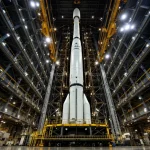
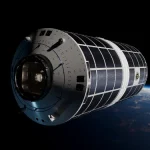
Aphelion Orbitals is developing a family of launch vehicles designed to expand access to space for the nanosatellite market through cost-effective launch services. The company focuses on addressing one of the industry’s longstanding challenges, the limited availability of responsive launch opportunities for small satellites by developing launch systems optimized specifically for nanosatellite missions. The portfolio includes the Trailblazer suborbital launch vehicle, the Helios orbital launch vehicle and a range of in-house propulsion and avionics technologies that support scalable, flexible and responsive launch operations. Aphelion Orbitals is developing dedicated launch solutions intended to provide customers with greater scheduling flexibility, customized mission profiles and direct access to target orbits.
Also Read: What are the the Different Types of Launch Vehicles used in Space?
The rapid expansion of the small satellite industry has created increasing demand for launch services capable of accommodating compact spacecraft on customer-defined schedules. While rideshare missions have lowered launch costs for many operators, they often require payloads to conform to predetermined launch windows, orbital parameters and integration constraints established by the primary mission. These limitations can delay spacecraft deployment and restrict mission flexibility for organizations seeking timely access to space. Aphelion Orbitals is addressing this challenge by developing launch vehicles dedicated specifically to nanosatellite missions, allowing customers to fly as primary payloads without depending on larger spacecraft for mission timing or orbital selection. The company’s launch philosophy centers on reducing the cost of dedicated space access while maintaining responsive launch operations. By combining innovative manufacturing methods with purpose-built launch vehicle architectures, Aphelion Orbitals aims to provide affordable launch services for organizations that may otherwise rely on shared launch opportunities. Dedicated launches allow spacecraft operators to optimize orbital insertion according to mission objectives while simplifying payload integration and reducing scheduling uncertainty. These capabilities are particularly valuable for commercial constellations, scientific missions, technology demonstrations, educational programs and government payloads requiring greater mission control.

The first member of the company’s launch portfolio is Trailblazer, a suborbital launch vehicle designed to make high-frequency suborbital missions more accessible to commercial customers. Suborbital flight provides valuable opportunities for scientific research, technology validation, aerospace testing and educational experiments without requiring full orbital insertion. Trailblazer is intended to support customers seeking rapid and affordable access to the upper atmosphere and near-space environment for payload testing, sensor validation and experimental research. By focusing specifically on responsive commercial suborbital operations, the vehicle expands opportunities for organizations that traditionally face limited access to flight testing. Trailblazer is designed to accommodate diverse customer requirements through configurable mission profiles. The launch vehicle can be adapted according to customer specifications, enabling support for different experiment types and testing objectives. This flexibility allows organizations to design suborbital missions around individual research programs while maximizing the usefulness of each launch opportunity. Such adaptability benefits universities, commercial technology developers, aerospace companies and research institutions conducting flight experiments in near-space conditions. The vehicle is designed to support approximately one-month turnaround between customer booking and launch operations, reducing waiting periods commonly associated with experimental flight campaigns. Rapid scheduling enables organizations to accelerate technology development cycles while providing more frequent opportunities for testing and demonstration. This responsiveness is particularly important for emerging aerospace technologies that require iterative flight validation before progressing toward orbital deployment. The company indicates that the vehicle can be launched from virtually anywhere within the country, providing flexibility in selecting launch locations based on mission requirements and operational considerations.

Helios has been developed specifically to provide dedicated launch services for CubeSats and nanosatellites requiring independent access to orbit. The launch vehicle is designed to deliver payloads of up to 20 kilograms into Sun-synchronous Orbit (SSO) while supporting a variety of additional orbital destinations. Rather than sharing capacity with unrelated missions, customers receive launch services designed specifically to their payload requirements. Helios supports multiple CubeSat configurations, including 1U, 3U, 6U, 12U and other nanosatellite form factors. The vehicle is designed to accommodate payloads with specialized integration requirements, allowing customers to design spacecraft accommodations according to mission-specific needs. Dedicated launch capability enables operators to optimize deployment conditions while supporting satellites intended for Earth observation, communications, scientific research, technology demonstrations and institutional missions. By focusing specifically on the nanosatellite market, Helios addresses a segment where launch demand continues to outpace available dedicated capacity. Beyond Sun-synchronous Orbit, Helios is designed to support missions requiring polar orbits and highly eccentric orbits. Providing access to multiple orbital regimes allows customers to select trajectories that best support their mission objectives rather than adapting spacecraft to available rideshare opportunities. This flexibility is particularly valuable for remote sensing satellites, scientific payloads, communications demonstrations and technology validation programs requiring specialized orbital environments. Supporting the company’s launch vehicles is an internal propulsion development program. Aphelion Orbitals has designed and manufactured multiple rocket engines, including a current family of 250-newton liquid rocket engines used in testing the Trailblazer propulsion system. The company also develops liquid-propellant engines spanning thrust classes from approximately 20 newtons to 30 kilonewtons, enabling propulsion solutions suitable for multiple launch vehicle sizes and mission requirements.

Aphelion Orbitals combines precision manufacturing with advanced propulsion research to support the vehicle development. The company maintains internal capabilities for manufacturing ablative materials and precision engine components used throughout the propulsion systems. Engineers are developing additively manufactured annular aerospike rocket engines, an advanced propulsion concept intended to improve manufacturing efficiency while supporting cost reduction and operational reliability. The use of additive manufacturing enables production of complex engine geometries that may be difficult to achieve through conventional fabrication methods. Vehicle guidance and control are supported by a scalable avionics architecture developed around modern electronics and extensive system testing. These avionics designs have accumulated flight heritage through previous launch vehicle applications. The platform supports several advanced vehicle functions, including aerospike thrust vectoring, while maintaining low mass, reduced power consumption and cost efficiency. The scalable design enables avionics systems to be adapted across different launch vehicles while maintaining consistent operational performance and reliability. Aphelion Orbitals is developing launch systems that address many of the operational limitations associated with traditional rideshare missions. By focusing on dedicated nanosatellite launches, configurable mission profiles, rapid turnaround, innovative propulsion technologies and flexible orbital access, the company is building launch capabilities intended to provide commercial, scientific, educational and government customers with more responsive and mission-specific access to space.
About Aphelion Orbitals
Aphelion Orbitals is an aerospace company headquartered in New Jersey, United States, focused on developing launch vehicles and propulsion technologies for the nanosatellite market. The company is designing dedicated launch solutions to provide responsive and cost-effective access to space through the Trailblazer suborbital launch vehicle and Helios orbital launch vehicle. Aphelion Orbitals develops in-house liquid rocket engines, scalable avionics and advanced propulsion technologies, including additively manufactured aerospike engines. The integrated approach to launch vehicle design, propulsion, and avionics supports commercial, scientific, educational and government missions requiring flexible and dedicated launch capabilities for CubeSats and nanosatellites.