On October 6, 2026, Federal Aviation Administration (FAA) data revealed that commercial space launch activity declined in fiscal year 2026 for the first time since FY2019.
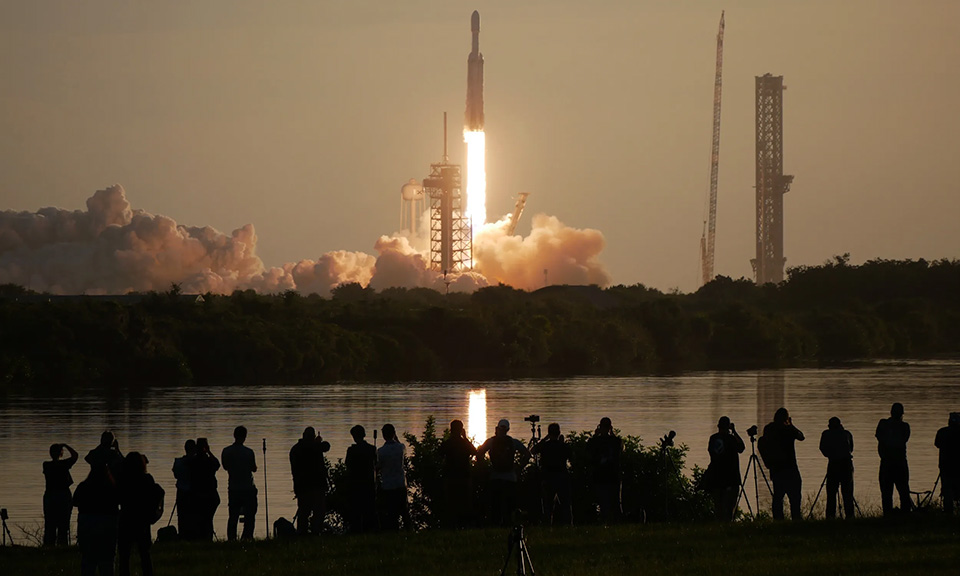
The FAA licensed 187 launches during FY2026—which ended September 30—down from 196 in FY2025. Total licensed operations, including launches and atmospheric reentries, reached 194, falling short of the agency’s projected forecast of 209 to 214 operations.
Launch Capacity Bottlenecks and Spaceport Perspectives
The decline highlights persistent launch bottlenecks across the commercial space domain. Industry executives at a recent spaceport forum noted that satellite operators face severe delays securing launch slots and rideshare occupancy. Forum participants warned that continued government subsidies for legacy launch vehicles risk distorting market dynamics and undercutting private capital investment required to bring next-generation medium- and heavy-lift rockets into commercial operation over the coming years.
Architectural Solutions to Fairing Volume and Manifest Constraints
To mitigate launch manifest constraints, satellite developers are engineering higher-density spacecraft architectures to maximize fairing volume. Satellite infrastructure provider Meridian Space, which recently completed a corporate spin-out, is addressing launch availability from the satellite hardware side.
By replacing bulky traditional dish and phased-array antennas with flat-panel, electronically reconfigurable reflectarrays, Meridian Space’s bus design allows up to 250 satellites to stack within a single SpaceX Falcon 9 payload fairing. This design increases spacecraft capacity per launch vehicle by an order of magnitude compared to traditional smallsat configurations.
In-Orbit Demonstration and Fleet Scaling Roadmap
The core reflectarray technology behind Meridian Space’s high-density architecture achieved a critical operational milestone following the in-orbit activation of its First Customer Link payload. Launched aboard SpaceX’s Transporter-18 rideshare mission on October 1, the demonstrator validated antenna gain, thermal management, and power distribution in low Earth orbit.
As commercial launch providers work through regulatory and manifest backlogs, high-density satellite designs offer constellation operators a pathway to deploy large-scale networks with fewer required rocket launches.