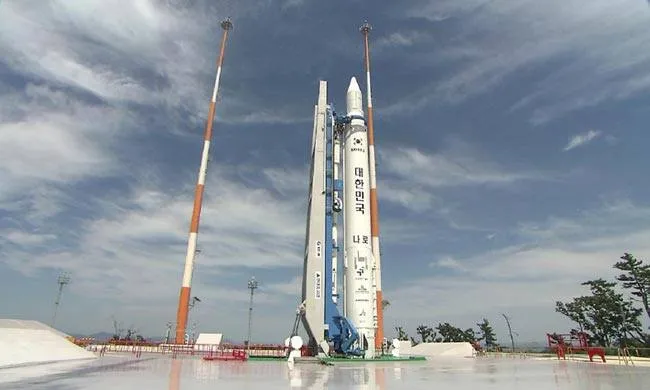
The Mir demonstration, tracked by Next Spaceflight for Wednesday, November 4, would mark the debut of a rocket South Korea’s defense ministry has developed since 2021. South Korean officials have committed only to flying before the end of the year. The demo was originally set for June 30 but slipped over safety concerns.
The week opened Monday, November 2, when Rocket Lab launched The Sea God Surveys on an Electron rocket from Launch Complex 1 on New Zealand’s Māhia Peninsula at 11:41 a.m. EST. The flight carried a QPS-SAR satellite for Japanese company iQPS, marking Electron’s 10th flight for the customer. iQPS is building a fleet of synthetic aperture radar satellites to provide near real-time radar views to customers worldwide. Also Monday, CAS Space, founded by the Chinese Academy of Sciences, targeted 7:10 p.m. EST for a Kinetica 2 launch from the Jiuquan Satellite Launch Center with an undisclosed payload. The only prior Kinetica 2 flight carried SpaceSail satellites, part of a Chinese broadband megaconstellation also known as Qianfan.
On Wednesday, November 4, SpaceX will launch the classified USSF-432 mission for the U.S. Space Force from Vandenberg Space Force Base in California at 8:28 p.m. EST, with the Falcon 9 first stage targeting a landing on the droneship Of Course I Still Love You in the Pacific Ocean. On Thursday, November 5, the China Aerospace Science and Technology Corporation has two launches scheduled. A Long March 2C is set to lift off from the Xichang Satellite Launch Center at 11:00 a.m. EST, followed by a Long March 12 from the Wenchang Space Launch Site on Hainan Island at 4:15 p.m. EST, both with undisclosed payloads. On Friday, November 6, Chinese commercial company Galactic Energy will launch a Ceres 2 rocket from Jiuquan at 6:35 p.m. EST. It will be the second test flight for the Ceres 2, which suffered a first-stage failure and fell short of orbit on its first flight in January.
South Korea’s military plans to use the Mir rocket to launch small military reconnaissance satellites into orbit, the stated purpose behind the solid-fueled vehicle’s development. The Galactic Energy flight is described as a return to flight following the January failure.
The Mir launch window from Jeju Island depends on Next Spaceflight’s tracking, with South Korean officials confirming only that the flight will happen before the end of the year. Looking further ahead, United Launch Alliance is targeting no earlier than Friday, November 13, for the launch of Amazon Leo (LV-01) on a Vulcan rocket from Cape Canaveral Space Force Station, lofting satellites for Amazon’s broadband constellation formerly known as Project Kuiper. Rocket Lab plans to fly The Mountain God Rises from Māhia no earlier than Saturday, November 14, marking Electron’s 100th launch and carrying another QPS-SAR radar satellite for iQPS bound for low Earth orbit.