
Senators built their draft 2027 defense spending bill, released Nov. 16, from elements of President Donald Trump’s $1.5 trillion defense plan. That plan was split between a $1.15 trillion base budget and a $350 billion supplement intended for a separate reconciliation bill, a mechanism that lets the majority party bypass the Senate’s 60-vote threshold for most legislation. The resulting Senate bill totals about $1.1 trillion, which the committee said provides “stable, sustainable, and predictable funding for critical capabilities across the Joint Force.”
Under the Space Force portion of the bill, procurement rose to $13.8 billion, well above both the $4.0 billion enacted this year and the $9.6 billion requested. Research, development, test and evaluation fell to $32.3 billion, below the $38.4 billion request. Operation and maintenance came in at $6.8 billion, and military personnel at $1.8 billion. The committee prioritized procurement over operations and maintenance and research and development accounts.
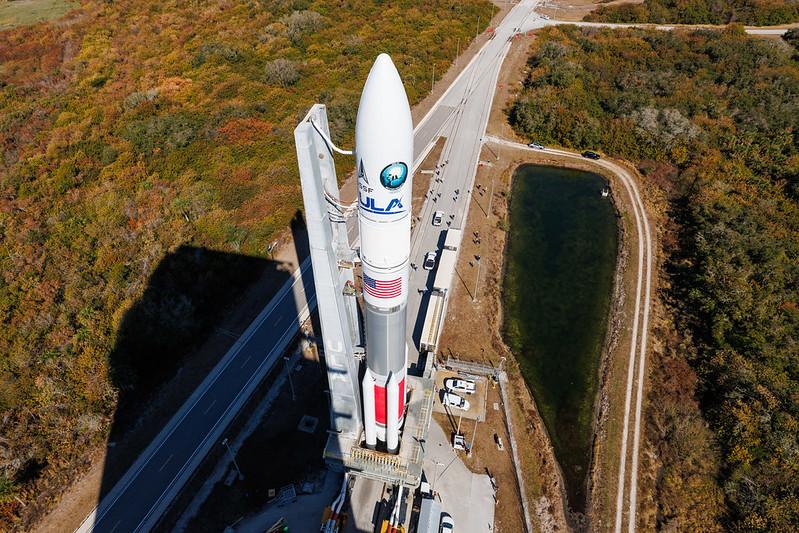
Appropriators would spend $7.08 billion for the National Security Space Launch program, up from the service’s $4.12 billion request. About $835 million of that increase reflects an accounting change combining the NSSL and Space Development Agency launch budgets. The bill also includes $2.1 billion in added classified funds and $890 million drawn from the reconciliation request, and increases total launches from 31 to 54. For Air Moving Target Indicators from space, the Pentagon’s planned $7.7 billion reconciliation investment did not survive, but Senate appropriators approved about $2 billion. The government-commercial Space Data Network, intended to enable high-speed data connectivity and underpin targeting and missile warning systems, received $3.3 billion against an original $3.86 billion reconciliation request.
Senators also agreed to invest $9.4 billion in the Golden Dome missile defense program, placing it among the largest programs in the budget but still only about half the $17.5 billion the White House requested. The Pentagon launched Golden Dome with funds from the One Big Beautiful Bill Act passed in 2025, which can be spent over five years rather than the three-year limit on budgeted funds. Appropriators pushed back on “the creation of a specific fund for enduring requirements that have historically been funded in traditional appropriation accounts,” warning the approach leaves projects vulnerable to political instability.
Lawmakers issued a modest rebuke of the Space Force, noting the service “appears to abandon meaningful competition in favor of sole-source awards” for both the AMTI and SDN programs. They directed service officials “to maintain multiple vendors” in the programs as contracts are awarded using funds in the bill.
Once the full Senate approves the bill, a House and Senate conference committee will work out the differences between the measures.