When Steve Jurvetson walked on stage to open the first SmallSat Symposium, SpaceX was a private company worth roughly $12 billion. Today it trades on Nasdaq at a valuation measured in trillions.
That was Feb. 23, 2016, at the Hogan Lovells offices in Menlo Park, California. More than 300 people packed the room for a two-day event billed as “The Small Satellite Business & Finance Show,” and registration had closed days earlier because the show sold out. Its opening panel carried a title that read like a dare: “No Longer Small.”
The title held up.
This is the first installment of Early Signals, an 11-part SatNews series revisiting every SmallSat Symposium from 2016 through 2026, one year per edition, in the run-up to the 12th show Feb. 9–11, 2027. Each part looks at who was on stage, what they were building at the time and where they stand now.
The opening keynote
Jurvetson came as a partner at venture firm DFJ. His speaker bio listed board seats at Planet Labs, SpaceX and Tesla. SatNews’ recap from that week described a keynote that ran from his childhood memories to his predictions for the industry, and was openly bullish on near-term smallsat growth.
He had reason to be. SpaceX went public June 12, raising $75 billion in the largest IPO on record, and finished its first trading day worth about $2.1 trillion.
Jurvetson left DFJ in 2017 and co-founded Future Ventures with Maryanna Saenko in 2018. He still sits on SpaceX’s board, and he’s still writing space checks. Future Ventures backed Xona Space Systems, which closed a $250 million Series D at a $2.45 billion valuation in October. He also came back to the SmallSat Symposium stage, delivering the keynote again in 2021.
Two years before orbit
The last panel of Day 1 tackled cost savings and budgets in small satellite programs. Moderated by Latham & Watkins partner John Janka, it put Rocket Lab CEO Peter Beck alongside Chris Boshuizen, then a principal at Data Collective, the firm now known as DCVC.
Electron hadn’t flown yet. Rocket Lab’s rocket reached orbit for the first time in January 2018, and the company went public in 2021. Today Rocket Lab is worth more than $30 billion.
Some of the money behind that climb was in the building, too. When Rocket Lab closed a $140 million Series E in November 2018, Bessemer Venture Partners, DCVC and Promus Ventures were all listed among its existing investors. Bessemer’s Sunil Nagaraj and Promus founder Mike Collett both spoke on finance panels at the 2016 show.
Boshuizen, a Planet co-founder, returns later in this series as the 2022 keynote speaker.
The rest of the room
Planet had more than a board connection in the room. Mike Safyan, then Planet Labs’ director of launch and regulatory affairs, spoke on the risk and regulation panel. Planet listed on the NYSE in 2021 and is worth about $4.4 billion today. Safyan came back as a keynote speaker in 2019.
Spaceflight Industries CEO Jason Andrews sat on both the launch provider roundtable and the earth observation panel. Spire Global launch manager Jenny Barna spoke on hosted payloads and shared launches. Clyde Space founder Craig Clark, Kymeta’s Tom Boyer, Deep Space Industries CEO Daniel Faber and Tyvak’s Marco Villa all took turns on stage.
Money was the show’s center of gravity. Four of its sessions dealt directly with financing, structuring or cost. Lux Capital’s Shahin Farshchi, Space Angels’ Amir Blachman, Near Earth’s Hoyt Davidson and Raymond James analyst Chris Quilty were among the voices explaining how investors were sizing up a sector most of them still called emerging.
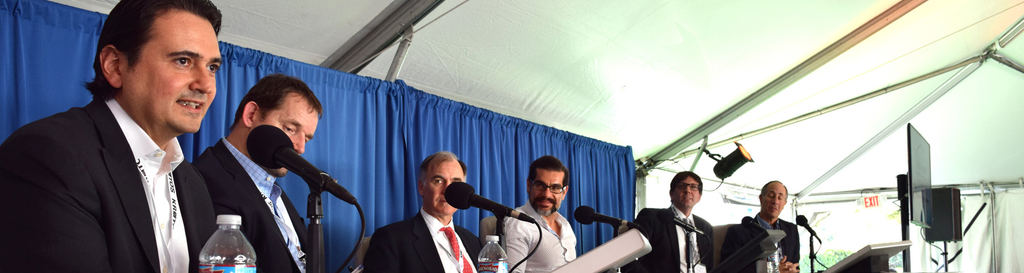
Day 2 opened with a keynote from John Paffett, CEO of Surrey Satellite Technology US, who walked through the growth SSTL had already seen and urged companies to move on the opportunities showing up almost daily.
The 2016 agenda, read as a scorecard
The Day 2 earth observation session description counted close to 400 imaging satellites planned for launch by 2025 and listed the companies racing to build them. Among them: Skybox Imaging, Satellogic, BlackSky and Planet.
Read that list today and it doubles as a scorecard. Skybox ended up inside Planet, which bought it from Google as Terra Bella in 2017. BlackSky and Satellogic both went public, and Satellogic reported record revenue this month.
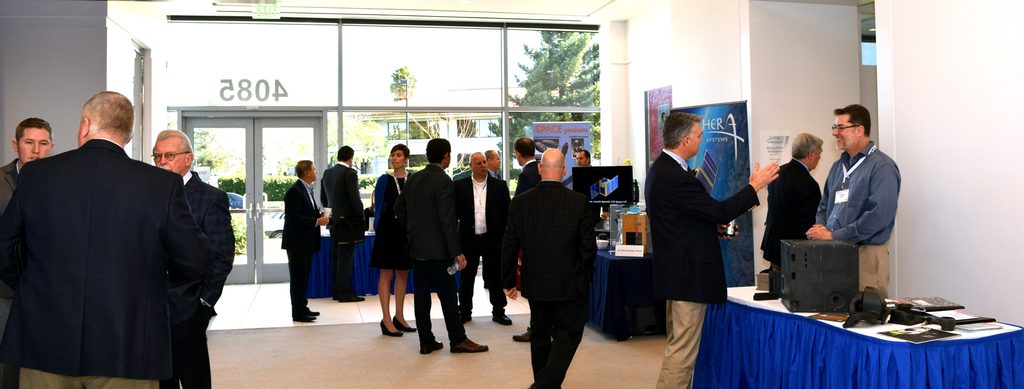
The exhibition began on a modest scale, too. The first SmallSat Symposium had just 12 exhibitors. DHV and SFL were among that original group and have exhibited at every edition since.
The 12th SmallSat Symposium runs Feb. 9–11, 2027, at the Computer History Museum in Mountain View. Next week: 2017, the year the show moved there.