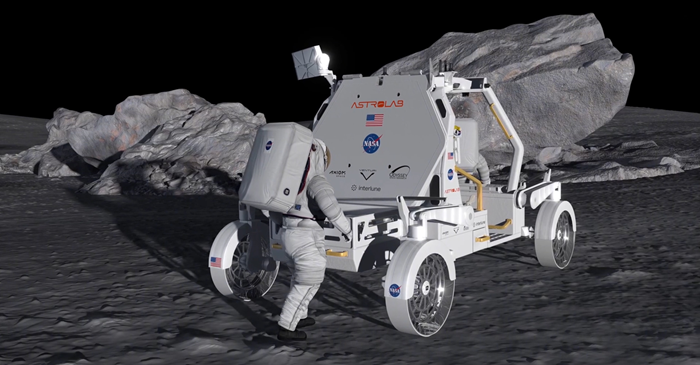
Astrolab is developing next-generation lunar mobility systems designed to support sustained human and robotic operations on the Moon. Through the FLEX Rover, FLEX Services ecosystem and FLIP technology demonstration platform, the company is building transportation, logistics, exploration and infrastructure capabilities intended to enable a scalable off-Earth economy and long-term human presence beyond Earth. Astrolab’s rover technologies are designed to support astronaut transportation, scientific research, cargo logistics, construction activities, resource utilization and infrastructure deployment across challenging lunar environments. The company’s approach emphasizes modularity, reusability and commercial scalability, allowing a single mobility platform to support a broad range of government, scientific and commercial missions.
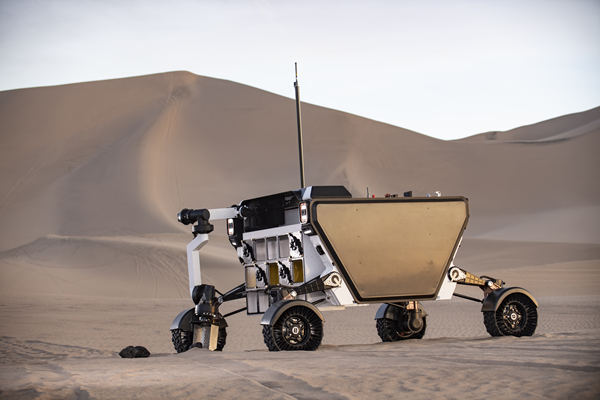
At the center of Astrolab’s lunar mobility strategy is the FLEX Rover, a commercial Lunar Terrain Vehicle (LTV) engineered to support a wide variety of activities required for sustained lunar exploration and settlement. FLEX was developed as a modular platform capable of supporting multiple payloads, customers and operational scenarios over the service life. The rover is designed to transport both astronauts and cargo while supporting scientific exploration, logistics operations, infrastructure development, resource extraction and site preparation activities. As required under NASA’s Lunar Terrain Vehicle program objectives, FLEX can carry two suited astronauts while simultaneously supporting robotic operations through an integrated robotic arm system. The vehicle is also capable of remote operation from Earth when astronauts are not present, enabling continuous mission utilization and increased operational flexibility. One of FLEX Rover’s most significant capabilities is the ability to transport up to 1600 kilograms of cargo and payloads with volumes exceeding 3 cubic meters to the lunar surface. This cargo capacity supports a wide range of mission requirements, from scientific instruments and communications infrastructure to construction equipment and resource utilization systems. The rover also provides customers with integrated support services including power distribution, data connectivity, thermal management and robotic deployment assistance, creating a comprehensive mobile platform for lunar operations. A defining characteristic of FLEX Rover is the FLEX Universal Payload architecture, a modular payload transportation and deployment system specifically designed to facilitate commercial and scientific operations on the Moon. Astrolab’s approach addresses this challenge through a standardized payload interface that allows equipment and cargo to be transported between landers and rovers while supporting rapid deployment and reconfiguration on the lunar surface. The FLEX Universal Payload concept enables customers to transport scientific instruments, commercial payloads, infrastructure components and logistics equipment using a common interface architecture.
By reducing integration complexity and increasing interoperability, the system is designed to support a broader ecosystem of lunar activities while encouraging participation from a wider range of commercial and institutional customers. This modular approach is intended to support the emergence of a sustainable lunar economy where payloads can be repeatedly transported, relocated and deployed as operational requirements evolve. Astrolab envisions FLEX as a foundational mobility system supporting the movement of large quantities of cargo needed to establish and maintain future lunar outposts. FLEX Rover incorporates a unique wheel-on-limb mobility architecture that allows the vehicle to adapt to highly variable lunar terrain conditions while maintaining stability and operational effectiveness. The system enables the rover to dynamically adjust chassis ground clearance, raising or lowering the vehicle to accommodate terrain irregularities and mission-specific tasks. This capability not only improves mobility across uneven surfaces but also allows the rover to lower instruments, payloads and equipment directly to the ground for deployment and operational use. The adaptive mobility architecture also supports autonomous collection and transportation of modular payloads. By combining adjustable suspension systems with payload handling capabilities, FLEX is designed to perform a wide range of logistics and infrastructure support functions beyond traditional exploration activities. Particularly important for lunar south pole missions, where terrain can be highly challenging and illumination conditions complex, the rover’s mobility system is intended to provide reliable access to operational sites while maintaining vehicle stability and payload integrity. A key operational feature of FLEX Rover is the integrated six-degree-of-freedom (6DOF) robotic arm designed to support deployment, manipulation and servicing tasks on the lunar surface. The robotic arm offers payload handling capability exceeding 25 kilograms within a two-meter operational workspace. Equipped with a modular end effector, the system can be configured for a variety of mission applications including payload deployment, equipment installation, infrastructure assembly, scientific sampling and operational servicing tasks. Astrolab designed the robotic arm to support both crewed and autonomous mission scenarios. During astronaut-assisted operations, the arm can serve as a force multiplier for surface activities, while during autonomous missions it enables independent deployment and interaction with scientific instruments and infrastructure systems.
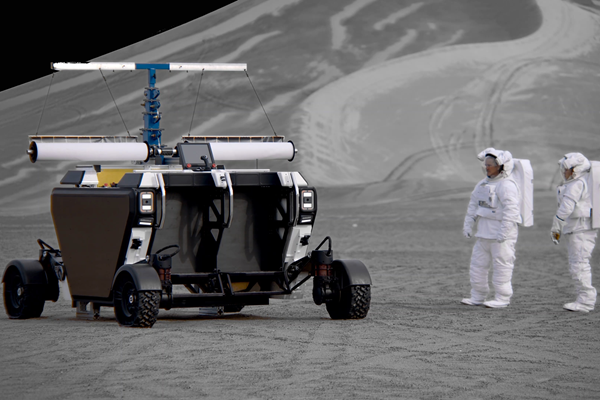
The arm is also capable of supplying mechanical support and electrical interfaces to deployed payloads, enabling more sophisticated surface operations that extend beyond simple transportation functions. This capability significantly expands the operational utility of the FLEX platform across scientific, commercial and infrastructure-focused missions. Lunar dust remains one of the most challenging environmental factors affecting spacecraft and surface systems. FLEX Rover incorporates dust-tolerant quick-disconnect interfaces and blind-mate umbilicals designed to maintain reliable payload connections under harsh lunar conditions. These interfaces provide payloads with regulated electrical power, data communications and thermal management services while minimizing operational complexity during deployment and retrieval activities. The ability to connect and disconnect payloads efficiently is critical for supporting large-scale lunar logistics and infrastructure operations. The rover’s integrated payload support services effectively transform FLEX into a mobile utility platform capable of supporting a wide variety of customer equipment throughout mission lifecycles. This approach allows payload developers to focus on mission-specific objectives while providing Astrolab’s mobility and support infrastructure. FLEX Rover incorporates several technologies developed in collaboration with Astrolab’s strategic partner Venturi, including advanced lunar wheel systems and battery enclosures designed specifically for extreme lunar environments. The rover utilizes hyper-deformable lunar wheels engineered to remain highly flexible while maintaining durability and structural integrity. These wheels are designed to deform in response to terrain irregularities, improving traction, stability and ride performance while supporting vehicle masses approaching two tonnes when fully loaded. The wheel design is intended to withstand harsh radiation exposure and challenging terrain conditions expected at the lunar south pole. Operating speeds of up to approximately 20 kilometers per hour are supported while maintaining stability and payload protection. The rover also incorporates a specialized battery enclosure designed to maintain consistent performance despite extreme temperature fluctuations that can occur on the lunar surface. The enclosure is engineered to support operations through temperature variations ranging from approximately -230°C to -90°C, helping ensure reliable power availability during extended missions. Complementing the rover platform itself is Astrolab’s FLEX Services offering, a commercial lunar transportation and logistics framework designed to support customers operating on the Moon. The company envisions FLEX Services as a scalable infrastructure solution capable of supporting deployment of hundreds of tons of modular payloads per month. These services are intended to facilitate scientific research, infrastructure construction, resource extraction, site surveys, logistics operations and human support activities required for sustained lunar presence. The flexibility of the rover architecture enables multiple vehicles to collaborate on larger operational tasks. For example, multiple FLEX rovers could work together to relocate landers, transport oversized infrastructure components, or assist with construction projects supporting future lunar habitats. This cooperative operational model aligns with broader industry efforts to establish reusable and scalable lunar transportation systems capable of supporting increasingly complex surface operations.
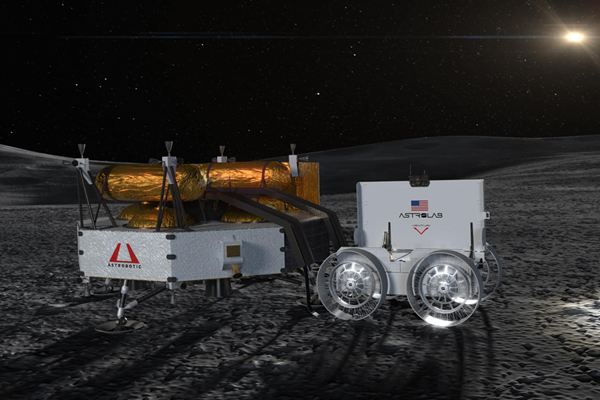
Supporting the development of the FLEX platform is Astrolab’s FLIP Rover, a technology demonstration vehicle designed to validate critical systems and components under actual lunar operating conditions. FLIP is scheduled to deploy to the lunar south pole as part of Griffin Mission 1 and serves as a key element of Astrolab’s rapid spiral development strategy. This methodology emphasizes iterative design-build-test-fly cycles that enable technologies to mature through operational experience and continuous improvement. The rover will test numerous components and subsystems intended for future FLEX missions, including full-scale batteries, wheels, avionics systems, sensors and software architectures. Data collected during FLIP operations will provide valuable insights that support further refinement of Astrolab’s lunar mobility technologies. FLIP offers customers opportunities to conduct scientific investigations and gather operational data. One important area of focus involves studying lunar dust behavior and developing mitigation strategies for protecting vehicles, infrastructure and spacecraft systems from dust-related degradation. The rover’s payload capacity also allows scientific and commercial customers to deploy technologies and experiments to the lunar south pole, providing additional opportunities for technology demonstration and surface operations research. Through the FLEX Rover, FLEX Services ecosystem and FLIP technology demonstration platform, Astrolab is developing a comprehensive lunar mobility architecture designed to support these emerging requirements. By combining modular payload systems, advanced mobility technologies, robotic operations and scalable logistics capabilities, the company is contributing to the infrastructure necessary for long-term operations on the Moon and future planetary destinations. Astrolab’s focus on reusable, flexible and commercially scalable mobility solutions reflects broader industry efforts to transform lunar exploration from isolated missions into a sustainable operational ecosystem capable of supporting scientific discovery, commercial development and human expansion beyond Earth.
About Astrolab
Astrolab is a space technology company headquartered in Hawthorne focused on developing lunar mobility systems, surface logistics solutions and planetary exploration infrastructure for government and commercial missions. The company designs rover platforms and transportation services intended to support scientific research, cargo delivery, infrastructure deployment, resource utilization and sustained human operations on the Moon and future planetary destinations. Astrolab’s portfolio includes the FLEX Rover, a commercial Lunar Terrain Vehicle (LTV) designed to transport astronauts, cargo, scientific instruments and infrastructure components across the lunar surface. The rover features a modular payload architecture, robotic handling capabilities, adaptive mobility systems and integrated power, data, and thermal services to support a wide range of lunar mission requirements. The company also offers FLEX Services, a lunar logistics and payload transportation framework designed to support the deployment, movement and operation of commercial and scientific payloads on the Moon. Through its FLEX Universal Payload architecture, Astrolab enables standardized cargo transportation and surface deployment for future lunar infrastructure and exploration activities. Astrolab is developing the FLIP rover, a lunar technology demonstration platform designed to validate mobility systems, batteries, avionics, sensors, software and lunar dust mitigation technologies in preparation for future operational missions. Through its rover technologies and surface mobility solutions, Astrolab is contributing to the development of sustainable lunar exploration and long-term off-Earth operations.