
Author: starpathwp-production
-
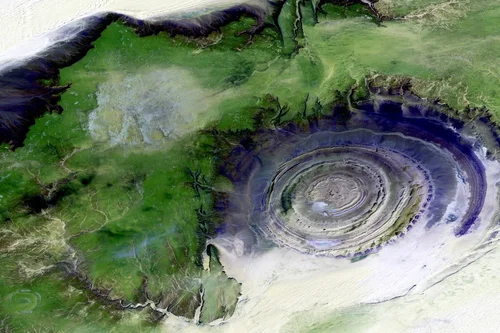
Braking maneuver puts satellite in lunar orbit
China’s Queqiao 2 relay satellite entered a lunar orbit after successfully braking near the moon, the nation’s space administration announced on Monday. The satellite carried out a braking operation at 12:46 am about 440 kilometers above the lunar surface, and entered a lunar orbit 19 minutes later, the China National Space Administration said in a…
-

China launches new satellite to monitor atmospheric, space environments
China launched a new satellite from the Taiyuan Satellite Launch Center in its northern Shanxi Province on Wednesday morning. A modified version of a Long March-6 rocket carrying the Yunhai-3 02 satellite lifted off at 6:51 a.m. (Beijing Time). The satellite has entered the preset orbit and will be used for atmospheric and marine environment…
-
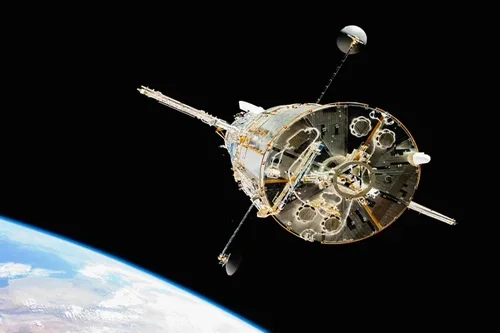
Astranis Partners with Orbith to Launch a Dedicated MicroGEO Satellite for Argentina
Astranis has announced its new partnership with Orbith, a fast-growing, Latin American Internet Service Provider, to provide a dedicated MicroGEO communications satellite for Argentina. This deal is an exciting opportunity in a country that has proven its openness to disruptive technologies and ideas. This new partnership with Orbith is a great opportunity to expand Astranis…
-

Satellite Business Gets ‘Marriage Advice’ on Relationship With Telco Partners
The relationship between satellite operators and telcos can at times seem like a troubled marriage — “It is difficult to live together. But it’s more difficult to live alone,” Jean-Luc Vuillemin, special executive advisor to the CEO of mobile network operator Orange, told a session at last week’s SATELLITE 2024. Leaders representing Orange, Telstra, and…
-

UK Space Agency to Open New Headquarters in Harwell Science Campus Space Cluster
The UK Space Agency is opening new headquarters in Harwell, Oxfordshire, and regional offices in Scotland, Wales, and the Midlands as it works to support the space sector across the UK. Aligned with the government’s Levelling Up strategy, the expansion will enable the Agency to collaborate more closely with the UK’s thriving space sector, while…
-
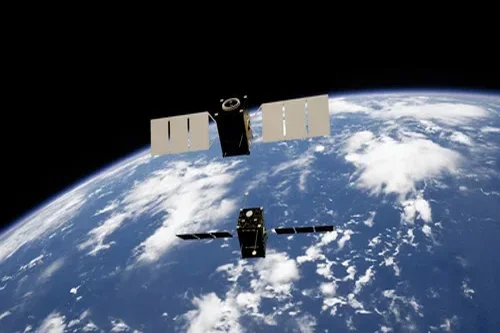
Astrobotic’s Xodiac Completes First Night Flight in Preparation for NASA’s TechLeap Challenge
Astrobotic’s Propulsion & Test department flew Xodiac, a vertical-takeoff, vertical-landing (VTVL) reusable terrestrial rocket, for its first-ever night flight. The tethered night test prepared Xodiac for upcoming flight testing with the NASA TechLeap Prize’s Nighttime Precision Landing Challenge, managed by NASA’s Flight Opportunities program. TechLeap is designed to rapidly identify and develop technologies of interest…
-
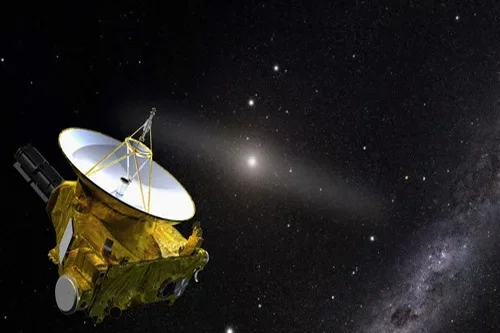
Optical Ground Station: Safran Revolutionizing Space Communications
Imagine ultra-fast data transfers between satellites and ground stations, enabling real-time transmission of high-definition data and images! This is made possible by optical technologies, which free space communications from the distance and range limitations of radiofrequency systems. Safran Data Systems is positioning itself as a major player in this revolution. Focusing on optical technologies Going farther,…
-

Daily Telescope: A protostar with a stunning protoplanetary disc
Welcome to the Daily Telescope. There is a little too much darkness in this world and not enough light, a little too much pseudoscience and not enough science. We’ll let other publications offer you a daily horoscope. At Ars Technica, we’re going to take a different route, finding inspiration from very real images of a…
-

Three options for seeing the solar eclipse, from expensive to iffy to absolutely free
Skywatchers gather at Seattle’s Gas Works Park to watch the progress of 2017’s solar eclipse. (GeekWire Photo) After a seven-year gap, a total solar eclipse is once again due to make a coast-to-coast run across North America, boosting popular interest (and airfares) to astronomical proportions. The track of totality for the April 8 eclipse doesn’t…
-
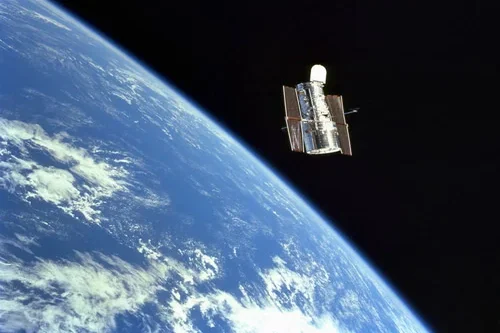
Apex Releases Satellite Selfie Following Successful First Payload Commissioning
Apex, the Los Angeles-based spacecraft manufacturing company, released its “satellite selfie,” an image taken by its Aries SN1 spacecraft. The photograph was taken by a payload owned by Apex, which completed commissioning last week. The image was taken by a camera mounted on the satellite bus’s payload deck. The camera captures one of the deployed solar…