
Author: starpathwp-production
-
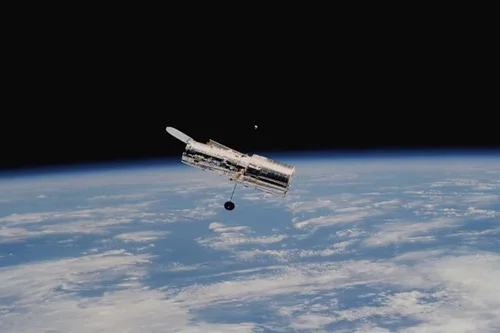
Quad Core LEON4FT Processor from CAES Selected for SpaceLogistics’ Next Mission
CAES, one of the leaders in advanced mission-critical electronics for aerospace and defense, has announced that its radiation-hardened microelectronics are on board SpaceLogistics’ Mission Robotic Vehicle (MRV) Spacecraft, and the Mission Extension POD (MEP), which will be deployed to assist in extending the life of aging satellites in space. The MRV is the second-generation servicing…
-
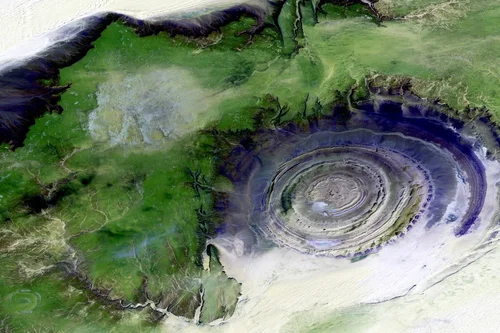
China launches Wentian space lab
China on Sunday launched Wentian, the first lab module of its space station. The new module will function both as a backup of the core module and as a powerful scientific experiment platform. The Wentian module is 17.9 meters long, has a maximum diameter of 4.2 meters, and a takeoff mass of 23 tonnes. The…
-

Shenzhou-14 astronauts enter Wentian lab module
On Monday at 10:03 a.m. (Beijing Time), the Shenzhou-14 astronauts opened the hatch door of Wentian, the first lab module of China’s space station, and entered the module, according to the China Manned Space Agency (CMSA). It was the first time the Chinese astronauts had entered the lab module in orbit. The Wentian module, launched…
-

Wentian lab module docks with Tianhe core module combination
Wentian, the first lab module of China’s space station, has successfully docked with the combination of the Tianhe core module, according to the China Manned Space Agency (CMSA). The Wentian module, launched on Sunday afternoon, docked with the front port of Tianhe at 3:13 a.m. Monday (Beijing Time), after it entered the planned orbit and…
-

Tianzhou-3 cargo craft re-enters atmosphere under control
China’s Tianzhou-3 cargo craft re-entered the atmosphere in a controlled manner at 11:31 a.m. (Beijing Time) Wednesday, according to the China Manned Space Agency (CMSA). Most of the spacecraft’s components burned up during the re-entry, and a small amount of its debris fell into the scheduled safe waters of the South Pacific, the CMSA said.…
-
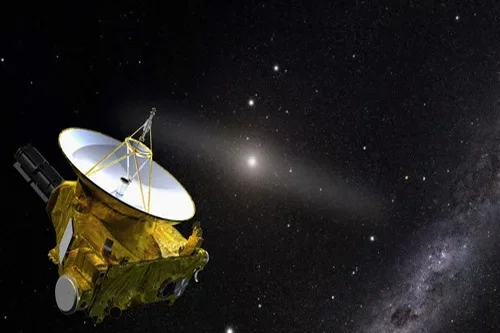
Hubble vs JWST: How James Webb telescope’s first images stack up to the legend
What are the differences between Hubble and JWST? James Webb Space Telescope is the successor to Hubble on paper. However, Webb is not a replacement for the older Hubble. The main difference between images captured by each telescope is the wavelength range observed. Hubble can see in the ultraviolet, visible, and near-infrared range. JWST focuses…
-

Zhongke-1A makes a successful debut from Jiuquan
The CAS Space Zhongke-1A, an all-solid four-stage small to medium-lift launch vehicle, made its first-ever launch at 04:12 UTC on Wednesday, July 27. The rocket successfully flew from Jiuquan in the remote Inner Mongolia desert region of northwest China. CAS Space, also known as Zhongke Aerospace, is a spinoff company partially owned by the Chinese…
-

Orion teams ready for Artemis 1 as pre-launch preparations head into the home stretch
With the Artemis 1 mission just weeks away from launch, teams at NASA and the program’s contractors are carrying out final preparations for this major milestone in the effort to return humans to the Moon. NASASpaceflight sat down with Mike Hawes, the Vice President and Program Manager for Orion at Lockheed Martin to discuss how…
-
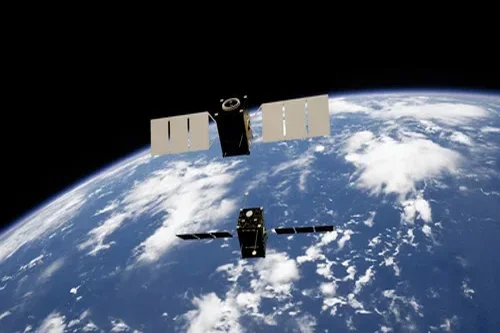
James Webb Space Telescope stamp collection coming to USPS in celebration of deep space photos
Background Decades in the making, James Webb Space Telescope is the successor to the Hubble Space Telescope. It’s named after James Webb, who served as the second NASA Administrator including during the early Apollo era. Image details captured by JWST contain much more detail than its predecessor that was launched over 30 years earlier in…
-
Data from OSIRIS-REx reveals loose surface of asteroid Bennu and “early aging” of asteroids
Recently analyzed data from an asteroid surface-sample collection performed by NASA’s OSIRIS-REx mission has revealed that asteroid 101955 Bennu’s surface regolith is much looser than previously thought. Had OSIRIS-REx not fired its thrusters to back away from Bennu after collecting its sample, the spacecraft likely would’ve sunk straight into Bennu’s surface. What’s more, additional data…