
Author: starpathwp-production
-

ADIPEC 2026: How Do You Upgrade an Oil and Gas Facility While It’s Still Running?
An oil or gas facility can have room to produce more even when there is little room to build. In his ADIPEC 2026 article Brownfield Modernisation: Unlocking the Next Era of Middle East Energy, Technip Energies’ Dominique Gadelle argued that some of the region’s most attractive opportunities lie in assets that have already been operating…
-

ADIPEC 2026: Can Power Grids Keep Up With Renewable Growth?
Francesco La Camera, Director-General of the International Renewable Energy Agency (IRENA), told ADIPEC 2026 that infrastructure has become the main bottleneck for renewable power. Adding solar and wind capacity is only part of the job. Electricity still needs to move from where it is generated to where it is needed, through networks that can balance…
-

ADIPEC 2026: How AIQ Would Investigate a Pipeline Pressure Drop
When pressure drops between two points on a pipeline, an operator has a section to investigate and a decision to make about sending someone into the field. At ADIPEC 2026 in Abu Dhabi, AIQ Chief Executive Officer Dennis Jol used that scenario to show how pressure readings, cameras, drones, and field crews could work together…
-

ADIPEC 2026: ADNOC Gas Eyes Northern Emirates Supply. How Can Operators Manage Pipeline Corridor Risks as Networks Expand?
At ADIPEC 2026 in Abu Dhabi, ADNOC Gas CEO Fatema Mohamed Al Nuaimi said gas buyers are looking for more flexibility in how they secure supply. Long-term contracts remain an important part of that strategy, but buyers also want a wider choice of suppliers, contract lengths, and pricing mechanisms so they can adjust when demand…
-
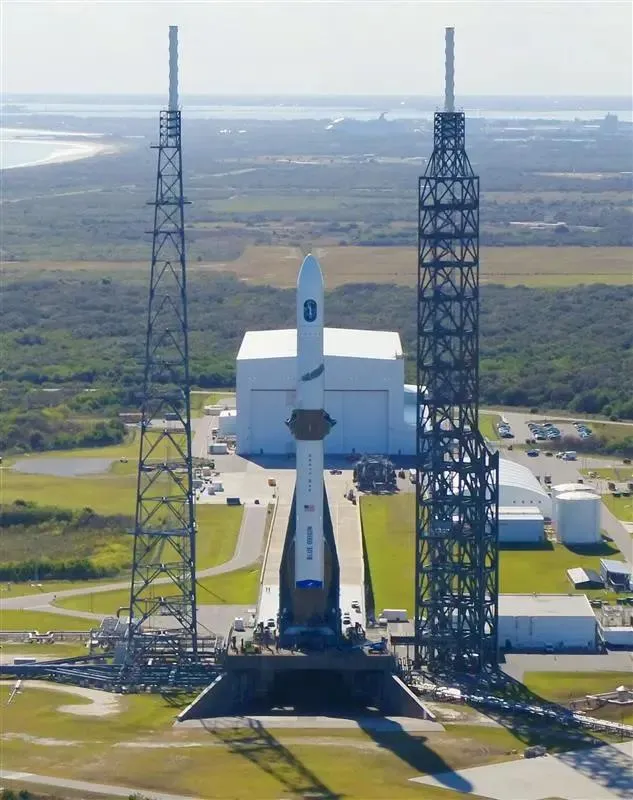
Blue Origin Pushes Next New Glenn Launch to January 2027 After Pad Explosion
The cause is physical rather than procedural. A major explosion during testing in May 2026 caused extensive damage to Blue Origin’s Florida launchpad, and the revised schedule follows from that damage. The delayed mission was meant to carry Amazon internet satellites, though the reporting does not specify how many were on the manifest. Chief executive…
-
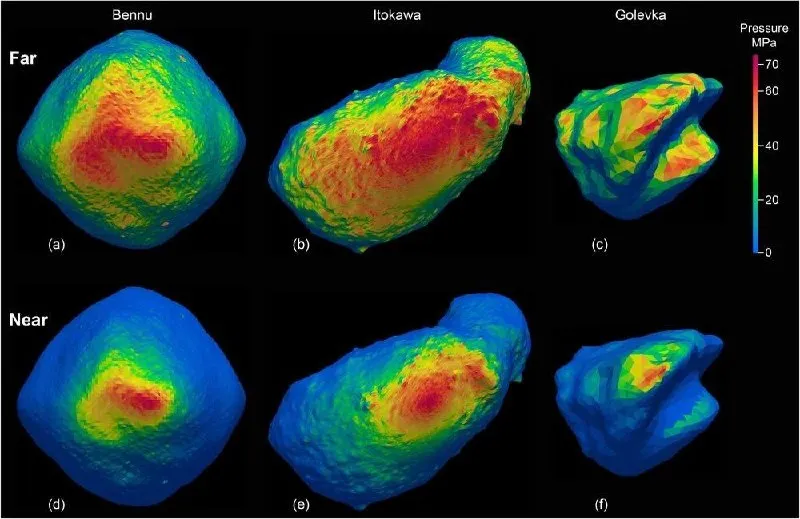
Asteroid Shape Determines Nuclear Deflection Success, New Sandia Study Finds
The work addresses a scenario considered an option of last resort: deflecting a near Earth object or comet discovered too late for a simple kinetic impactor to work. In that case, researchers argue, late interception might only be possible with the higher energy concentration of a pulsed energy device, meaning a nuclear weapon. Rather than…
-

Ukraine Pushes for New Starshield Deal as October Outage Questions Linger
Ukraine relies on SpaceX’s Starshield, the US military variant of the Starlink satellite network, for drone operations against Russian threats and targets. In October, Ukrainian officials claimed a sudden change to the Starshield network, which they directly attributed to the failure of drones and defenses. Around the same time, US President Donald Trump announced a…
-

Redwire Wins $20M DARPA Contract for Scaled SabreSat VLEO Precursor Flight
JACKSONVILLE, Fla. — Redwire Corporation has secured a $20 million contract from the Defense Advanced Research Projects Agency (DARPA) to conduct additional testing and experimentation under the agency’s Otter program, the company announced on Thursday, Nov. 5, 2026. The award funds a precursor flight test in very low Earth orbit (VLEO) using a scaled-down version…
-

Pentagon Commits $150M OSC Loan to LeoLabs in $300M Radar Network Expansion
WASHINGTON — The Pentagon’s Office of Strategic Capital (OSC) has issued a conditional loan commitment of $150 million to commercial space tracking provider LeoLabs to finance the expansion of its global radar network, as reported on Wednesday, Nov. 4, 2026. Under the financing arrangement, the federal loan commitment is structured to be matched by private…
-
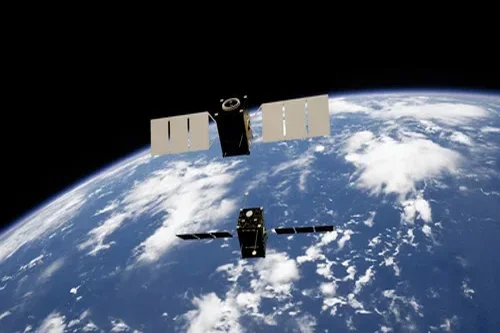
UniSQ Demonstrates Tomographic Spectrometer During KREPE-3 Re-Entry Campaign
TOOWOOMBA, Australia — Researchers from the University of Southern Queensland (UniSQ) successfully captured the atmospheric breakup of returning spacecraft using a computed tomographic imaging spectrometer (CTIS) during an airborne observation mission over the Pacific Ocean, the university announced on Thursday, Nov. 5, 2026. The flight collected real-time spectral data during the Oct. 12 re-entry of…