
Author: starpathwp-production
-

Sidus Space Announces Successful Completion of Integration of LizzieSat-3
Sidus Space, an innovative, agile space mission enabler, announced the successful completion of integration with the launch vehicle for LizzieSat-3 at the Astrotech Space Operations facility at Vandenberg Space Force Base in California. LizzieSat-3 has been turned over to SpaceX and is ready for launch no earlier than the first quarter of 2025 as part of…
-

Redwire to Deliver Mako Spacecraft for US Space Force Tetra-6 Mission
Redwire Corporation, a leader in space infrastructure for the next-generation space economy, announced it has been awarded a contract by Orion Space Solutions to deliver a Mako spacecraft to support Tetra-6, a U.S. Space Force (USSF) Space Systems Command (SSC) mission. The Tetra-6 mission is a follow-on contract to the USSF/Air Force Research Laboratory (AFRL)…
-

Why do Satellite Components not need Radiation-Hardened Testing for use in LEO?
Satellite components doesn’t need radiation-hardened testing for use in LEO orbit because the radiation levels encountered are relatively low compared to other environments such as deep space or near nuclear reactors. The radiation environment in LEO is considerably less severe than in other orbits (MEO, GEO, HEO, etc). The Earth’s magnetic field also provides some…
-
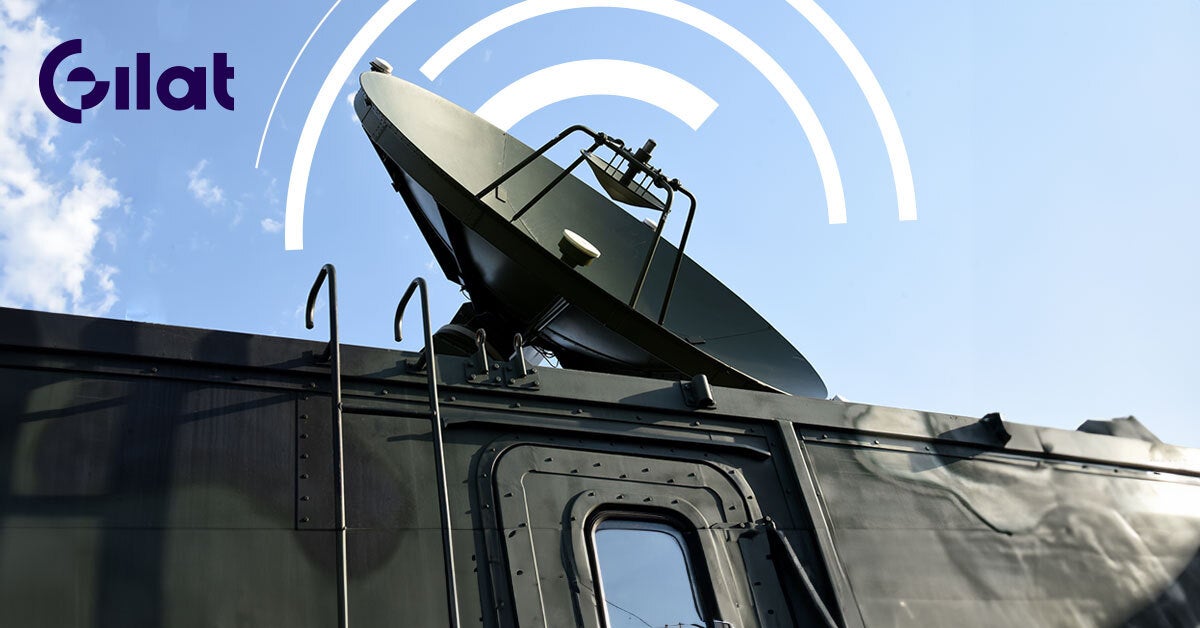
Gilat Projects 42% Revenue Increase at the Midpoint for 2025
Gilat Satellite Networks anticipates strong revenue growth in the coming year, projecting its revenue growth for 2025 between 36% and 49%. Gilat released its full-year 2024 financial results on Feb. 12, along with guidance predicting revenues between $415 million to $455 million for 2025. Gilat reported $305 million in revenue for 2024, a 15% increase…
-

What is an Inclined Geo-Synchronous Orbit (IGSO)?
An Inclined Geosynchronous Orbit (IGSO) is a type of orbit that combines the characteristics of both geosynchronous and inclined orbits. Similar to a geosynchronous orbit, an IGSO satellite orbits the Earth with a period equal to the Earth’s rotation period, resulting in the satellite appearing to remain stationary relative to a fixed point on the…
-

After Putin sacked Russia’s space chief, the rumor mill is running red-hot
After a relatively short period of just two and a half years, the chief of the Russian space corporation Roscosmos, Yuri Borisov, was dismissed from his position last week. The Kremlin announced he would be replaced by 39-year-old former Deputy Minister of Transport Dmitry Bakanov. An economist by training, Bakanov has worked in the past…
-
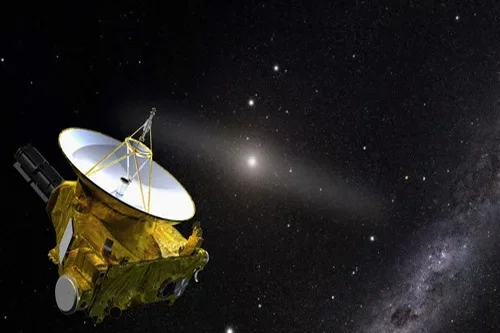
What are the Different Types of Antennas used in Deep Space Network?
Antenna arraying is a technique that combines signals from multiple antennas and transforms them into a cohesive unit, significantly enhancing the reception of weak signals. This technique enhances the reception of weak signals in deep space communications, providing higher data rates and increased sensitivity. Introduced in the early 1970s, antenna arraying initially experimented with a…
-

What are Satellite Laser Communication Terminals?
Satellite Laser Communication Terminals are space communication devices that are used to establish high-speed data links between satellites or spacecraft in orbit and ground stations on Earth or other celestial bodies. Instead of using traditional radio frequency (RF) signals, these terminals utilize laser beams to transmit data optically, offering several advantages over traditional RF communication,…
-

What is NASA-STD-3001 Standard?
NASA-STD-3001 standard is defined by NASA to ensure the safety, health, and well-being of astronauts during space missions. Its also called “Space Flight Human-System Standard“. This standard’s primary goal is to provide a uniform set of technical requirements that govern the design, selection, and application of hardware, software, processes, procedures, practices, and methods for systems…
-

What is Satellite OTA Testing?
Satellite OTA (Over-The-Air) testing is a method that is used to predict the performance and reliability of wireless devices equipped with embedded antennas, such as mobile phones, IoT (Internet of Things) devices, and various wearables like smartwatches. The performance of the antenna is crucial to ensure seamless wireless connectivity for OTA testing. During OTA testing,…