
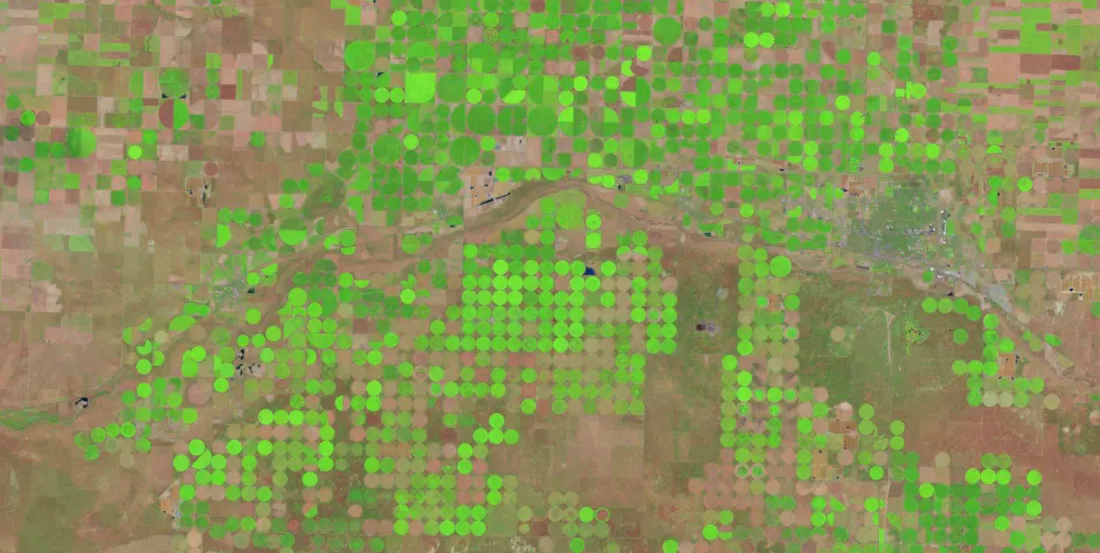
Satellite images, analytical findings and monitoring indicators are the raw materials of a growing data economy. But data does not automatically generate revenue. Its commercial value depends on whether people can establish rights to it, assess its usefulness and turn it into something customers will pay for.
That raises a practical question: how does a satellite remote sensing dataset move from a file sitting in storage to a resource that supports transactions, financial reporting or lending?
An Agricultural Insurance Dataset Gets a “Title Deed”
The story begins with a certificate. Guoyuan Agricultural Insurance, based in Anhui, developed an Agricultural Insurance Risk Assessment Dataset that received what Anhui Daily described as China’s first property rights registration certificate for an agricultural insurance data asset on August 18, 2026.
The significance is easier to understand through a property analogy. Before a lender accepts a building as collateral, it needs evidence of the borrower’s rights to it. Data raises similar questions: who holds the relevant rights? What uses are permitted? Can it be shared or licensed? What happens if someone copies it without authorization?
A registration certificate helps document the dataset, the rights holder and the scope of the registered rights. It provides evidence that can support transactions and other commercial uses. However, registration alone does not automatically qualify a dataset for recognition on a balance sheet or guarantee that a lender will accept it as collateral.
The pilot described in Bortala, Xinjiang, addresses a related challenge: establishing a reliable record of how data is handled. According to the prefecture’s digital development authority in September 2026, key data was recorded on a blockchain throughout the process, creating a traceable and auditable record.
From Data Resources to Rights, Accounting and Revenue
The route toward treating data as an asset can be understood through three connected steps.
Step one: clarify rights. Registration and supporting records help establish who may hold, use or commercialize the data. Clear rights reduce uncertainty for potential customers, partners and lenders.
Step two: assess whether it qualifies for balance-sheet recognition. Under the applicable accounting rules, eligible data resources may be recognized as assets when they meet the relevant criteria. This is not simply a matter of assigning a price to a collection of files: the accounting treatment must reflect the nature of the resource and the associated expenditure.
Step three: realize commercial value. Data can reduce internal operating costs, generate revenue through licensing or services, or support financing arrangements where the necessary conditions are met. These routes can overlap, and many successful data businesses generate revenue without first recognizing their datasets as balance-sheet assets.
Guoyuan’s agricultural insurance business illustrates how data can support broader financial services. According to Anhui Daily, its “agricultural insurance plus credit” model served 36,000 households and facilitated RMB 20.67 billion in lending in the first half of 2026, up 470.8% year on year.
These figures describe lending facilitated through the insurance-and-credit model, rather than loans secured directly against the registered dataset. The commercial logic is nevertheless clear: verifiable information about cultivated land, planted area and crop conditions can help lenders assess agricultural borrowers.
The Bortala pilot also reportedly achieved a 35% improvement in a measure described as “premium pricing rationality” through differentiated pricing models. The underlying business case is that better risk information can support more appropriate insurance pricing.
Satellite Data and Financial Applications: Reported Results in China
Three Ways to Monetize Satellite Data
Satellite data businesses can be grouped into three broad models, each bringing the data closer to a customer’s decisions.
1. Sell Data
Imagery and data products can be sold by scene, through product packages or on subscription. This is the most direct model, but it can be commercially demanding. Digital files are easy to copy, and suppliers must demonstrate why their coverage, resolution, timeliness or licensing terms justify the price.
2. Sell Services
Customers often need an answer rather than an image. Examples cited in the underlying cases include shortening an insurance underwriting process from seven days to two hours and achieving a reported 98% accuracy in identifying illegal fishing.
The customer is paying for faster work, reduced manual effort and more effective oversight. Satellite data is the input; the useful result is the product.
Onboard processing can support this model by transmitting compact findings rather than complete images. Such outputs may be only one-tenth to one-hundredth the size of the original data. Their commercial value, however, depends on whether they fit into the customer’s workflow and lead to useful action.
3. Support Financial Products
Data can also become an input to insurance pricing, credit assessment and financial risk management. Weather indices can inform insurance products, while crop and land information can help lenders evaluate agricultural borrowers.
In this model, value comes from improving a financial decision. Selling data to a financial institution, supporting a lending decision and borrowing against a data asset are related but distinct activities.
The source material also cites an estimate that processing and analytics services have risen to 35% of the marine remote sensing market. This points toward a broader shift: a growing share of value lies in interpretation and practical applications.
Raw data can be valuable in its own right. Processing and industry expertise can make that value easier for customers to use—and easier for suppliers to charge for.
Data Assetization Is No Magic Wand
Three challenges deserve particular attention.
Quality. Poor inputs produce unreliable results. Registering a remote sensing dataset does not validate its accuracy. Ground observations, calibration and appropriate validation remain essential.
Rights and privacy. Agricultural insurance datasets may combine satellite observations with information about individual farmers and their land. An insurer’s rights to collect or process information do not necessarily amount to unrestricted rights to sell or disclose it. Those boundaries require careful attention.
Valuation. Data can be copied repeatedly, and its usefulness may decline over time. Conventional asset valuation methods do not always transfer neatly to data. A balance-sheet entry should therefore be read in the context of the applicable accounting rules and the dataset’s expected economic benefits.
Developing this market requires commercial demand, reliable technology and workable rules. The significance of an early registration certificate lies in demonstrating a possible route forward, rather than proving that every dataset can become valuable collateral.
Industry Term: Recognizing Data Resources on the Balance Sheet
This means recording qualifying data resources as assets under the applicable accounting standards.
In plain English, some expenditure associated with creating or acquiring a data resource may qualify to be carried as an asset rather than recognized immediately as an expense. That treatment depends on meeting the relevant criteria; it does not automatically establish a market price, increase the company’s economic value or make the data acceptable as loan collateral.
Key Figures and Sources
1. Guoyuan Agricultural Insurance: Its Agricultural Insurance Risk Assessment Dataset received what was reported as China’s first agricultural insurance data asset property rights registration certificate. Its agricultural insurance plus credit model served 36,000 households and facilitated RMB 20.67 billion in lending in the first half of 2026, up 470.8% year on year. These lending figures describe the broader business model, not financing secured against the dataset. Source: Anhui Daily, August 18, 2026.
2. Bortala: The cited pilot used blockchain records for key data and reportedly achieved a 35% improvement in “premium pricing rationality” through differentiated pricing models. Source attribution in the original article: Bortala digital development authority, September 2026.
3. Jingshan tea: Weather-index insurance paid RMB 90 million in cumulative claims over ten years. Source: China Pacific Insurance disclosures, September 2026. This illustrates the use of weather information in insurance, rather than revenue from satellite data or data asset financing.
The takeaway: Satellite data becomes a business when reliable information, clear usage rights and a practical application come together. Registration can support that process, while customers ultimately pay for the value the data delivers.
For agricultural insurers and lenders, that value begins with dependable evidence about land, crops and changing conditions. STARPATH GLOBAL combines satellite resources with monitoring and analysis to deliver information that supports these assessments, selecting imagery suited to the required detail, coverage and budget. To explore how satellite observations could support your agricultural risk workflow, talk to our team about the decisions you need the data to inform.