
Tag: Astrophysics
-
Japan’s Hitomi observatory made cosmic discovery before failing
The Perseus galaxy cluster is filled with hot X-ray-emitting gas, as seen in this image from NASA’s Chandra X-ray Observatory. Astronomers using the Soft X-ray Spectrometer aboard the Hitomi satellite have, for the first time, mapped the motion of this gas and determined its velocity structure across a large part of the cluster. The square…
-

LISA Pathfinder success bolsters plan for gravitational wave observatory
Artist’s concept of the LISA Pathfinder spacecraft. Credit: ESA–C. Carreau Europe’s LISA Pathfinder mission — a fundamental physics lab launched last year to a point a million miles from Earth — has demonstrated the mind-boggling technology required for a future space-based observatory to listen for faint, low-frequency vibrations emitted by invisible objects in the most…
-
Kepler adds 1,284 exoplanets to its total
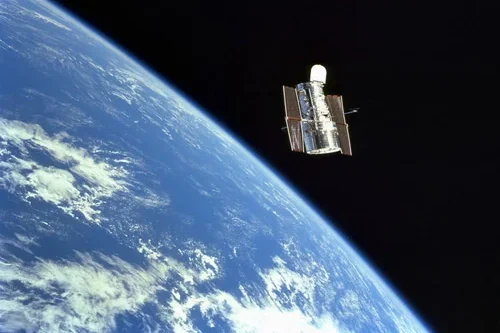
STORY WRITTEN FOR CBS NEWS & USED WITH PERMISSION This artist’s concept depicts select planetary discoveries made to date by NASA’s Kepler space telescope. Credits: NASA/W. Stenzel A statistical analysis of data collected by NASA’s planet-hunting Kepler space telescope during its initial mission shows a better than 99 percent chance that 1,284 worlds previously classified as “candidates”…
-
Japan gives up on rescuing black hole observatory
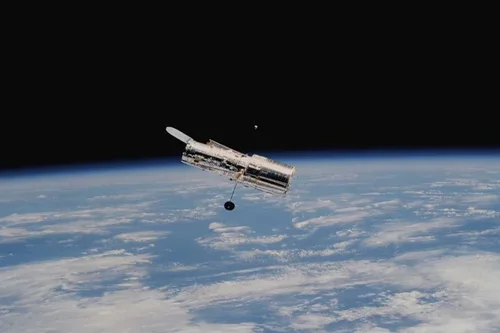
Artist’s concept of Japan’s Hitomi satellite. Credit: JAXA/Akihiro Ikeshita Japan’s space agency says it has ceased efforts to rescue a failed X-ray astronomy satellite after it spun out of control and broke apart in orbit, declaring the nearly $400 million mission lost two months after its launch. Controllers on the ground lost contact with the…
-

Attitude control failures led to break-up of Japanese astronomy satellite
Artist’s concept of Japan’s Hitomi satellite. Credit: JAXA/Akihiro Ikeshita Japan’s Hitomi X-ray observatory was beset by a series of attitude control problems March 26 that caused the satellite to spin out of control and shed sizable chunks of its power-generating solar panels or deployable telescope, according to engineers analyzing fragments of telemetry data sent to…
-

Kepler telescope recovered from spacecraft emergency
Artist’s concept of the Kepler observatory with survey regions highlighted in the sky. Credit: NASA NASA’s Kepler planet-searching spacecraft is stable and out of emergency mode, officials said Monday, and the observatory is downlinking data to help engineers determine what caused it to suspend science operations last week. “On Sunday morning, the spacecraft reached a…
-
Kepler space telescope in emergency mode
Artist’s concept of the Kepler observatory. Credit: NASA Mission controllers are trying to diagnose a problem that put NASA’s Kepler planet-hunting observatory in emergency mode nearly 75 million miles from Earth this week. Circling the sun in an orbit just outside Earth’s, Kepler is in an extended mission searching for worlds around other stars. Engineers…
-

U.S. military rules out collision as cause of Hitomi satellite’s woes
The Hitomi satellite is seen Nov. 27 at a press day held before its launch. Credit: JAXA As Japanese ground controllers struggle to restore communications with a tumbling space telescope in orbit, the U.S. military’s space surveillance experts have eliminated one cause for the satellite’s troubles. A military spokesperson told Spaceflight Now in an email…
-
Japan’s newest space telescope goes silent
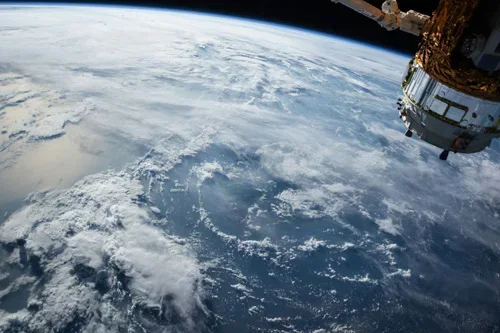
Updated on March 28. Artist’s concept of the Hitomi observatory. Credit: JAXA/Akihiro Ikeshita Japan has lost contact with the newly-launched Hitomi space telescope, and ground observations indicate the satellite has shed debris and may be tumbling in orbit more than 350 miles above Earth. Ground controllers lost contact with the Hitomi black hole observatory at the…
-
Photos: H-2A rocket soars on groundbreaking astronomy mission
Burning a mixture of super-cold liquid hydrogen, liquid oxygen and pre-packed solid propellant, Japan’s H-2A rocket vaulted into a deep blue evening sky over the beaches of Tanegashima Island on Wednesday with a satellite that will see the surroundings of black holes better than ever before. The 174-foot-tall (53-meter) rocket blasted off at 0845 GMT…