
Tag: Atlas 5
-
Fact sheet: Atlas 5 rocket to launch the NROL-42 mission from Vandenberg
*** AV-072/NROL-42 launch fact sheet *** Payload: CLASSIFIED NATIONAL SECURITY PAYLOAD NRO satellite in Molniya orbit Collects signals intelligence Launch Date: Saturday, Sept. 23, 2017 Target Launch Time: 10:30 p.m. local 1:30 a.m. EDT on Sept. 24 0530 GMT on Sept. 24 Unclassified Launch Period: Four hours 7:25-11:35 p.m. local 0225-0635 GMT on Sept. 24…
-
Photos: NROL-42 payload joins Atlas 5 booster for launch
This photo gallery shows the classified National Reconnaissance Office payload, already encapsulated in the 18-foot-diameter nose cone, being lifted atop the United Launch Alliance Atlas-Centaur rocket at Vandenberg Air Force Base’s Space Launch Complex 3-East pad. This milestone was achieved on Aug. 27. Launch of NROL-42 is planned for Thursday night, Sept. 21, at 10:38…
-

Launch operators expect minimal delays from Hurricane Irma
A construction trailer at the Turn Basin near KSC’s Vehicle Assembly Building was turned over during Hurricane Irma. Credit: NASA/Bill White SpaceX and United Launch Alliance expect to resume launches with little or no delay after Hurricane Irma veered west of Cape Canaveral last weekend, sparing the launch base from the storm’s most extreme damage.…
-
NASA data relay craft successfully blossoms in space
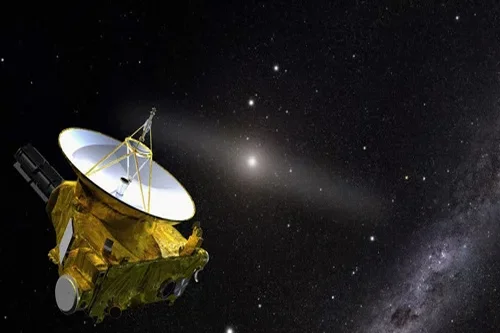
CAPE CANAVERAL — NASA’s new communications satellite, launched to a preliminary orbit August 18, has ascended to geosynchronous altitude more than 22,000 miles up, deployed its giant antennas and extended twin solar arrays to begin in-space commissioning. The $408 million Tracking and Data Relay satellite-M, was successfully lofted to a high-perigee geosynchronous transfer orbit by…
-
Photos: Atlas sends up new NASA satellite
NASA’s Tracking and Data Relay Satellite-M, a communications router for the space station and dozens of science spacecraft, blasted off from Cape Canaveral at 8:29 a.m. EDT on Friday atop a United Launch Alliance Atlas 5 rocket. Credit: United Launch Alliance Credit: United Launch Alliance Credit: United Launch Alliance Credit: United Launch Alliance Credit: United…
-
Videos: Replays from successful Atlas 5 launch of TDRS-M
Isolated camera views from various locations around Cape Canaveral and Kennedy Space Center show the United Launch Alliance Atlas 5 rocket lifting off with NASA’s Tracking and Data Relay Satellite-M. UCS 3 UCS 15 VIF roof Pad camera NASA Causeway VAB roof KSCVC observation gantry Rocketcam staging See earlier TDRS-M launch coverage.
-
Atlas 5 rocket delivers NASA data router into space for astronauts and satellites
CAPE CANAVERAL — Bulking up NASA’s constellation of tracking stations in the sky that provides critical links between orbiting spacecraft and ground control, a United Launch Alliance Atlas 5 rocket successfully deployed a new communications hub in space today. NASA’s Tracking and Data Relay Satellite series, a program that revolutionized mission operations for U.S. human…
-

Video: TDRS-M takes flight atop Atlas 5
The United Launch Alliance Atlas 5 rocket, standing 191 feet tall and and weighing 745,000 pounds, generates 860,000 pounds of thrust from its main engine to launch NASA’s Tracking and Data Relay Satellite-M. Video courtesy: NASA TV See earlier TDRS-M launch coverage.
-

Video: Atlas/TDRS-M pre-launch news briefing
Watch the pre-launch news conference held Thursday, Aug. 17 at NASA’s Kennedy Space Center to preview liftoff of the agency’s TDRS-M data relay satellite aboard a United Launch Alliance Atlas 5 rocket from Cape Canaveral. Briefing participants are: * Tim Dunn, NASA launch director * Badri Younes, deputy associate administrator for Space Communications and Navigation…
-

Multimedia: Atlas 5 rolled out with TDRS-M
The United Launch Alliance Atlas 5 rocket was transferred from its assembly building to the pad at Cape Canaveral’s Complex 41 today for Friday’s launch of NASA’s Tracking and Data Relay Satellite-M that directly supports the International Space Station and various science missions. Liftoff is planned for 8:03 a.m. EDT (1203 GMT). The rocket was…