
Tag: Black holes
-

XMM-Newton observes black hole that exhibits strange oscillations
The European Space Agency’s (ESA) XMM-Newton X-ray space telescope recently discovered rapidly fluctuating X-ray signals coming from the edge of supermassive black hole 1ES 1927+654. Located at the center of a nearby galaxy, the black hole’s X-ray signals have given scientists insight into its nature and how matter falls into it. Moreover, XMM-Newton’s observations also…
-
Astronomers use Hubble to discover rare intermediate-mass black hole in Omega Centauri
Using the joint NASA and European Space Agency (ESA) Hubble Space Telescope in low-Earth orbit, an international team of astronomers has discovered a rare black hole within Omega Centauri — the largest and brightest known globular cluster in the Milky Way. Globular clusters are large collections of stars and other cosmic material that can span…
-

Spitzer gives scientists insights into black hole eating habits
Using data from NASA’s retired Spitzer Space Telescope, scientists have gained new insights into the eating habits of supermassive black holes at the centers of galaxies throughout the universe. These black holes often fluctuate in brightness from the massive clumps of cosmic material falling into them. However, this is not true for the black holes…
-
IXPE investigates microquasar jets, finds unexpected magnetic field structure
Creating some of the most powerful gravitational forces and fields in the universe, black holes are known for their extreme nature, including the ways in which they can devour and destroy whole planets and stars in a matter of seconds. When black holes consume planets, stars, and other cosmic objects, the matter from the collision…
-
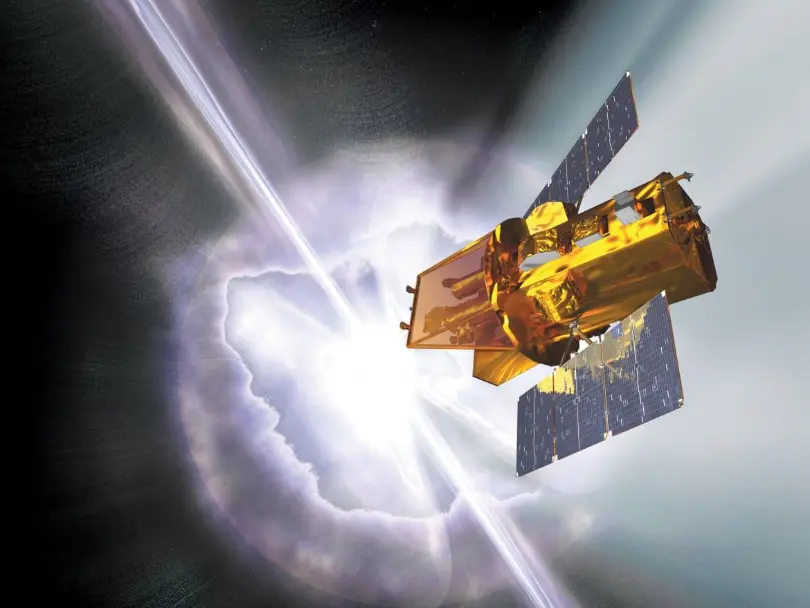
Using new data analysis tool on Swift, scientists discover black hole snacking on a star
Scientists, using NASA’s Neil Gehrels Swift Observatory, have discovered a black hole that is continuously snacking on a star that is similar to our Sun. Located in a galaxy around 500 million light-years away from Earth, the black hole’s constant nibbling on the star, a phenomenon known as a tidal disruption event, creates a bright…
-

LIGO starts its fourth round of searching for gravitational waves and black holes
A specialist checks the alignment of a test beam at the Laser Interferometer Gravitational-wave Observatory. (National Science Foundation Photo) After three years of upgrading and waiting, due in part to the coronavirus pandemic, the Laser Interferometer Gravitational-wave Observatory has officially resumed its hunt for the signatures of crashing black holes and neutron stars. “Our LIGO…
-

Using Hubble, researchers accidentally discover ejected black hole forcing star creation
Throughout the universe, supermassive black holes can typically be found at the center of massive galaxies that stretch tens of light years across. However, using Hubble, a team of researchers has discovered a supermassive black hole that appears to have been ejected from its galaxy. The black hole, which is around 20 million times more…
-
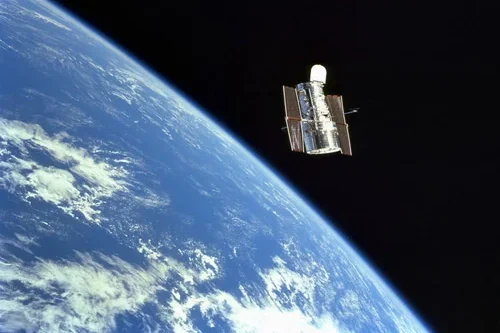
Astronomers witness unprecedented corona formation, evolution around black hole
With help from NASA’s Nuclear Spectroscopic Telescopic Array (NuSTAR) X-ray telescope, a group of researchers recently bore unusually close witness to the formation and evolution of an unexpected corona around a supermassive black hole as it destroyed a star that had passed too close to it. The event, located 250 million light years from Earth,…
-
China launches two small satellites for gravitational wave research
A Long March 11 rocket lifts off from the Xichang space base with the GECAM mission. Credit: CAS Two small Chinese satellites designed to detect gamma-ray bursts associated with gravitational waves launched Wednesday on a Long March 11 rocket, beginning an astrophysics research mission to study black holes and neutron stars. The Gravitational Wave High-energy Electromagnetic…
-
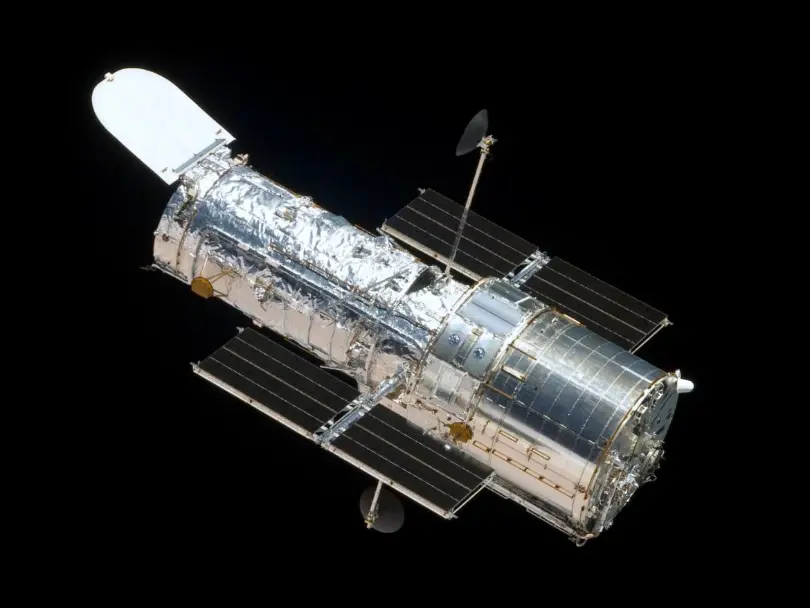
Missing dark matter & shadows from a black hole, Hubble continues to unlock cosmic mysteries
It’s a constant of the universe. Dark matter – a key ingredient for the formation and evolution of galaxies is present in whatever galaxy is observed. That is until NGC 1052-DF2 was discovered – a galaxy missing most of its dark matter. A year later, galaxy NGC 1052-DF4 was discovered 45 million light years from…