
Tag: Cassini
-
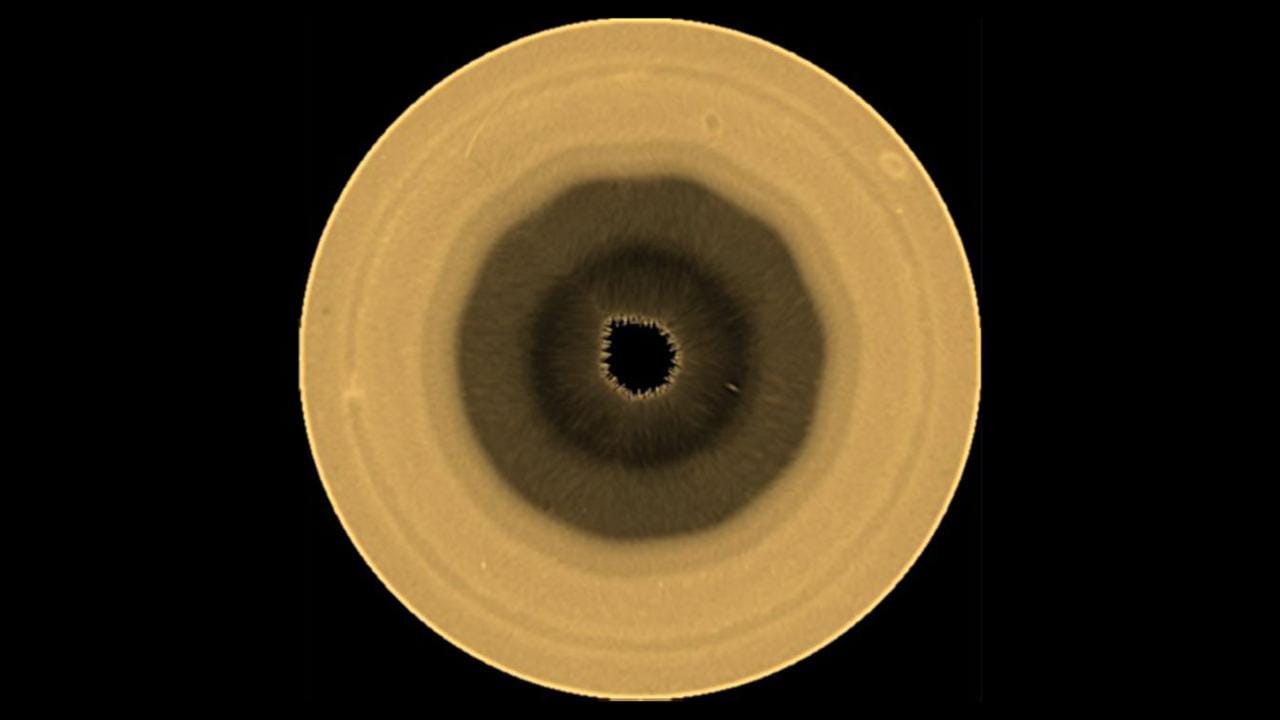
Saturn’s South Polar Decagon: What Could Have Created Hubble’s Newly Identified Atmospheric Wave?
NASA’s Hubble Space Telescope has revealed a giant, evolving ten-sided atmospheric wave around Saturn’s south pole—the first large, regular-sided jet pattern observed in the planet’s southern hemisphere. Known as a decagon, the feature appears in observations dating back to 2023 and has become increasingly distinct, offering scientists a rare opportunity to track the development of…
-
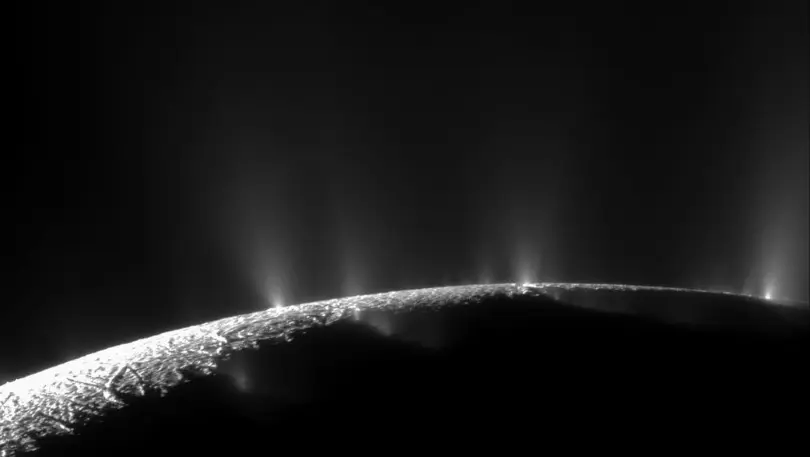
Scientists use Cassini data to discover new molecules in Enceladus water jets
Located around Saturn is the icy moon Enceladus — one of the most interesting and potentially habitable moons in the solar system. NASA’s Cassini mission extensively studied Saturn and its moons from 2004 to 2017 and, in 2005, revealed large geyser-like jets extending from Enceladus’ south pole. Later studies would suggest that a massive subsurface…
-
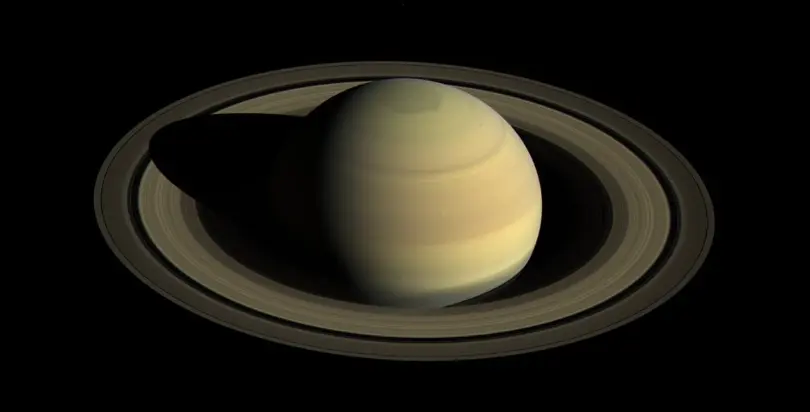
New research provides explanation for the origin of Saturn’s rings and icy moons
Recent research conducted by NASA and its partners using supercomputer simulations is shedding light on the origins of Saturn’s iconic rings and mysterious icy moons. Scientists believe the rings began forming from a massive impact between two icy moons, all the way back when dinosaurs were still roaming around the surface of Earth. The massive…
-
Cassini data reveals the presence of phosphorus in Enceladus’ ocean plumes
A team of scientists, using archival data from NASA’s now-retired Cassini mission, has discovered the presence of phosphorus in the massive plumes of water being ejected from the southern regions of Saturn’s moon Enceladus. Phosphorus — a chemical element essential for life and often considered a building block for life — is locked inside of…
-
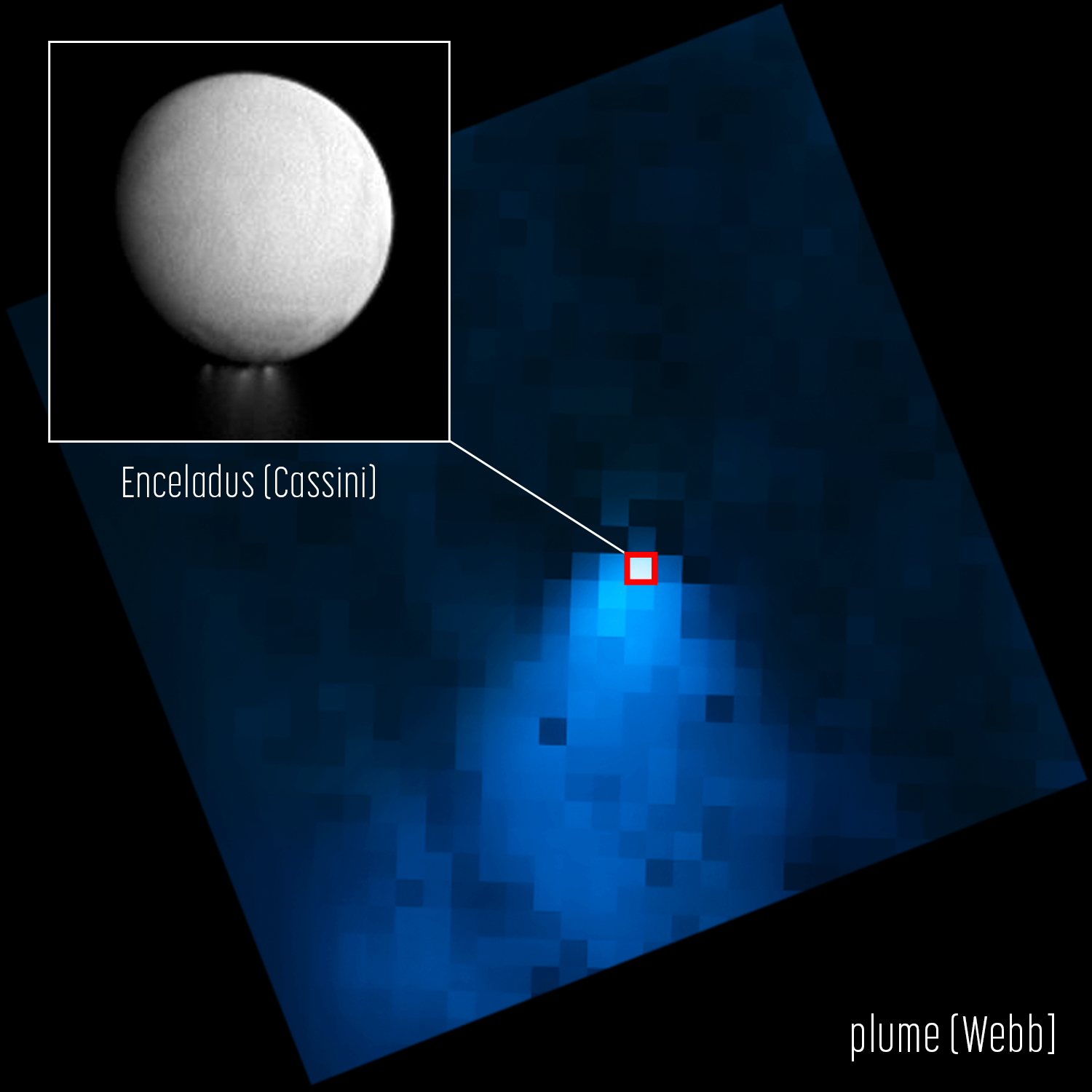
Megaplume of water vapor erupting on Enceladus caught by Webb Telescope
Enceladus, a frozen moon orbiting Saturn, has caught the interest of scientists because of the plumes of water vapor that erupt from its icy crust, which are possible evidence for a subsurface ocean. And an ocean means it has the potential for life (at least life as we know it). Now NASA’s James Webb Space…
-
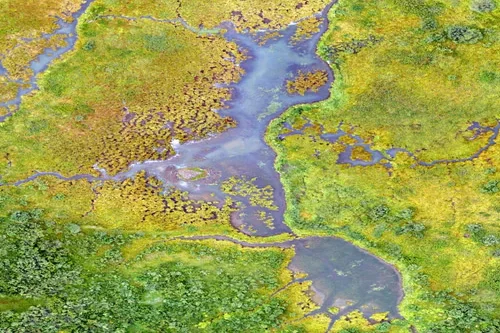
Scientists trace phosphates to Enceladus, boosting outlook for life on Saturn’s moon
A cutaway view shows water rising up from Enceladus’ ice-covered ocean. (NASA / JPL-Caltech Illustration) Phosphorus, an essential ingredient for life as we know it, has been detected for the first time in water samples that can be traced back to Enceladus, an ice-covered moon of Saturn. The discovery, reported today in the journal Nature,…
-
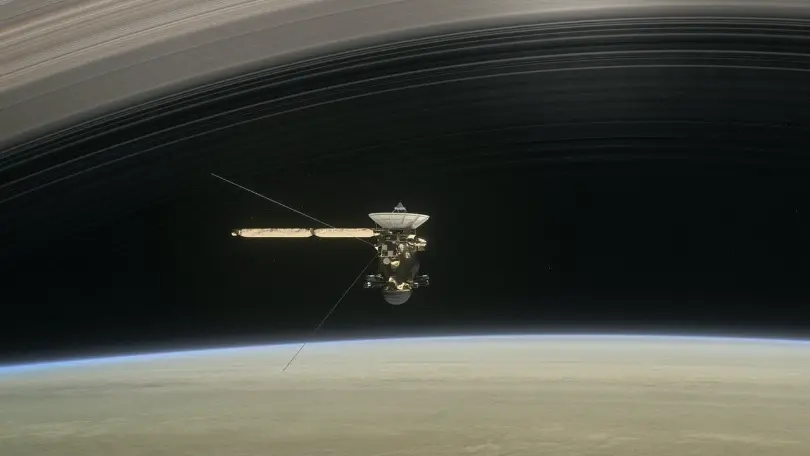
Cassini data sheds light on Saturn formation and Enceladus habitability
While its mission ended just over three years ago, data from NASA’s Cassini spacecraft continues to help scientists unlock the mysteries of the Saturnian system that contains more than 80 identified moons. In particular, new and updated research has helped determine the drift rate of Titan away from Saturn, in turn leading to a better…
-
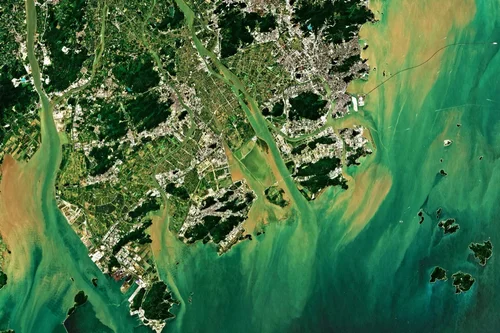
ESA’s Huygens probe landed on Saturn’s moon Titan 15 years ago
This mosaic of three frames taken by Huygens during its descent to Titan provides unprecedented detail of a ridge area, including a network of river channels. Credit: ESA/NASA/JPL/University of Arizona Fifteen years after accomplishing the first-ever landing on Saturn’s moon Titan, lessons learned from the European Space Agency’s Huygens spacecraft continue aiding designers of future…
-
Cassini still reveals Saturn’s secrets more than a year after its mission’s end
Cassini’s flagship mission to the ringed planet Saturn ended over a year ago, but data from the craft’s Grand Finale tour of the Saturnian system continues to allow scientists to unlock the mysteries surrounding the sixth planet in our solar system. Among the discoveries after the end of Cassini’s mission include a firm understanding of…
-
Saturn’s clouds run deep, rings may rain organics
Artist’s illustration of Saturn’s internal structure. Credit: NASA/JPL-Caltech Saturn’s clouds have roots deeper inside the planet’s atmosphere than scientists previously thought, and Saturn’s rings — now believed to have formed in the last 200 million years — appear to be raining organic molecules down on the planet, according to observations made by NASA’s Cassini spacecraft…