
Tag: Ceres
-
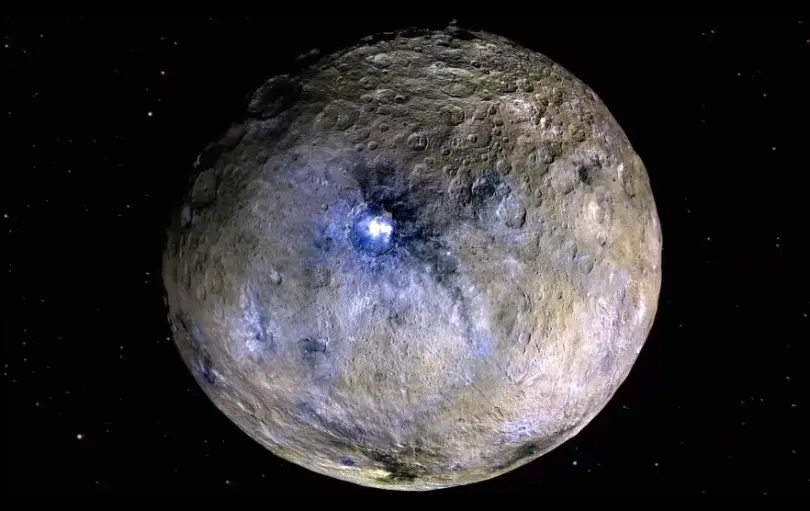
Data from NASA’s Dawn reveals chemical energy source on Ceres
Using data from NASA’s now-retired Dawn spacecraft, scientists have found that Ceres, a dwarf planet and the largest object in the asteroid belt, may have once had a lasting source of chemical energy. The Dawn data revealed evidence of molecules needed to fuel microbial metabolisms on Ceres. While the finding doesn’t confirm that microorganisms existed…
-

China launches two missions from Jiuquan in under 30 hours
In just under 30 hours, China launched two rockets with six satellites to their respective orbits. The first launch was a Chang Zheng 4C (CZ-4C) with the Yaogan 34-03 (Yaogan-34C) government remote sensing satellite on Nov. 15 at 01:38 UTC from Jiuquan Satellite Launch Center (JSLC) at Site 43/94. It was followed by the Ceres-1…
-

Introducing China’s new commercial rocket, Ceres-1
China’s latest commercial rocket, the Ceres-1 (Gushenxing-1) launch vehicle, has conducted its maiden launch this weekend, orbiting the Tianqi-11 satellite. Chinese company Galactic Energy conducted the launch on Saturday morning at 07:12 UTC from the Jiuquan Satellite Launch Center. The Galactic Energy, also designated Beijing Xinghe Dongli Space Technology Co. Ltd., is one of several…
-

NASA’s Dawn spacecraft runs out of fuel in the asteroid belt
NASA’s Dawn spacecraft ran out of fuel Wednesday and stopped transmitting to Earth, ending an 11-year mission that explored the two largest objects in the asteroid belt and set several records in the annals of space history. Dawn failed to contact controllers at NASA’s Jet Propulsion Laboratory in California during an overnight communications opportunity late…
-

NASA’s Dawn probe falls silent, ending mission to mysterious dwarf planet Ceres
This photo of Ceres and the bright regions in Occator Crater was one of the last views NASA’s Dawn spacecraft transmitted before it completed its mission. This view, which faces south, was captured on Sept. 1 from an altitude of 2,340 miles as the spacecraft was ascending in its elliptical orbit. (NASA / JPL-Caltech /…
-
NASA’s Dawn probe snaps close-ups of Ceres’ formerly mysterious white spots
A mosaic of images from NASA’s Dawn spacecraft shows a prominent mound of bright material on the western side of Cerealia Facula on dwarf planet Ceres. (NASA / JPL-Caltech / UCLA / MPS / DLR / IDA Photo) The once-mysterious bright spots shining on the surface of the dwarf planet Ceres are getting their closest…
-
Scientists thrilled with closer views of Ceres’ famous salty crater
This mosaic of a prominent mound located on the western side of Cerealia Facula was obtained by NASA’s Dawn spacecraft on June 22, 2018, from an altitude of about 21 miles (34 kilometers). Credit: NASA/JPL-Caltech/UCLA/MPS/DLR/IDA Fresh pictures from NASA’s Dawn spacecraft have provided the sharpest glimpse yet of the bright salt deposits discovered inside a…
-
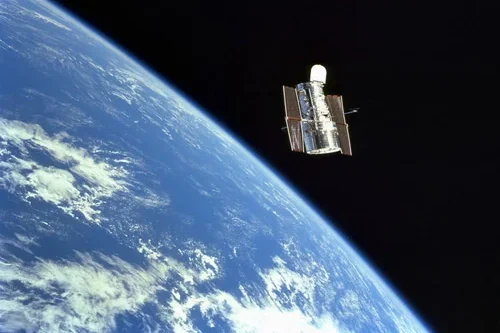
Dawn spacecraft flying low over Ceres
This image of Ceres’ limb was obtained by NASA’s Dawn spacecraft May 30 from an altitude of about 280 miles (450 kilometers). Credit: NASA/JPL-Caltech/UCLA/MPS/DLR/IDA In the closing months of a nearly 11-year mission, NASA’s Dawn spacecraft has arrived in its final orbit around the dwarf planet Ceres and is obtaining the sharpest views yet of…
-

Happy Kwanzaa from NASA – and Ceres!
The feature on Ceres known as Kwanzaa Tholus is at the center of each of these pictures from NASA’s Dawn probe. The color-coded elevation map at right highlights the feature as a reddish, crescent-shaped swath. (NASA / JPL-Caltech / UCLA / MPS / DLR / IDA) Kwanzaa may be an African-American festival on Earth, but…
-

NASA’s Dawn mission gears up for close look at Ceres
This artist concept shows NASA’s Dawn spacecraft above dwarf planet Ceres, as seen in images from the mission. Credits: NASA/JPL-Caltech/UCLA/MPS/DLR/IDA NASA’s Dawn spacecraft will remain at Ceres for the rest of its mission, heading closer to the asteroid belt’s largest resident than ever before to obtain new measurements of ice, salts and a tenuous intermittent…