
Tag: Charon
-

Charon takes center stage in new batch of New Horizons images
This enhanced color view of Charon comes from New Horizons’ Ralph color camera. The colors highlight the subtle variations in the composition of Charon’s crust, with the reddish region near the north pole — informally named Mordor Macular — standing out most prominently. Credit: NASA/Johns Hopkins University Applied Physics Laboratory/Southwest Research Institute With a meandering…
-
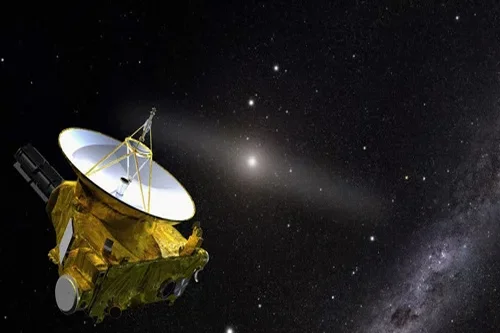
Scientists revel in latest Pluto close-ups
This synthetic perspective view of Pluto, based on the latest high-resolution images to be downlinked from NASA’s New Horizons spacecraft, shows what you would see if you were approximately 1,100 miles (1,800 kilometers) above Pluto’s equatorial area, looking northeast over the dark, cratered, informally named Cthulhu Regio toward the bright, smooth, expanse of icy plains…
-

Scientists eager for restart of Pluto photo pipeline
Four images from New Horizons’ Long Range Reconnaissance Imager (LORRI) were combined with color data from the Ralph instrument to create this global view of Pluto. (The lower right edge of Pluto in this view currently lacks high-resolution color coverage.) The images, taken when the spacecraft was 280,000 miles (450,000 kilometers) away, show features as…
-

Scientists share first close-up snapshot of Charon
The view of Charon in the inset of this image was taken by New Horizons’ LORRI camera around 6:30 a.m. EDT (1030 GMT) on July 14, less than 90 minutes before closest approach to Pluto.Credit: NASA/JHUAPL/SWRI A day after revealing mind-boggling ice mountains on Pluto, researchers from NASA’s New Horizons mission on Thursday released a…
-

Scientists thrilled with mountains on Pluto, chasms on Charon
STORY WRITTEN FOR CBS NEWS & USED WITH PERMISSION A snapshot of Pluto shows fresh deposits of water ice bedrock and 11,000-foot mountains, revealing evidence Pluto’s surface is one of the youngest in the solar system. Photo credit: NASA/JHUAPL/SWRI Post-flyby images from NASA’s New Horizons probe show Pluto is a surprisingly active world in the deep freeze…
-

Pluto and Charon as never seen before
A spectacular sampling of imagery from NASA’s New Horizons spacecraft reveals mountains and water ice bedrock on Pluto, an active crust on its largest moon Charon and the first resolved views of the icy world’s tiny mini-moons. A snapshot of Pluto shows fresh deposits of water ice bedrock and 11,000-foot mountains, revealing evidence Pluto’s surface…
-

Scientists wowed by new views of ‘psychedelic’ Pluto
Pluto and its Texas-sized moon Charon share an alien environment on the solar system’s outer frontier, with patches of organic ices and diverse rock types illustrated in color imagery released Tuesday. Speaking hours after NASA’s New Horizons spacecraft zoomed 7,700 miles from Pluto on the first-ever encounter with the mystery world, scientists said early images…
-
Question time with Alan Stern, the Pluto evangelist
Alan Stern, New Horizons’ principal investigator, started thinking about a mission to Pluto in the 1980s. Credit: NASA/Aubrey Gemignani July is a month of rich rewards for Alan Stern, the scientist who shepherded the New Horizons spacecraft from the drawing board to Pluto, and the payoff will be sweet. New Horizons comes closest to Pluto…
-
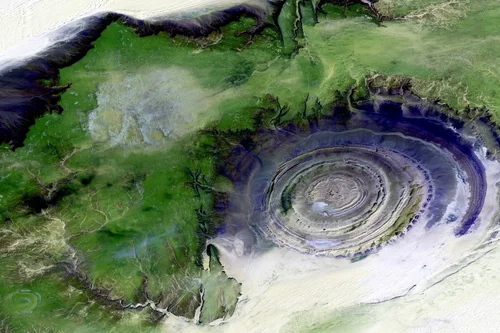
Pluto probe provides appetizer for next week’s flyby
New Horizons was about 3.7 million miles (6 million kilometers) from Pluto and Charon when it snapped this portrait late on July 8, 2015. Color data from New Horizons’ Ralph instrument was added to colorize the image. Credit: NASA/JHUAPL/SWRI Living up to promises that the view from New Horizons will only get better, the Pluto-bound…
-

New Horizons in good shape approaching Pluto
STORY WRITTEN FOR CBS NEWS & USED WITH PERMISSION These images, taken by New Horizons’ Long Range Reconnaissance Imager (LORRI), show numerous large-scale features on Pluto’s surface. The distance to Pluto ranges from 47 million kilometers (about 29 million miles) on June 5 to 31 million kilometers (19 million miles) on June 18. Credit: NASA/Johns Hopkins University…