
Tag: Dawn
-
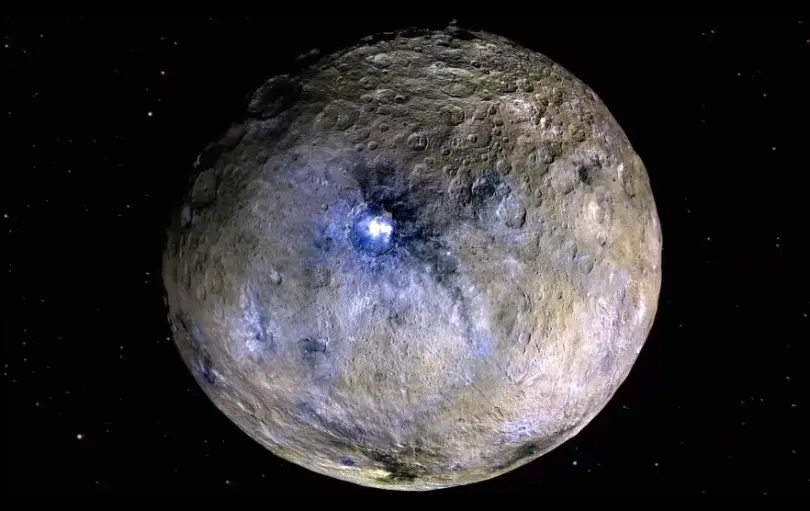
Data from NASA’s Dawn reveals chemical energy source on Ceres
Using data from NASA’s now-retired Dawn spacecraft, scientists have found that Ceres, a dwarf planet and the largest object in the asteroid belt, may have once had a lasting source of chemical energy. The Dawn data revealed evidence of molecules needed to fuel microbial metabolisms on Ceres. While the finding doesn’t confirm that microorganisms existed…
-
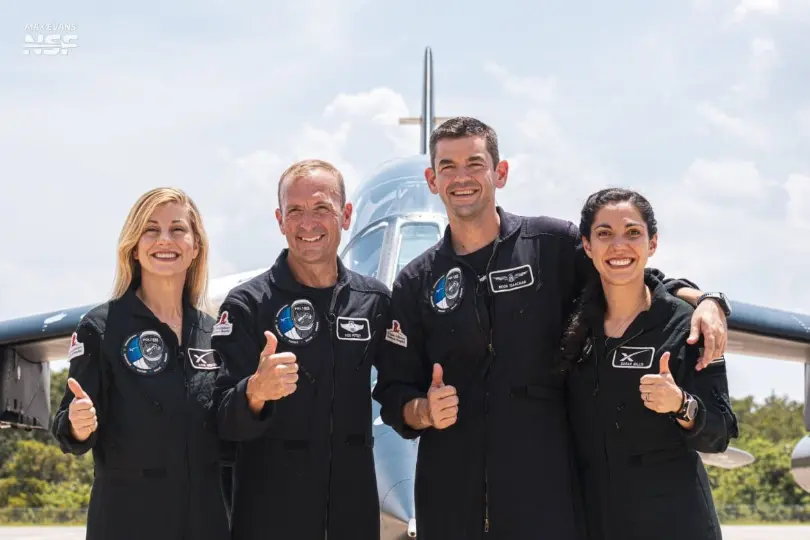
Polaris aiming to break barriers, build experience with Polaris Dawn
One of the most highly anticipated missions in 2024 is now mere days away from taking flight. The Polaris Dawn mission, scheduled to launch on SpaceX’s Falcon 9 and Crew Dragon with a four-person complement no earlier than Monday, Aug. 26, will see the introduction of new technologies and many records eclipsed — setting a…
-

Dawn, the intrepid explorer of multiple worlds
As another spacecraft prepares to land on Mars, the Dawn spacecraft recently ended its mission to explore two of the largest worlds in the asteroid belt and it has succeeded well beyond expectations, starting a new era in the exploration of the Solar System’s small worlds. As the age of robotic planetary exploration began, as…
-

NASA’s Dawn spacecraft runs out of fuel in the asteroid belt
NASA’s Dawn spacecraft ran out of fuel Wednesday and stopped transmitting to Earth, ending an 11-year mission that explored the two largest objects in the asteroid belt and set several records in the annals of space history. Dawn failed to contact controllers at NASA’s Jet Propulsion Laboratory in California during an overnight communications opportunity late…
-
Scientists thrilled with closer views of Ceres’ famous salty crater
This mosaic of a prominent mound located on the western side of Cerealia Facula was obtained by NASA’s Dawn spacecraft on June 22, 2018, from an altitude of about 21 miles (34 kilometers). Credit: NASA/JPL-Caltech/UCLA/MPS/DLR/IDA Fresh pictures from NASA’s Dawn spacecraft have provided the sharpest glimpse yet of the bright salt deposits discovered inside a…
-
Dawn spacecraft flying low over Ceres
This image of Ceres’ limb was obtained by NASA’s Dawn spacecraft May 30 from an altitude of about 280 miles (450 kilometers). Credit: NASA/JPL-Caltech/UCLA/MPS/DLR/IDA In the closing months of a nearly 11-year mission, NASA’s Dawn spacecraft has arrived in its final orbit around the dwarf planet Ceres and is obtaining the sharpest views yet of…
-
NASA’s Dawn mission gears up for close look at Ceres
This artist concept shows NASA’s Dawn spacecraft above dwarf planet Ceres, as seen in images from the mission. Credits: NASA/JPL-Caltech/UCLA/MPS/DLR/IDA NASA’s Dawn spacecraft will remain at Ceres for the rest of its mission, heading closer to the asteroid belt’s largest resident than ever before to obtain new measurements of ice, salts and a tenuous intermittent…
-
Scientists celebrate 10th anniversary of Dawn mission’s launch
Artist’s concept of the Dawn spacecraft with imagery of Ceres (left) and Vesta (right) captured during the mission. Credit: NASA/JPL-Caltech In the ten years since its launch from Cape Canaveral, NASA’s Dawn spacecraft has orbited the two largest worlds in the asteroid belt and overcome defective components that threatened to derail the mission on its…
-
Dawn mission managers await NASA decision on spacecraft’s future
Artist’s concept of the Dawn spacecraft with one of its ion engines firing. Credit: NASA/JPL-Caltech The future of NASA’s Dawn spacecraft, running low on hydrazine fuel and now flying around the dwarf planet Ceres without the help of internal pointing wheels, will be decided in the coming weeks by top space agency managers. Scientists have…
-
YIR III: From dwarfs to giants – the missions of Dawn, Juno, and Cassini
Moving out into the asteroid belt and farther still to the gas giants, NASA’s Dawn, Juno, and Cassini missions churned away in orbit of their respective hosts – with Dawn continuing an up-close-and-personal investigation of the dwarf planet Ceres, Juno’s fantastically accurate arrival at Jupiter but frustratingly crippled start to its science mission, and the…