
Tag: Delta 2
-

Tanking test marks resumption of Delta 2 rocket’s final launch campaign
Ground crews lift the second stage of a Delta 2 rocket into the mobile gantry at Space Launch Complex 2-West at Vandenberg Air Force Base. The second stage was stacked atop the Delta 2 rocket June 21. Credit: NASA/Randy Beaudoin With each day, another milestone passes like clockwork for engineers and technicians preparing a United…
-

Towers at historic Florida launch pad toppled
EDITOR’S NOTE: Updated at 7:50 a.m. EDT (1250 GMT) after demolition. Launch towers at Cape Canaveral’s Complex 17 launch pad were topped Thursday in an explosive demolition. Credit: Stephen Clark/Spaceflight Now The U.S. Air Force on Thursday demolished towers once used to assemble Delta 2 rockets at Cape Canaveral for missions to Mars, four dozen…
-
NASA gears up for brisk launch pace, starting with weather satellite
The first stage of the Atlas 5 rocket set to launch NOAA’s GOES-S weather satellite was lifted atop its mobile launch platform Jan. 31 inside the Vertical Integration Facility at Cape Canaveral’s Complex 41 launch pad. Credit: NASA/Ben Smegelsky Engineers at NASA’s Kennedy Space Center tasked with overseeing launches of scientific satellites and interplanetary probes…
-

Photos: Delta 2 climbs into the night from Vandenberg Air Force Base
Launching from Vandenberg Air Force Base on California’s Central Coast on its third try, United Launch Alliance’s Delta 2 rocket lifted off Saturday with NOAA’s JPSS 1 polar-orbiting weather satellite. It was the 154th and second-to-last flight of a Delta 2 rocket, the workhorse for NASA’s interplanetary exploration program, climate and weather satellites, and a…
-
Video: JPSS 1 weather satellite deploys from Delta 2 rocket
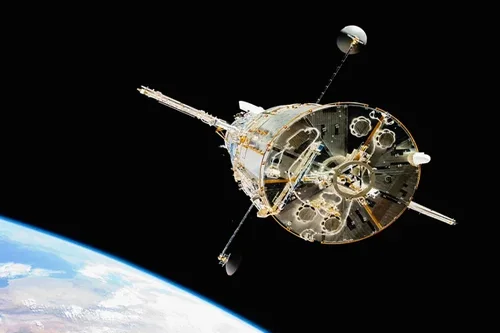
NOAA’s new JPSS 1 weather satellite deployed from its Delta 2 launcher in an orbit more than 500 miles (800 kilometers) above Earth nearly one hour after blasting off from California. Fully fueled with a launch mass around 5,025 pounds (2,280 kilograms), the JPSS 1 satellite is beginning a seven-year mission collecting atmospheric measurements to…
-
Penultimate Delta 2 rocket launch lofts advanced polar-orbiting weather satellite
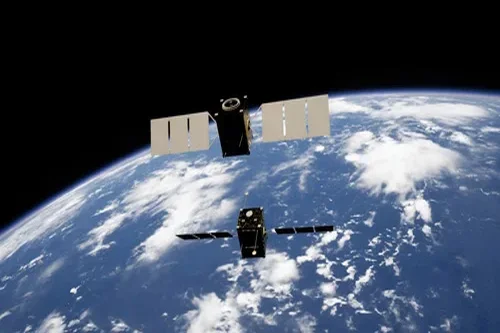
Credit: ULA/Walter Scriptunas II A United Launch Alliance Delta 2 rocket climbed into space Saturday from California with a $1.6 billion polar-orbiting weather satellite for NOAA, the first of four upgraded observatories designed to keep vital meteorological data flowing to forecasters for the next two decades. The government-owned weather sentinel was deployed into orbit more…
-
Video: Delta 2 rocket lifts off from California
A United Launch Alliance Delta 2 rocket lifted off Saturday from Vandenberg Air Force Base in California with the JPSS 1 weather satellite, the first in a new line of polar-orbiting observatories for NOAA. The 128-foot-tall (39-meter) rocket climbed into the sky from Space Launch Complex 2-West at 1:47:36 a.m. EST (4:47:36 a.m. EST; 0947:36…
-
Delta 2 launch from California halted for second day in a row
The Delta 2 rocket stands at Space Launch Complex 2-West at Vandenberg Air Force Base, California, awaiting liftoff with the JPSS 1 weather satellite. Credit: ULA/Walter Scriptunas II Brisk upper level winds blowing from the west thwarted a second try to launch a new NOAA weather satellite aboard a United Launch Alliance Delta 2 rocket…
-
Delta 2 launch from California halted for second day in a row
The Delta 2 rocket stands at Space Launch Complex 2-West at Vandenberg Air Force Base, California, awaiting liftoff with the JPSS 1 weather satellite. Credit: ULA/Walter Scriptunas II Brisk upper level winds blowing from the west thwarted a second try to launch a new NOAA weather satellite aboard a United Launch Alliance Delta 2 rocket…
-
Photos: JPSS 1 weather satellite prepped for encapsulation
NOAA’s JPSS 1 weather satellite is enshrouded inside the nose fairing of a Delta 2 rocket, awaiting liftoff from Vandenberg Air Force Base in California on a seven-year mission to collect data to improve global weather forecasts. The satellite weighs around 5,025 pounds (2,280 kilograms), according to NOAA, and will orbit more than 500 miles…