
Tag: Geology
-
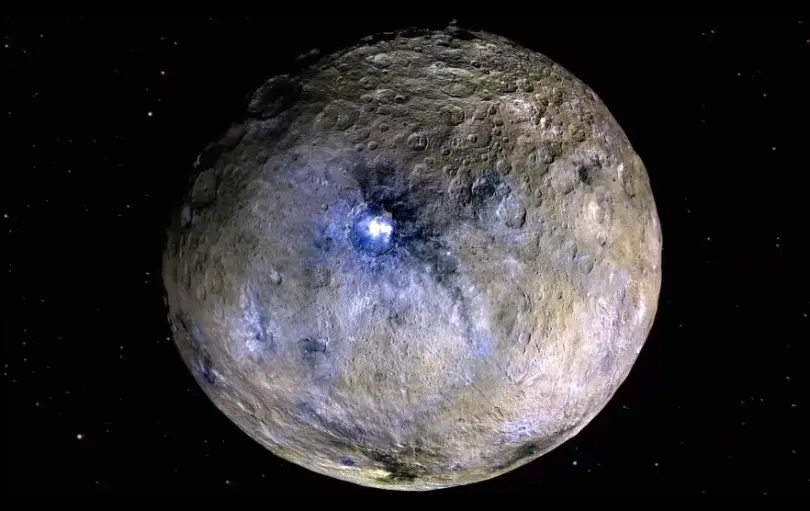
Data from NASA’s Dawn reveals chemical energy source on Ceres
Using data from NASA’s now-retired Dawn spacecraft, scientists have found that Ceres, a dwarf planet and the largest object in the asteroid belt, may have once had a lasting source of chemical energy. The Dawn data revealed evidence of molecules needed to fuel microbial metabolisms on Ceres. While the finding doesn’t confirm that microorganisms existed…
-
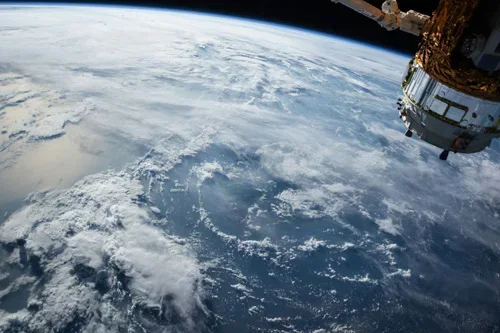
Magellan data provides new insight into tectonic processes on Venus
Over 30 years after its demise in the Venusian atmosphere, NASA’s Magellan mission recently provided new insight into tectonic processes on Venus. Scientists studied large, rounded geologic features called coronae by combining gravity measurements and topography data collected by Magellan throughout its mission. Not only does the new study shed light on Venus’ geology, but…
-

Juno reveals Io’s inner structure and volcanic activity; investigates north pole cyclones
New data from NASA’s Juno mission, which has been orbiting Jupiter since 2016, has provided scientists with insight into the extreme winds and cyclones present within the gas giant’s atmosphere. The data allowed scientists to develop a model that better represents the fast jet stream circling Jupiter’s north pole, which is cluttered with many cyclones.…
-
Curiosity discovers carbonate mineral, provides insight into disappearance of ancient atmosphere
NASA’s Curiosity rover, which has been driving around the surface of Mars for over 12 years, recently discovered a mineral called siderite on the slopes of Mount Sharp in Gale Crater. Interestingly, siderite might be the mineral that helps planetary scientists finally solve the mystery of where Mars’ carbon dioxide-rich atmosphere went. Solving such a…
-

Hayabusa2 samples reveal the effects of space weathering on asteroid Ryugu
Using samples collected by Japan Aerospace Exploration Agency’s (JAXA) asteroid explorer Hayabusa2, scientists have found the effects of micrometeoroid bombardments on asteroid 162173 Ryugu. The team used a technique called electron holography to study the sample’s magnetic properties, to learn about the magnetic field in the early solar system, and how space weathering affected the…
-
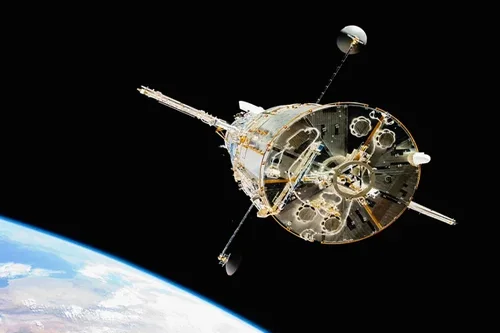
Three ongoing missions study human side of Moon and Mars missions
While a lot of the focus when it comes to space travel beyond Earth orbit is on the spacecraft, multiple studies are underway to explore the human side of what NASA calls “Moon to Mars Exploration.” Those studies include physical health, mental health, and even training astronauts to recognize geology that could answer many questions…
-

Lunar Reconnaissance Orbiter discovers thermally stable areas in surface pits suitable for future lunar bases
Using data from NASA’s Lunar Reconnaissance Orbiter (LRO), a group of NASA-funded researchers has discovered that shaded locations inside surface pits on the lunar surface harbor comfortable temperatures that could prove useful for future lunar exploration. Furthermore, LRO continues to operate in a healthy state around the Moon and is regularly returning data, so much…
-
NASA, ESA unveil advanced architecture for Mars Sample Return
On July 27, NASA and the European Space Agency (ESA) unveiled new advanced mission architecture for the upcoming Mars Sample Return mission. Additionally, NASA completed its system requirements review for the mission, bringing the ambitious project one step closer to the completion of its conceptual design phase. The new mission architecture takes advantage of new…
-
Data from OSIRIS-REx reveals loose surface of asteroid Bennu and “early aging” of asteroids
Recently analyzed data from an asteroid surface-sample collection performed by NASA’s OSIRIS-REx mission has revealed that asteroid 101955 Bennu’s surface regolith is much looser than previously thought. Had OSIRIS-REx not fired its thrusters to back away from Bennu after collecting its sample, the spacecraft likely would’ve sunk straight into Bennu’s surface. What’s more, additional data…
-
As Webb begins observing exoplanets, scientists use Spitzer data & brown dwarfs to reveal how silicate clouds form
In a new study from a group of researchers in Canada, data from NASA’s now-retired Spitzer Space Telescope was used to determine the conditions under which silicate clouds form on distant exoplanets outside of our solar system — giving scientists insight into what’s inside the atmospheres of exoplanets similar in size, temperature, and composition to…