
Tag: Hubble
-
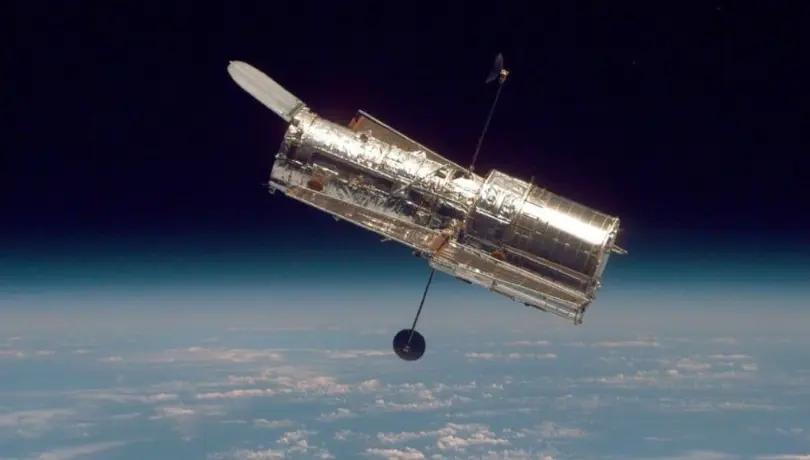
Teams evaluate Hubble safe mode event, history of telescope leads to JWST
Thirty-one years after its launch, and 12 years after its most-recent servicing mission, the NASA/ European Space Agency (ESA) Hubble Space Telescope remains in safe mode on orbit as operators work to determine why the iconic observatory ceased science operations at 02:38 EDT on October 25. The latest safe mode event continues to publicly show…
-

Hubble returns to science operations on backup payload computer
NASA teams have successfully resurrected the iconic Hubble Space Telescope after it first experienced problems with an onboard computer on June 13 and suspended all science operations. The telescope is now fully operational and the switch to the backup hardware — which included powering on the backup payload computer — was performed successfully on July…
-
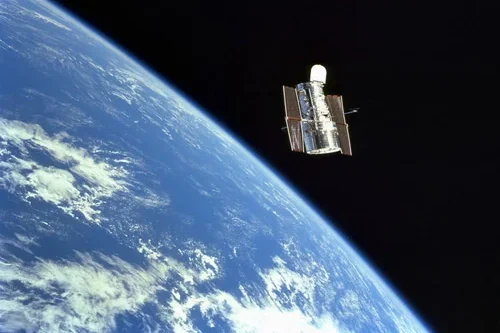
As teams work to bring Hubble back online, new science highlights missing dark matter in galaxy
Following an unexpected payload computer halt on June 13, Hubble teams are diligently working to bring the 31-year-old telescope back online. The halt, which has garnered news headlines throughout the past week, is proving to be quite the challenge for engineers to resolve. Although this failure undoubtedly highlights Hubble’s growing age, scientists have continuously used…
-
With Hubble, astronomers use UV light for first time to measure a still-forming planet’s growth rate
In 2018, the exo-planet PDS 70b was observed using the Very Large Array. It’s discovery instantly placed it at the top of observation requests and telescope time for one quite profound reason: the exoplanet was still forming. For the first time, a still-accreting planet had been discovered, providing astrophysicists a unique opportunity to study how…
-
Hubble returned to operational service, showcases exoplanet’s second atmosphere
The Hubble Space Telescope recently garnered headlines for a software anomaly that caused the iconic observatory to enter safe mode as its control teams worked to successfully restore the telescope to operational status. While Hubble is showing its age, scientists using the observatory are nonetheless continuing to produce incredible scientific discoveries, including a recent announcement…
-

NASA selects potential small-scale astrophysics missions, Hubble measures exoplanet’s odd orbit
The Hubble Space Telescope has successfully measured the highly eccentric and distant orbit of an exoplanet circling a double star system 336 light years from Earth. The new exoplanet information is potentially important much closer to home as scientists search for the proposed Planet Nine in our solar system. Meanwhile, NASA has selected four small…
-
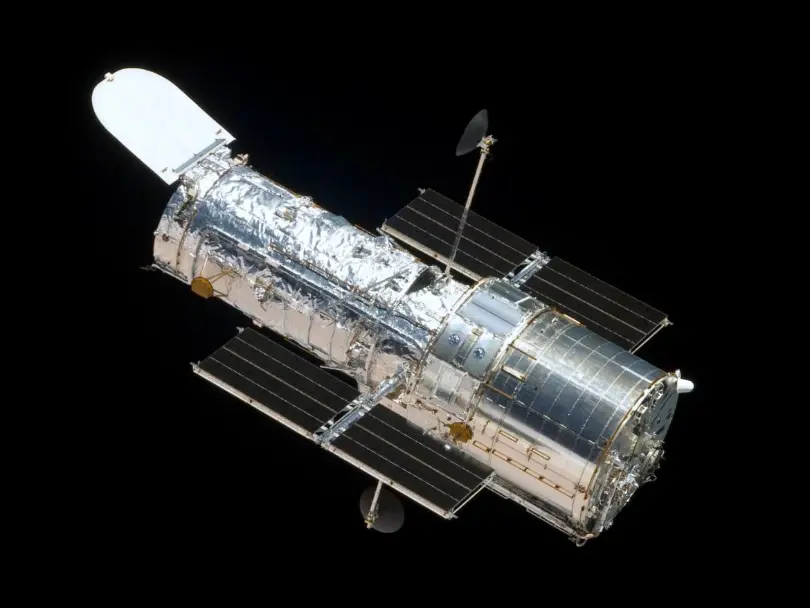
Missing dark matter & shadows from a black hole, Hubble continues to unlock cosmic mysteries
It’s a constant of the universe. Dark matter – a key ingredient for the formation and evolution of galaxies is present in whatever galaxy is observed. That is until NGC 1052-DF2 was discovered – a galaxy missing most of its dark matter. A year later, galaxy NGC 1052-DF4 was discovered 45 million light years from…
-
Astronomers offer a solution to Hubble Space Telescope’s case of the disappearing planet
More than a decade ago, Fomalhaut b was considered one of the first exoplanets to be directly imaged — but now it’s vanished, and scientists suspect it was actually nothing more than a huge cloud of dust created by a cosmic smashup. The disappearing act in the Fomalhaut star system, 25 light years away in…
-
‘Super-puff’ planets add a cotton candy flavor to the search for alien worlds
An illustration depicts the sunlike star Kepler 51 and three giant planets that have an extraordinarily low density. (NASA / ESA / STScI / Hustak, Olmsted, Player and Summers) Readings from the Hubble Space Telescope have shed light on a bizarre class of alien planets that have the density of cotton candy. The “super-puff” planets…
-
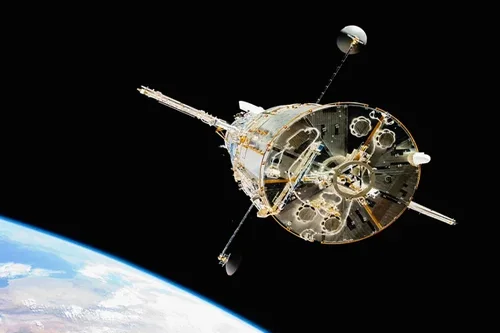
Hubble image shows distant galaxy photobombing an interstellar comet as it swings around the sun
Comet 2I/Borisov appears as a bright dot within a haze of dust, with a distant spiral galaxy in the background of the Hubble Space Telescope image, taken on Nov. 16. The comet was about 203 million miles from Earth when the picture was taken. (NASA / ESA / UCLA / D. Jewitt) The Hubble Space…